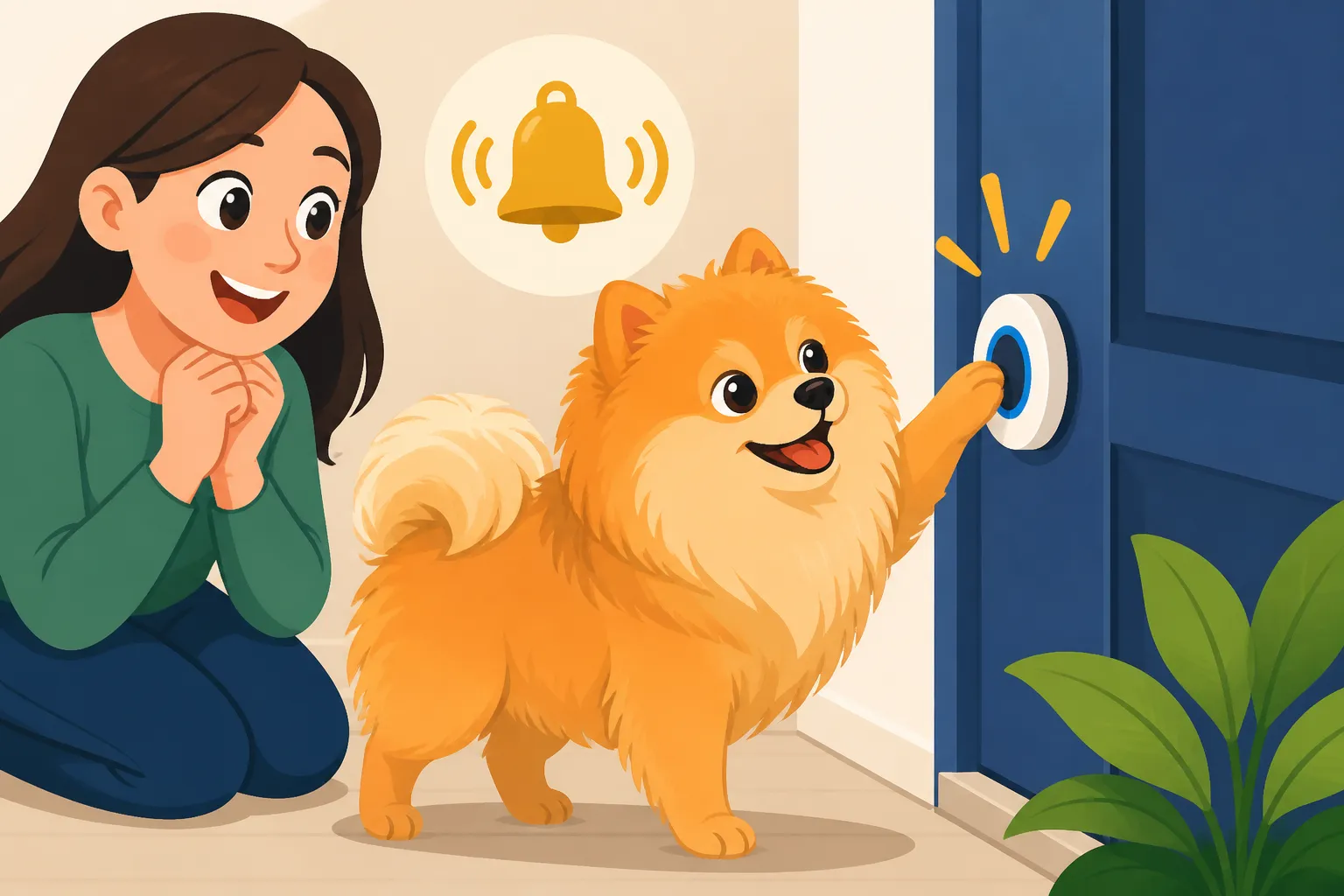
Teaching a Pomeranian a Door Bell
The moment that doorbell rings, it can feel like your Pomeranian transforms into a miniature alarm system, barking with an intensity that belies their small size. This isn't just annoying; it can be incredibly stressful, both for you and your furry friend, and it often leads to frantic greetings and escalating noise levels. This guide is here to walk you through a step-by-step approach to teaching your Pomeranian a calm, controlled response to the doorbell, transforming chaos into quiet confidence.
Understanding Why Your Pomeranian Barks at the Doorbell
Before we can even begin to tackle the "how-to," it's vital to understand the "why." Your Pomeranian isn't just being difficult; their barking is rooted in their breed's natural instincts and learned behaviors. Poms are often vocal, and the doorbell is a major trigger.
The Pomeranian's Natural Instinct to Alert
Let's be real: Pomeranians, despite their fluffy appearance, are descended from much larger Spitz breeds. They have that innate watchdog instinct coursing through their veins. Their ancestors were often kept to alert their families to anything unusual. A doorbell, in their tiny, vigilant minds, isn't just a sound; it's a giant, flashing neon sign screaming "INTRUDER ALERT!" They see it as their job, their sacred duty, to let you know someone is at the gate. This strong alert barking is a fundamental part of their temperament, and it’s why something as simple as a bell can send them into a frenzy. It’s not malice; it's instinct. This is why getting a Barking Pomeranian to Stop on Command can feel like such an uphill battle, especially when a high-value trigger like a doorbell is involved.
Learned Behavior and Excitement
Beyond instinct, a lot of doorbell barking is learned behavior. Think about it: every time the doorbell rings, what happens? People get up, rush to the door, maybe even talk in excited tones. For your Pomeranian, this sequence of events—doorbell, human excitement, arrival of a new person—becomes a powerful reward cycle. They learn that barking causes all this interesting stuff to happen. They might be genuinely excited to see who's there, or they might be guarding their territory and family. The problem is, they don't know how to express that excitement or protective instinct appropriately, so they default to the loudest, most attention-grabbing behavior they know: barking. Over time, this habit becomes ingrained, making it harder to break without intentional training. Consider whether your Pomeranian barks From Fear or Habit.
Foundations for Doorbell Training
To successfully teach your Pomeranian a new doorbell response, you need to lay some solid groundwork. This isn't just about the doorbell itself; it's about establishing clear communication, consistent expectations, and effective management strategies.
Establishing a "Go to Mat" or "Place" Command
One of the most powerful tools in your training arsenal will be a "go to mat" or "place" command. This teaches your Pomeranian to go to a designated spot—a bed, a mat, a specific rug—and stay there calmly when asked. This provides them with a clear, alternative behavior to barking and rushing the door.
Start by introducing the mat without any doorbell distractions. Lure your Pom onto the mat with a tasty treat. As soon as all four paws are on the mat, mark the behavior with a verbal cue like "Yes!" or a clicker, then reward generously. Gradually increase the duration they stay on the mat before getting the reward. Once they understand the concept, add the verbal cue, "Place" or "Mat." Practice this many, many times in different rooms and with increasing distractions, always rewarding calm duration. Many online training programs, like those offered by BAXTER & Bella, offer excellent step-by-step guides for teaching "place" commands, often with video demonstrations that can be invaluable for visual learners. A solid "place" command offers a structured alternative to the frantic response to the doorbell, giving your Pomeranian a job to do that is incompatible with barking.
Managing Environmental Triggers
While you're training, you need to control the environment to prevent accidental rehearsals of the unwanted barking behavior. Every time your Pomeranian barks at the doorbell and is not redirected, that behavior gets stronger.
This means temporarily disabling the actual doorbell if possible, or putting a sign on your door asking visitors to knock or call instead. Then, you can use a recording of a doorbell sound during controlled training sessions. You can find various doorbell sound effects on platforms like YouTube or even purchase a simple doorbell sound app for your phone via platforms like Amazon. This allows you to control the volume and frequency, setting your Pomeranian up for success rather than constant failure. Also, consider using baby gates or an exercise pen to create a physical barrier between your Pom and the front door during real-life visitor arrivals. This helps manage the excitement and gives you time to implement your training.
| Training Component | Purpose | How it Helps with Doorbell Barking |
|---|---|---|
| "Place" Command | Teaches a designated calm spot | Provides an alternative, quiet behavior |
| Doorbell Recording | Controlled exposure to the trigger | Allows gradual desensitization at low intensity |
| Physical Barriers | Prevents rushing the door | Manages excitement and creates space for training |
| High-Value Treats | Motivation and positive reinforcement | Makes the new, calm behavior highly rewarding |
Step-by-Step Doorbell Training Protocol
Now that we've covered the groundwork, let's dive into the practical steps for teaching your Pomeranian a calm response. Remember, consistency and patience are your best friends here. This is a journey, not a sprint, especially for a vocal breed like a Pomeranian.
Desensitization with Recorded Sounds
The first step is to desensitize your Pomeranian to the doorbell sound itself. This means playing the sound at such a low volume that it doesn't trigger a reaction, then gradually increasing the volume over many sessions.
Start by playing a recording of a doorbell (you can search for "doorbell sound effect" on YouTube or get a soundboard app) at a volume so low that your Pomeranian barely notices it, or hears it but doesn't react. The moment the sound plays, calmly walk over to their "place" mat, lure them onto it, and reward them with a high-value treat as they settle. If they don't even look up, that's a perfect start! If they show even a slight twitch of an ear or glance towards the door, quickly redirect them to their mat. Repeat this many times over several days. The goal is for them to associate the sound of the doorbell with going to their mat and receiving a reward, rather than with barking. This counter-conditioning creates a positive emotional response to the sound.
Counter-Conditioning with a "Place" Command
Once your Pomeranian is comfortable with the low-volume sound, you'll begin to integrate the "place" command more actively. This phase builds the muscle memory for the desired behavior.
With your Pom already on their "place" mat, or very close to it, play the doorbell recording at a slightly higher volume. The instant the sound plays, say "Place" (if they're not already there) and immediately reward them for staying calm on the mat. If they start to get up or bark, the volume is too high. Decrease it and try again. The key is to reward before they have a chance to bark. Think of it as a race: you want to reward the calm behavior before the barking response can even form. Use super tasty treats, something they absolutely adore. This process of pairing the previously scary or exciting sound with a positive outcome (treats and praise on their mat) is what we call counter-conditioning. You're changing their emotional response to the doorbell. For excellent guidance on timing your rewards, look into resources about Whether Marker Training Holds a Pomeranian's Attention.
Gradual Increases in Distraction and Reality
As your Pomeranian becomes proficient with the recorded doorbell sounds, it's time to introduce more realism and distraction.
This is where you'll start increasing the volume of the recorded doorbell. Practice with various family members walking past the door, or even pretending to ring the doorbell from outside. Work up to having someone actually ring the disabled doorbell, while your Pomeranian is on their mat. Reward heavily for successful calm responses. When you're confident they understand the new routine, introduce a real doorbell ring, perhaps from a friend or family member who can follow instructions carefully. Have them ring the doorbell, wait for your Pomeranian to go to their mat, reward, and then open the door. The goal is for your Pomeranian to calmly go to their mat before the door even opens. This can take weeks or even months of consistent practice. Remember, Training Session Length for a Pomeranian should be short and fun to maintain their engagement, so don't try to cram too much into one session.
Troubleshooting and Long-Term Success
Even with the best intentions, training a Pomeranian is rarely a straight line. There will be setbacks, and some Poms will take longer than others. The key is to stay patient, consistent, and adapt your approach as needed.
Dealing with Setbacks and Over-Excitement
It's inevitable: your Pomeranian will bark at the doorbell again. Don't get discouraged! This is part of the learning process. If they react, it usually means you've progressed too quickly, or the distraction was too high.
If they bark, calmly interrupt the behavior. Avoid yelling or punishing, as this can create a negative association with the doorbell or even make them more anxious. Instead, simply stop the interaction, let the "visitor" (or recorded sound) pause, and then reset. Go back to a lower level of distraction or volume where they were previously successful. Rehearse the desired behavior (going to the mat) multiple times successfully at that easier level, then slowly try to increase the challenge again. Sometimes, a super high-value treat, like a tiny piece of cheese or cooked chicken, can help re-engage them when they're over-excited. Remember, the goal isn't never to bark, but to reduce the frequency and intensity of the barking and redirect it to a more appropriate behavior. You're trying to re-pattern a deeply ingrained response.
Consistency, Patience, and Continued Practice
The most critical ingredients for long-term success are consistency and patience. This isn't a one-and-done training session. Your Pomeranian needs consistent reinforcement of the new behavior over weeks and months, and even throughout their life.
Every single person in the household needs to be on board with the training protocol. If one person allows the barking, it undermines all your hard work. Keep those high-value treats handy by the door and near your Pomeranian's "place" mat. Continue to practice regularly, even after you've achieved success. Occasional "drills" with a friend ringing the bell, or even using your recorded sounds, will keep the behavior fresh. Pomeranians are smart, but they can also be a bit stubborn. You might find yourself wondering Whether a Pomeranian Is Stubborn or Just Bored, but often, it's just a matter of making the desired behavior more rewarding and easier to understand than the old, ingrained one. This continuous reinforcement will solidify their calm response to the doorbell for years to come.
When to Seek Professional Help
If you've diligently followed these steps and your Pomeranian's barking remains problematic or escalates, don't hesitate to seek professional help. A certified professional dog trainer or a veterinary behaviorist can provide tailored guidance.
Some Pomeranians might have deeper-rooted anxiety or reactivity that goes beyond simple excitement, and a professional can help diagnose and address those underlying issues. They can observe your Pomeranian's specific responses and offer personalized strategies, potentially incorporating different tools or techniques. They can also help rule out any medical conditions that might be contributing to excessive vocalization. Remember, investing in professional guidance is an investment in your peace of mind and your Pomeranian's well-being. Sometimes, the issue is so ingrained that even thinking about Whether a Pomeranian Barks When Left Alone can be daunting, and a professional can offer a fresh perspective.
Disclaimer
This article is for general informational purposes only and does not constitute professional advice. Laws, prices and regulations vary by location and change over time. Consult a qualified professional for guidance on your specific situation.