The Reward a Pomeranian Actually Cares About
It's incredibly frustrating when you're trying to teach your tiny Pomeranian something new, or even just get them to cooperate with a simple request, and they look at you with that intelligent, dismissive glint in their eye, completely unimpressed by the standard kibble or a quick "good dog!" Many Pom parents struggle to find that elusive reward that truly lights up their little furball, leading to stalled training and a feeling of being outsmarted. This guide is all about cracking the code of your Pomeranian's unique motivations, helping you discover the high-value rewards that will make training a joy for both of you.
Understanding What Makes a Pomeranian Tick
Pomeranians, with their spirited personalities and ancient Spitz lineage, aren't your average lap dogs when it comes to motivation. They have a distinct blend of independence, intelligence, and a surprisingly strong desire to please, but only if they feel it's truly worth their while. Understanding these core traits is the first step to figuring out what rewards truly resonate with them.
The Independent Spitz Spirit
Pomeranians descend from much larger, working Spitz breeds, and while they've been miniaturized, they haven't entirely shed that independent spirit. This isn't a breed that always lives to serve; they have their own agenda, their own thoughts, and often, a sassy opinion about what you're asking them to do. If the reward isn't compelling, their Spitz brain might just decide it's not worth the effort. They might pretend they didn't hear you, or simply stare blankly, waiting for you to up the ante. This isn't stubbornness, exactly, but a selective hearing often triggered by a lack of perceived value in the exchange. You'll find that their focus is fleeting unless the payoff is big. How Long a Pomeranian Will Hold Focus will tell you more about managing their attention spans.
Intelligent and Observant Nature
Don't let their fluffy, teddy bear appearance fool you; Pomeranians are incredibly intelligent and observant. They're constantly watching you, learning your habits, and figuring out what gets them what they want. This intelligence means they can easily become bored with repetitive, low-value rewards. If a piece of their regular kibble is offered for a complex task, they might decide the mental effort isn't worth the paltry prize. They're quick to recognize patterns and will quickly learn to distinguish between a "sometimes" treat and a "special occasion" treat, making the latter far more impactful for breaking through training plateaus. This intellectual capacity also means they thrive on variety, which we'll delve into later.
Desire for Connection, But on Their Terms
While Poms are fiercely independent, they also crave connection and attention from their favorite people. However, this connection often comes on their terms. They might demand lap time or playtime, but when it's your turn to ask something of them, they might play hard to get. This means that praise and affection, while important, often need to be paired with something more tangible, especially in the early stages of training. A simple head pat might not cut it if they're distracted by a squirrel outside or the mailman at the door. You have to make your interaction the most valuable thing in their world at that moment.
Beyond the Biscuit: High-Value Rewards for Your Pom
Forget what you think you know about dog rewards. For a Pomeranian, a reward isn't just about food; it's about anything they perceive as truly valuable. This could be a specific type of treat, a favorite toy, a moment of intense play, or even a particular kind of verbal praise. The key is to find what your Pomeranian considers "jackpot."
The Power of High-Value Treats
When it comes to food, not all treats are created equal in the eyes of a Pomeranian. Their tiny mouths and discerning palates often prefer soft, smelly, and easily consumable morsels. This isn't the time for dry, crunchy biscuits that take too long to chew. Think small, potent, and fast.
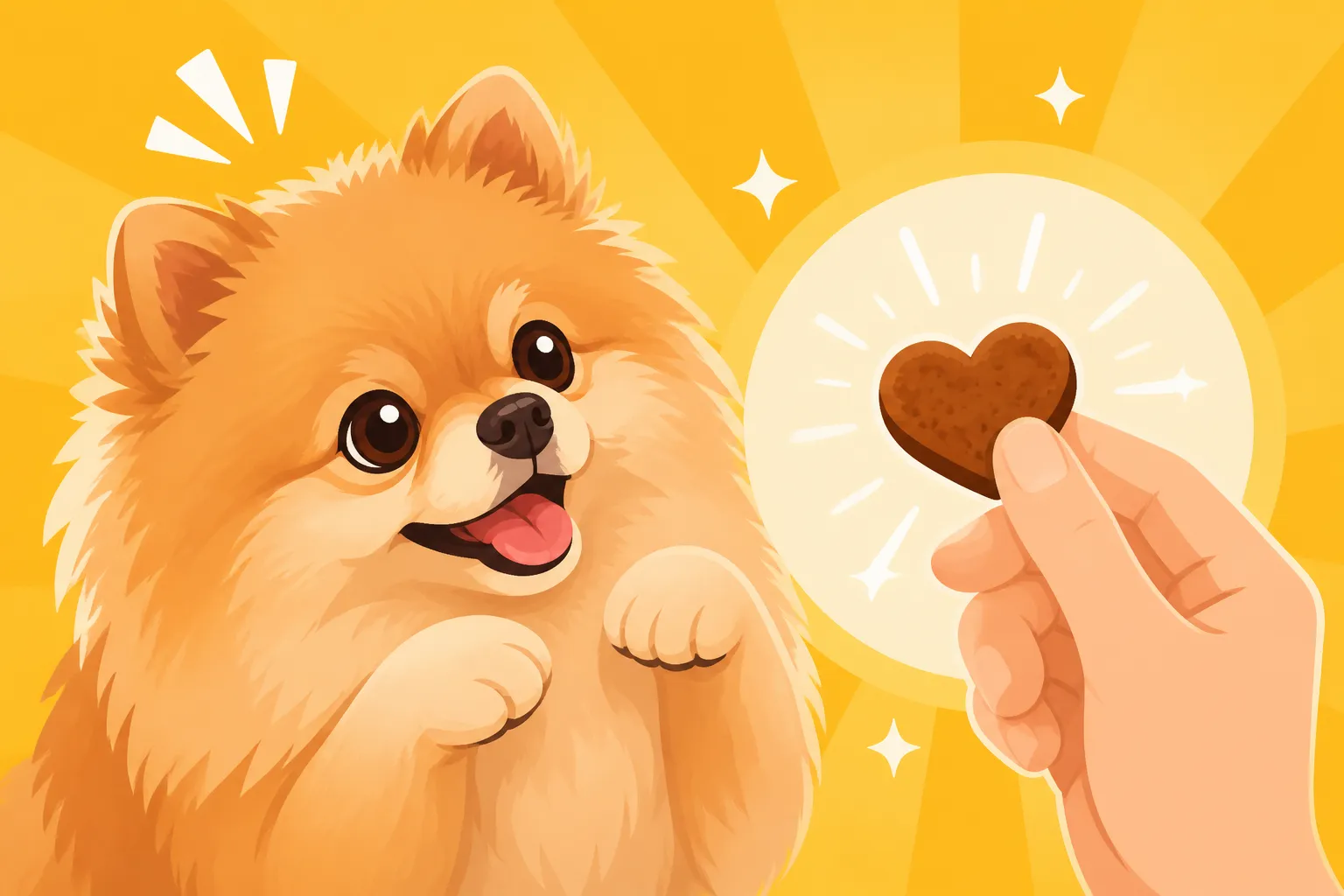
- Soft, Meaty Bites: Cooked chicken breast, lean beef, or even small pieces of cheese are often huge motivators. Cut them into pea-sized pieces so your Pom can gobble them down quickly, keeping their focus on the next command. Many owners find that freeze-dried liver or salmon treats, readily available on platforms like Amazon, are a huge hit. They're lightweight, intensely fragrant, and break apart easily.
- Novelty: Sometimes, the best reward is something they never get otherwise. A tiny dab of peanut butter (xylitol-free!), a lick of plain yogurt, or a sliver of apple can be incredibly exciting. Rotate these novelties to keep your Pom guessing and engaged.
- Temperature: Believe it or not, a slightly warmed piece of meat can be more appealing than a cold one, as the aroma is enhanced. Just be careful it's not too hot.
Remember, a Pomeranian's digestive system is delicate, so introduce new treats slowly and in very small quantities to avoid upset stomachs. Also, be mindful of how many treats you're giving to avoid an overweight Pomeranian, as How Few Treats a Pomeranian Can Actually Have emphasizes.
The Allure of Play and Toys
For many Poms, especially younger ones, play can be an even higher reward than food. The thrill of a chase, the satisfaction of a "kill" with a favorite toy, or a quick game of tug can be incredibly motivating.
- Interactive Toys: Small, squeaky toys, miniature tennis balls, or crinkly fabric toys that fit their tiny mouths are often winners. The key is interaction. Throwing a toy for them to retrieve (even if it's just a few feet in the living room), or engaging in a gentle tug-of-war, turns the toy into a shared experience, not just a static object.
- The Chase: A laser pointer (used carefully to avoid obsessive behaviors) or a flirt pole (a pole with a toy attached to a string) can tap into their natural prey drive in a safe, controlled way. A quick, exhilarating chase for a few seconds can be a powerful reward for performing a trick or coming when called.
- Praise and Affection During Play: Combine the toy with enthusiastic praise and physical affection. "Good catch, Foxy!" accompanied by a joyful hug can amplify the reward. This creates a positive association between your praise and their favorite activity. When they're bored, they might chew up What a Bored Pomeranian Chews Up if you don't offer suitable alternatives.
Enthusiastic Praise and Affection
While often not enough on its own, genuine, enthusiastic praise is crucial for reinforcing desired behaviors. Poms, like all dogs, thrive on positive feedback from their humans.
- Tone of Voice: Your tone is everything. A high-pitched, joyful "YES! Good boy/girl!" makes a world of difference compared to a flat, unenthusiastic "okay." Your voice should convey excitement and genuine happiness.
- Physical Affection (If They Like It): Many Poms enjoy a quick cuddle, a scratch behind the ears, or a gentle belly rub. However, some Poms are particular about how and when they're touched. Pay attention to your individual dog's preferences. If they tense up or pull away, that particular form of affection isn't a reward for them.
- "The Happy Dance": Some owners develop a specific "happy dance" or celebratory movement that their Pom associates with success. This adds another layer of positive reinforcement.
It's important to remember that praise and affection are most effective when they immediately follow the desired behavior. Timing is absolutely everything in dog training, especially for intelligent breeds like Pomeranians.
Tailoring Rewards to Your Individual Pomeranian
Every Pomeranian is an individual, and what one Pom loves, another might tolerate. The real secret to success is becoming a keen observer of your own dog.
Observing Your Pomeranian's Preferences
This is where your detective skills come in! Pay close attention to what truly excites your Pom. Do their ears perk up more for a piece of chicken or a squeaky toy? Do they come running faster for a game of fetch or a special chew?
- Trial and Error: Experiment with different types of treats, toys, and activities. Keep a mental note, or even a physical list, of what gets the most enthusiastic response.
- The "Reward Buffet": Sometimes, for really tough training, lay out a few different high-value treats and toys. Let your Pom "choose" their reward. This instantly makes the reward more valuable because they had a say in it.
- Context Matters: A treat that's high-value in the quiet living room might be completely ignored in a distracting park environment. For high-distraction scenarios, you'll need to pull out the absolute "big guns" of rewards. This is often where things like cooked salmon or highly prized cheese come into play.
Rotating Rewards to Maintain Value
If you always use the same treat, it quickly loses its appeal. Think about it like your favorite dessert – if you had it every single day, it wouldn't feel special anymore. Rotation is key.
- Keep a Variety: Have a stash of 3-5 different high-value treats and 2-3 favorite toys.
- Surprise and Delight: Don't let your Pom predict what the reward will be. Sometimes it's chicken, sometimes it's cheese, sometimes it's a quick game with the mini tennis ball. This element of surprise keeps them engaged and eager to earn whatever jackpot might come next.
- Graduated Rewards: For easy, known behaviors (like "sit"), you might use a medium-value treat or enthusiastic praise. For new, challenging, or high-distraction behaviors (like a solid recall in the park), bring out the absolute highest-value reward you have. This system helps your Pomeranian understand the varying importance of different tasks.
Incorporating Contextual Brands for Solutions
When you're searching for those perfect high-value treats or engaging toys, you'll find a vast selection available. Many owners turn to online retailers like Amazon to discover new and exciting options. You can easily browse different brands, read reviews from other small dog owners, and experiment to see what truly captures your Pomeranian's attention. For more structured training approaches that often emphasize positive reinforcement and finding personalized motivators, resources like BAXTER & Bella offer guidance that can help you tailor your reward strategy. They often discuss how crucial it is to identify your dog's top motivators to make training effective and fun.
| Reward Type | Pros | Cons | When to Use |
|---|---|---|---|
| High-Value Treats | Universally appealing, quick consumption | Can lead to weight gain if overused, messy | New behaviors, high distraction, rapid rewards |
| Favorite Toys | Builds connection, physical outlet | Not all Poms are toy-motivated, can be noisy | Play breaks, engaging active Poms |
| Enthusiastic Praise | Always available, no cost, reinforces bond | Not always enough on its own, can be ignored | Everyday behaviors, combined with other rewards |
| Affection/Cuddles | Reinforces bond, calming | Some Poms dislike it, can be distracting | Calming rewards, after successful calm behavior |
Integrating Rewards into Training and Daily Life
Once you've identified your Pomeranian's top motivators, the next step is to seamlessly integrate them into your training routine and daily interactions. This isn't just about formal training sessions; it's about making every interaction an opportunity to reward and reinforce good behavior.
Positive Reinforcement is Key
Pomeranians respond best to positive reinforcement. Scolding or punishment can be counterproductive, potentially leading to fear, anxiety, or an even stronger resolve to ignore you. Instead, focus on rewarding the behaviors you want to see. This builds confidence and a positive association with learning. When you use positive reinforcement effectively, you're building a strong, trusting relationship with your Pom. Whether Corrections Backfire on a Pomeranian explains why positive methods are often superior.
Marker Training for Precision
Consider using a marker word (like "Yes!") or a clicker to precisely mark the exact moment your Pomeranian performs the desired behavior. This tiny sound or word acts as a bridge, telling your Pom, "That's exactly what I wanted, and a reward is coming!" This precision is incredibly helpful for intelligent dogs like Poms, as it removes ambiguity and speeds up the learning process. Whether Marker Training Holds a Pomeranian's Attention delves deeper into this technique. After the marker, immediately follow with their high-value reward.
Short, Frequent Training Sessions
Pomeranians have relatively short attention spans, especially when they're young. Keep training sessions brief – 3 to 5 minutes at a time, several times a day, is far more effective than one long, drawn-out session. This keeps them engaged, prevents boredom, and ends on a positive note, making them eager for the next session. Always ensure the reward is delivered instantly. For more on optimizing their learning experience, refer to Training Session Length for a Pomeranian.
Rewarding Spontaneous Good Behavior
Don't just save rewards for formal training. Catch your Pomeranian being good! If they lie down calmly when guests arrive, or choose to chew on their appropriate toy instead of the furniture, quietly go over and offer a high-value treat or a gentle, approving pet. This teaches them that good choices lead to great things, even when you haven't explicitly asked for a behavior. This is crucial for shaping a well-behaved companion.
Making Training Fun for Both of You
Training should never feel like a chore. If you're stressed or bored, your Pomeranian will pick up on that energy. Approach training with enthusiasm, make it a game, and celebrate every small success. When you make learning enjoyable and consistently reward your Pomeranian with what they truly value, you'll be amazed at how quickly they learn and how strong your bond becomes. Remember that a Pomeranian responds best to a firm, yet kind, voice, as discussed in Whether a Pomeranian Responds to a Firm Voice. They're smart cookies, and they'll always be more likely to listen if they know there's something wonderful in it for them!
Disclaimer
This article is for general informational purposes only and does not constitute professional advice. Laws, prices and regulations vary by location and change over time. Consult a qualified professional for guidance on your specific situation.