Luxating Patellas and Torn Cruciates in a Pomeranian
It’s truly disheartening when your energetic little Pomeranian, a breed known for its spirited demeanor, suddenly starts favoring a leg, limping, or even skipping a step as they run. These tiny dogs, for all their fluff and charm, are unfortunately predisposed to a couple of common and quite painful orthopedic issues: luxating patellas (slipping kneecaps) and torn cranial cruciate ligaments (often just called ACL tears in people). This guide is here to walk you through understanding these conditions, recognizing the signs, exploring treatment options, and most importantly, how to keep your beloved Pom comfortable and active for as long as possible.
Understanding Luxating Patellas in Pomeranians
A luxating patella is probably one of the most frequently diagnosed orthopedic problems in small breed dogs like Pomeranians. It's a condition that can range from a minor annoyance to a debilitating pain, and it often catches owners off guard, especially when their pup is still young.
What is Patellar Luxation?
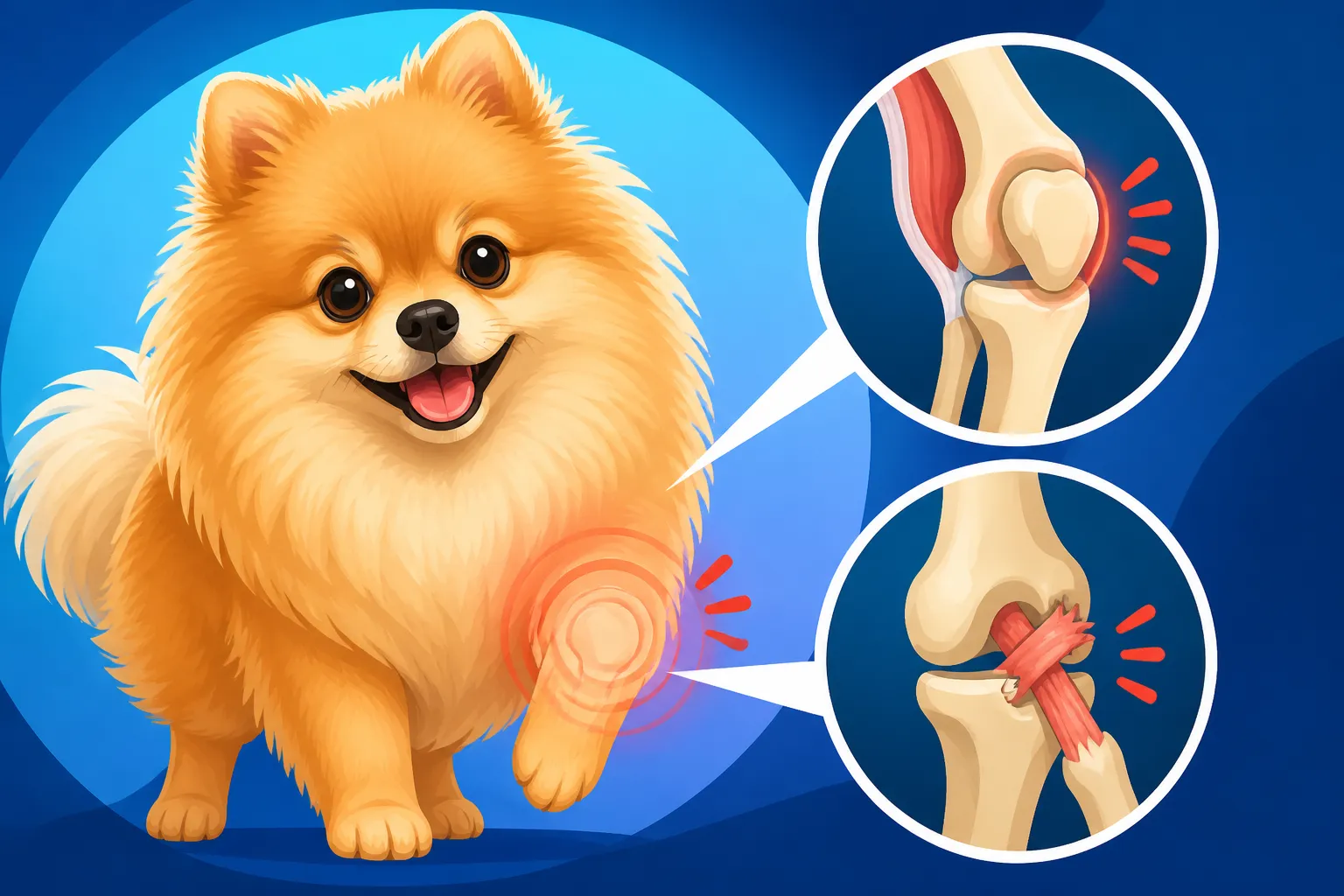
At its core, patellar luxation simply means the kneecap (patella) slips out of its normal groove on the thigh bone (femur). Think of your own kneecap; it sits in a small, shallow valley at the front of your knee. In dogs, especially small ones, that groove can sometimes be too shallow, or the alignment of the leg bones can be a bit off, causing the kneecap to pop out of place. This usually happens towards the inside of the leg (medial luxation), but it can also happen to the outside (lateral luxation).
Veterinarians grade patellar luxation from Grade 1 to Grade 4, giving you a clearer picture of the severity. A Grade 1 might see the kneecap slip out only occasionally and then pop right back in on its own, barely noticeable to you. As it progresses to Grade 2, it slips out more frequently and might need a little help to go back in, causing more obvious skipping. By Grade 3, the kneecap is out more often than it's in, and your dog will likely have a persistent limp. A Grade 4 is the most severe, where the kneecap is permanently dislocated, and the leg often stays bent, making it difficult or impossible for your Pomeranian to bear weight properly. It's a spectrum, and sometimes it can worsen over time.
How Pomeranians Are Prone to Slipping Kneecaps
Pomeranians are genetically predisposed to luxating patellas, which means it’s something they’re often born with, even if the symptoms don't show up until later in life. Their small size and specific bone structure make them particularly vulnerable. The way their hind legs are formed can result in a shallower groove for the patella or an angle that naturally encourages the kneecap to dislocate. This isn't something you did wrong; it's often just part of their genetic makeup.
Beyond genetics, everyday activities can exacerbate the problem. When your Pom jumps off the sofa or leaps off the bed, the sudden impact and twisting motion can put immense stress on their delicate knee joints. This is especially true for Why Jumping Off Furniture Wrecks a Pomeranian's Knees, making seemingly harmless actions a real risk for those tiny legs. Even a seemingly minor fall or an awkward landing during playtime can trigger a patellar luxation or worsen an existing one. It’s why you might notice your Pomeranian showing signs of discomfort or a limp after a burst of zoomies or a particularly enthusiastic greeting.
Recognizing the Signs of Patellar Luxation
Catching the signs early can make a big difference in managing your Pomeranian's comfort and long-term joint health. One of the most classic indicators is the "Pomeranian skip." You might see your dog suddenly pick up one hind leg, hold it up for a few steps, and then put it back down as if nothing happened. That’s often the kneecap popping out and then sliding back into place on its own. It can be quite subtle, especially with a Grade 1 or 2 luxation, but once you know what to look for, it becomes more apparent.
As the condition progresses, the skipping might become more frequent or turn into a persistent limp. Your Pomeranian might show signs of pain, vocalizing when the leg is touched or when they try to move. They might be reluctant to jump, climb stairs, or even walk as much as they used to. You might also notice a decreased range of motion in the affected leg. Sometimes, the luxation can affect both knees, making it even harder for your dog to get around. If you’re seeing any of these signs, it’s always best to get them checked out by your vet. For more detailed information on assessing severity, you can read about Grading Patellar Luxation in a Pomeranian.
Navigating Torn Cruciate Ligaments in Pomeranians
While luxating patellas are common, torn cranial cruciate ligaments are another serious knee injury that can plague Pomeranians, sometimes even alongside patellar luxation, creating a double whammy for their little legs.
What is a Cranial Cruciate Ligament (CCL) Tear?
The cranial cruciate ligament (CCL) is a vital band of tissue inside your Pomeranian's knee joint, connecting the femur (thigh bone) to the tibia (shin bone). Its job is to prevent the tibia from sliding forward excessively relative to the femur and to limit internal rotation of the joint. When this ligament tears, the knee becomes unstable, leading to pain, inflammation, and degenerative joint disease. In people, this is often called an Anterior Cruciate Ligament (ACL) tear.
Unlike the common acute ACL tears seen in human athletes from a sudden injury, CCL tears in dogs, especially small breeds, are frequently the result of a gradual degeneration of the ligament over time. Think of it like a rope slowly fraying until it eventually snaps. This chronic process means that sometimes, the tear isn't a single dramatic event, but rather a slow, painful progression that can worsen over weeks or months. This is why even seemingly minor limping or stiffness should never be ignored.
How a Pomeranian's CCL Can Tear
Pomeranians can tear their CCLs in a couple of ways. An acute tear can happen from a sudden misstep, a fall, or rough play – perhaps twisting their leg awkwardly while jumping or running. Because of their small size, even a routine jump off the sofa could potentially lead to such an injury, especially if their joints are already under stress.
More commonly, however, the CCL tear in Pomeranians, much like in many small breeds, is due to a degenerative process. This means the ligament gradually weakens and frays over time, often without a specific traumatic event. Factors like genetics, obesity, and even the presence of a luxating patella in the same knee can contribute to this degeneration. An unstable kneecap from luxation can alter the biomechanics of the joint, placing abnormal stress on the CCL and making it more susceptible to tearing. This unfortunate combination means that addressing one knee issue can sometimes help prevent the other.
Diagnosing a CCL Tear in a Small Dog
Diagnosing a CCL tear in a Pomeranian can be a bit tricky, especially because of their small size and sometimes stoic nature. Your veterinarian will typically start with a thorough physical examination. They’ll look for swelling in the knee, assess pain levels, and try to feel for instability in the joint. The "cranial drawer test" and "tibial compression test" are two common manipulations vets use to check for abnormal movement in the knee, which indicates a torn ligament. However, in small, tense dogs, these tests can sometimes be difficult to perform accurately without sedation.
X-rays are also a crucial diagnostic tool. While X-rays don't directly show the ligament itself, they can reveal signs of inflammation, fluid buildup in the joint, and the development of arthritis, all of which are consistent with a CCL tear. They can also rule out other potential issues, such as fractures or tumors. Sometimes, more advanced imaging like an MRI might be recommended for a definitive diagnosis, but often, a combination of physical exam findings and X-rays is sufficient to guide treatment, especially if surgery is being considered.
Treatment Options and Management for Knee Issues
Once your Pomeranian has been diagnosed with either a luxating patella or a torn CCL, or sometimes both, it's natural to feel overwhelmed. The good news is there are several effective treatment options available, ranging from conservative approaches to surgical interventions, all aimed at restoring comfort and mobility to your furry friend.
Conservative Management Approaches
For less severe cases of luxating patellas (Grade 1 or some Grade 2s) or very minor partial CCL tears, conservative management might be the first line of defense. This approach focuses on minimizing pain, reducing inflammation, and supporting the joint without surgery. Rest is paramount; limiting strenuous activity, jumping, and running can give the knee a chance to heal and stabilize. This means no more leaping off the couch or sudden bursts of speed in the living room.
Anti-inflammatory medications, both non-steroidal anti-inflammatory drugs (NSAIDs) and sometimes corticosteroids, can be prescribed by your vet to manage pain and reduce swelling. Physical therapy, which might include controlled exercises, massage, and hydrotherapy, can help strengthen the muscles around the joint, improving stability. Weight management is also incredibly important. Even a small amount of excess weight puts additional strain on already compromised joints, making it harder for them to heal and causing more pain. Keeping your Pomeranian at a healthy weight is one of the most impactful things you can do for their joint health. You can explore Whether a Pomeranian Can Live With a Grade Two Knee to understand more about managing less severe cases.
Surgical Interventions for Luxating Patellas and CCL Tears
When conservative methods aren't enough, or if the condition is more severe, surgery becomes the most effective long-term solution. For luxating patellas, several surgical techniques aim to deepen the trochlear groove where the kneecap sits and realign the patellar ligament. This might involve deepening the groove (trochleoplasty), moving the attachment point of the patellar ligament (tibial crest transposition), or tightening/loosening soft tissues around the kneecap to keep it in place. The goal is to create a stable pathway for the patella.
For a torn CCL, the surgery aims to stabilize the knee joint. Common procedures include Tibial Plateau Leveling Osteotomy (TPLO) or Tibial Tuberosity Advancement (TTA), which involve cutting and repositioning parts of the tibia to change the biomechanics of the knee, making the torn ligament less critical. Another option is the lateral fabellar suture technique (extracapsular repair), where a strong suture material is used outside the joint to mimic the function of the torn ligament. The choice of surgery depends on your dog's size, age, and the extent of the damage, and your veterinary surgeon will discuss the best option for your Pomeranian. It's worth considering pet insurance, like a plan from Healthy Paws, which can help cover a significant portion of these potentially expensive procedures.
Post-Surgery Care and Rehabilitation
Surgery is only half the battle; the recovery and rehabilitation period are just as critical for a successful outcome. After surgery, your Pomeranian will need strict rest and activity restrictions for several weeks, often confined to a crate or small, safe area to prevent re-injury. Pain management is crucial during this time, and your vet will prescribe appropriate medications to keep your dog comfortable. Keeping them calm and still, especially a high-energy Pom, can be challenging but is absolutely necessary.
Physical therapy often begins a few days or weeks post-op and gradually increases in intensity. This might include passive range of motion exercises, controlled leash walks, balance exercises, and eventually more active movements. A certified canine rehabilitation therapist can guide you through this process, which is vital for rebuilding muscle strength, improving joint flexibility, and restoring normal function. This dedicated recovery period can last several months, but with diligence, most Pomeranians make excellent recoveries. For a deeper dive into what to expect during this phase, check out Recovery After a Pomeranian's Knee Surgery. When planning for these rehabilitation costs, services from providers like Healthy Paws can be a real lifeline.
Prevention and Long-Term Care for Your Pomeranian's Knees
While some orthopedic issues are genetic and can't be entirely prevented, there's a lot you can do as a dedicated Pomeranian parent to minimize risks and provide the best possible long-term care for their precious joints. Proactive measures can save your Pom from discomfort and potentially costly veterinary bills down the line.
Lifestyle Adjustments to Protect Joints
One of the most important things you can do is modify your home environment to be joint-friendly. For a tiny Pomeranian, even a small jump can put disproportionate stress on their knees. Invest in ramps or steps for furniture that your Pom frequently jumps on and off, like beds and sofas. This simple change can drastically reduce impact on their joints. You can find excellent advice on this in Ramps for a Pomeranian That Jumps Off the Sofa.
Avoid activities that involve high-impact jumps or quick, twisting movements, especially on slippery surfaces. Consider using rugs or runners on hardwood floors to provide better traction and prevent slips. Supervise playtime, especially with larger dogs, to ensure your Pomeranian isn't accidentally injured during roughhousing. Leash walks are great, but avoid overly long or strenuous hikes that could overtax their small joints.
Nutritional Support and Supplements
Maintaining an ideal body weight is perhaps the single most impactful nutritional strategy. Even an extra pound can significantly increase the load on your Pomeranian's knees, accelerating arthritis and exacerbating existing conditions. Talk to your vet about the best diet for your Pom's specific needs, focusing on high-quality, balanced nutrition appropriate for their activity level.
Beyond diet, joint supplements can play a supportive role. Ingredients like glucosamine, chondroitin, and omega-3 fatty acids are commonly recommended for their anti-inflammatory and cartilage-supporting properties. While not a cure, they can help slow the progression of arthritis and improve joint comfort. Always discuss any supplements with your veterinarian before adding them to your Pomeranian's regimen to ensure they're appropriate and properly dosed. For more information, read Whether Joint Support Helps a Pomeranian's Knees. This is another area where pet insurance, like a comprehensive plan from Healthy Paws, can sometimes help offset the costs of long-term supportive care.
Regular Vet Check-ups and Early Detection
Routine veterinary check-ups are vital for early detection and intervention. Your vet can perform physical examinations to assess joint health, identify any subtle signs of luxating patellas or early arthritis, and monitor your Pomeranian's overall condition. Catching these issues early can often lead to more effective and less invasive treatment options.
Don't wait until your Pomeranian is overtly limping or in obvious pain to seek veterinary attention. Subtle changes in gait, reluctance to perform certain movements, or even just a general decrease in activity level can be early indicators of joint discomfort. Regular veterinary care, along with your observant eye, forms the best defense against progression of these conditions, helping your Pomeranian lead a happy, active life for as long as possible. Pet insurance is a smart consideration, and Insuring a Pomeranian Before Its Knees Slip can highlight how beneficial it is to have coverage in place before conditions like these manifest or are officially diagnosed.
Comparison of Knee Conditions in Pomeranians
Here's a quick overview to help distinguish between luxating patellas and CCL tears:
| Feature | Luxating Patella (LP) | Cranial Cruciate Ligament (CCL) Tear |
|---|---|---|
| Affected Joint Part | Kneecap (patella) and its groove on the femur | Ligament connecting femur to tibia inside the knee |
| Common Cause | Genetic predisposition, shallow groove, misalignment | Degeneration over time, acute injury, exacerbated by LP |
| Typical Onset | Often seen in puppies/young adults | Can occur at any age, often middle-aged or older |
| Common Symptoms | "Skipping" gait, intermittent limping, holding leg up | Persistent lameness, toe-touching, swelling, reluctance to bear weight |
| Pain Level | Variable, from mild discomfort to acute pain | Often significant pain, especially with acute tears |
| Long-Term Risk | Cartilage wear, arthritis, can predispose to CCL tear | Rapid arthritis development, chronic instability |
| Primary Goal of Surgery | Stabilize kneecap in its groove | Stabilize the knee joint to prevent tibia from sliding forward |
Disclaimer
The information provided in this article is for educational purposes only and is not a substitute for professional veterinary advice. Always consult with a qualified veterinarian for any health concerns or before making any decisions about your pet's medical care.