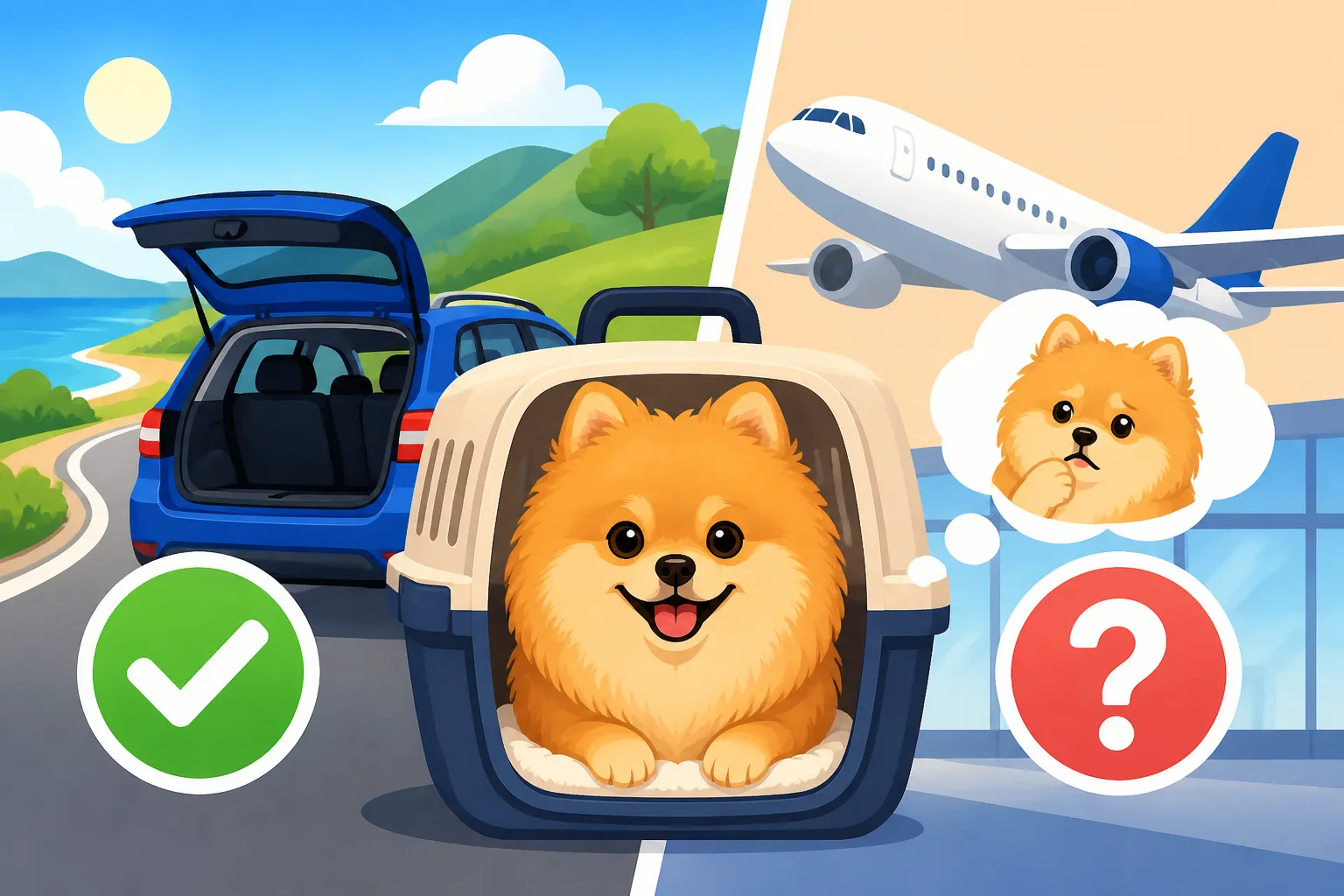
Whether a Pomeranian Travels Well
A Pomeranian can travel happily, but a small body does not automatically make every trip easy. Car noise, busy terminals, unfamiliar rooms, heat, and long stretches in a carrier can be a lot for a toy-sized dog. This guide explains how to judge whether your Pom is a good travel companion and how to make car rides, flights, and overnight stays safer and less stressful.
What Makes a Pomeranian a Good or Difficult Travel Companion
Personality matters more than size
Some Pomeranians settle into a carrier and snooze through a drive. Others bark at every passing truck, tremble in a new room, or struggle when separated from their person. A confident, curious dog may enjoy the changing sights and smells of travel, while a dog that startles easily may find even a short journey overwhelming.
Think about how your dog handles ordinary changes at home. Does your Pom relax when visitors arrive, or spend the evening on high alert? Can they nap in a pen while you move around, or do they follow you from room to room? Travel tends to magnify familiar habits: a dog that is already comfortable settling independently is often easier to take along than one who becomes distressed whenever routines change. Building a Pomeranian's Independence has more ideas for practicing that skill before a trip.
A Pomeranian’s vocal nature can also make travel more complicated. A dog that barks at hallway sounds may have a hard time settling in a hotel room or waiting area, where doors, footsteps, carts, and voices are constant. Try a few short practice outings before booking a long trip. A quiet visit to a friend’s home or a brief ride to a calm park can show you how your dog responds without the pressure of a tight schedule.
Physical comfort needs a little extra attention
Pomeranians are small enough to be vulnerable to rough handling, accidental knocks, and gaps they could slip through. Their compact size makes it tempting to carry them everywhere, but a dog that is always carried may have little experience walking through unfamiliar places. Use a properly fitted harness and keep your Pom securely under control when they are out of the carrier. If your dog wriggles or backs out of gear, practice fitting and wearing it at home first. Fitting a Harness on a Pomeranian That Backs Out covers ways to work on that safely.
Breathing and mobility also matter. Some Pomeranians have airway or knee problems that can affect how far they can comfortably walk, how they handle excitement, or what type of restraint is appropriate. If your dog has a persistent cough, noisy breathing, a limp, or another ongoing health concern, ask your veterinarian whether travel is sensible and what precautions to take. A The Honking Cough of a Pomeranian's Collapsing Windpipe can help explain why breathing symptoms deserve attention, but a veterinarian should assess your individual dog.
A trip that suits a healthy adult Pom may be too demanding for a very young puppy, a frail senior, or a dog recovering from illness or surgery. Consider the whole itinerary, not just the time spent moving. A flight with a long drive to the airport, an extended wait, and a late-night arrival may be much harder than a direct car trip with planned rest stops.
Preparing Your Pomeranian for Car Travel and Flights
Make the carrier familiar before departure
A carrier should feel like a predictable resting place, not a container that appears only when something stressful is about to happen. Leave it open at home with familiar bedding inside. Drop in treats, offer meals nearby, and let your Pom investigate without being pushed inside. Once your dog goes in willingly, practice closing the door for a few seconds, then gradually build up to longer calm periods.
Next, take short trips that end somewhere pleasant. Start with sitting in a parked car, then try a brief ride around the block. Keep the carrier stable and secure, and avoid letting your dog roam loose in the car. A loose dog can distract the driver and may be injured if the vehicle stops suddenly. If the carrier is secured with a seat belt or another restraint, follow its instructions and make sure it does not slide around. For a deeper look at choosing a travel setup, see Carriers and Slings for a Pomeranian.
If your dog panics, drools heavily, vomits, or cannot settle, do not assume they will simply “get used to it” on a long journey. Return to shorter practice sessions and ask your veterinarian for guidance if the reaction continues. Medication or other support may be appropriate for some dogs, but a veterinarian should help decide what is safe. Never give a human medication or a calming product without checking first.
Check flight rules and the full airport routine
Flying requires more planning than driving because each airline sets its own requirements for pets, carriers, booking, and cabin travel. Rules can differ by route and may change, so check directly with the airline before buying a ticket. Confirm whether your Pomeranian can travel in the cabin, what carrier dimensions are accepted, where the carrier must fit, and what documents or advance arrangements are required. Airline Rules for Flying a Pomeranian in Cabin is a useful place to start, but the airline’s own instructions should guide your final plan.
Measure your dog and carrier carefully rather than relying on a product label that says “small.” Your Pom needs to fit comfortably within the carrier and be able to move into a natural resting position. A carrier that is technically compact but cramped may make a long wait miserable. Some owners compare options at retailers such as Chewy, but it is worth checking the airline’s specifications before ordering anything. A carrier that works for a car ride may not meet flight requirements.
Think through the airport experience, too. Arrive with enough time to handle check-in and security without rushing, and ask the airline how pets are screened. Keep your dog secured according to the instructions you receive; a frightened Pom can slip away quickly in a busy terminal. Pack familiar bedding, waste bags, a small amount of food, and any medication your veterinarian has recommended. Avoid feeding an unusually large meal immediately before travel if your dog tends to get carsick, but ask your veterinarian for advice about meal timing and hydration for your specific itinerary.
Keeping Your Pom Comfortable Away From Home
Build in breaks, food, water, and quiet time
For a car trip, plan safe stops where your dog can drink, stretch, and toilet without being exposed to traffic or loose dogs. Keep your Pom on a leash or in a secure enclosed area; do not open a car door and assume a small dog will stay close. A harness and light lead are useful for controlled breaks, but check that the fit is secure before you set out.
Keep the routine as familiar as you can. Bring your dog’s usual food, bowls, bedding, and a few well-loved toys. Sudden changes in diet, treats, or feeding times can upset a small dog’s stomach, so this is not the ideal moment to introduce a new food. Chewy can be one place owners use to arrange familiar supplies before leaving, but the key is packing what your Pom already tolerates rather than experimenting on the road.
At your destination, let your dog explore one quiet area first. A hotel room or relative’s house can be full of unfamiliar scents, open doors, and tempting hiding places. Check for hazards such as balconies, gaps behind furniture, cleaning products, and foods within reach. Keep a familiar bed or blanket in a low-traffic spot and give your Pom time to decompress before introducing visitors or taking a long walk.
Plan for noise, temperature, and overnight stays
Travel environments can be noisy and unpredictable. If your Pom reacts strongly to footsteps, elevators, or voices in a hallway, ask for a quieter room when possible and use a familiar settling routine. A chew or food puzzle can help occupy a dog that is comfortable eating in a new place, though it should be sized safely and supervised. If constant sound is especially difficult for your dog, Whether a Pomeranian Copes With Constant Noise may help you think through what to practice beforehand.
Temperature deserves close attention. A carrier can warm up quickly, and a small dog may have limited room to move away from a hot or cold spot. Never leave your Pomeranian unattended in a parked car, even if you plan to be gone only briefly. During hot weather, keep the journey cool and avoid strenuous walks in the hottest part of the day. In cold weather, make sure your dog is warm enough during outdoor breaks without allowing clothing to restrict movement or breathing.
For an overnight stay, keep the first evening calm. Offer a toilet break, water, and a familiar place to rest, then give your dog a chance to settle before expecting a full night’s sleep. If your Pom is used to a crate or pen at home, bringing a familiar setup may help. A dog who has never practiced being contained may find a new room and a closed carrier especially upsetting, so rehearsing calm settling at home can pay off. Getting a Pomeranian to Settle in a Sling offers related practice ideas for helping a Pom feel secure while being carried.
Choosing the Right Kind of Trip for Your Pomeranian
Compare the travel options honestly
No single travel method is best for every Pomeranian. Car travel gives you more control over breaks and temperature, while flying may be quicker for some routes but involves airport noise, rules, and less flexibility. Leaving your dog with a trusted sitter may be kinder than taking them along if the trip is long, crowded, or incompatible with their health and temperament.
| Travel option | What may suit a Pomeranian | Main challenge to plan for |
|---|---|---|
| Car | Flexible breaks and control over the route | Secure restraint, motion sickness, and safe rest stops |
| Cabin flight | May reduce separation from the owner when permitted | Airline rules, carrier fit, airport stress, and limited flexibility |
| Train or bus | Can work on routes that allow pets | Operator rules, crowds, noise, and limited space |
| Staying with a sitter | Familiar care without the journey | Finding someone your dog trusts and preparing a clear routine |
The best option depends on your dog’s response, not on the idea that all small dogs travel easily. If your Pom relaxes in a car but struggles in crowded places, a road trip with a quiet destination may be a better fit than flying. If they become distressed when confined, several hours in a carrier may be unfair even if the carrier meets every requirement.
A sitter is not a failure or a lesser choice. For a dog that is elderly, medically fragile, highly anxious, or easily overwhelmed, staying in a familiar home with a dependable caregiver may be more comfortable. Arrange a trial visit or short stay before a longer absence, and share feeding instructions, medication details, emergency contacts, and your veterinarian’s information. Leaving a Pomeranian With a Sitter can help you prepare for that handoff.
Use a simple readiness checklist
Before committing to a trip, ask yourself whether your Pom can rest in a carrier, tolerate the type of movement involved, and recover after a new experience. Consider whether they can walk safely on leash, accept handling, and settle in a room that is not their own. You do not need a perfectly trained dog, but a little preparation can prevent a manageable trip from turning into a stressful scramble.
Use this checklist as a practical starting point:
- Talk with your veterinarian if your dog has breathing problems, heart disease, joint pain, motion sickness, recent surgery, or a medication routine.
- Check the carrier and restraint for a comfortable fit, secure closures, and suitability for the specific transport method.
- Practice in small steps with short sessions at home, then brief journeys and visits to new places.
- Confirm travel rules directly with the airline, carrier, hotel, or transport operator.
- Pack familiar supplies such as food, water, bowls, bedding, leash, harness, waste bags, and required medications.
- Make a backup plan in case your dog becomes unwell, the schedule changes, or the trip proves too stressful.
A Pomeranian that has not traveled before may need several low-pressure practice outings before a longer trip. Watch the dog in front of you: a relaxed body, willingness to take treats, and ability to rest are encouraging signs. Persistent trembling, frantic escape attempts, repeated vomiting, or breathing difficulty are reasons to pause and seek appropriate help rather than pushing through.
Chewy and other pet retailers may make it convenient to gather travel basics, but supplies cannot replace practice, careful supervision, or veterinary advice when a health issue is involved. The most successful trips are usually the ones planned around the dog’s actual limits, with enough flexibility to change course if needed. For some Pomeranians, that means becoming a cheerful road-trip companion. For others, it means enjoying a calm stay at home while their person travels.
Disclaimer
This article is for general informational purposes only and does not constitute professional advice. Laws, prices and regulations vary by location and change over time. Consult a qualified professional for guidance on your specific situation.