The Tail a Pomeranian Carries Over Its Back
That magnificent plume waving proudly over your Pomeranian's back isn't just a pretty accessory; it's a defining characteristic of the breed, a crucial communication tool, and sometimes, a little bit of a grooming challenge! This guide will dive deep into everything there is to know about your Pom's iconic tail, from its anatomical design to daily care and what it tells you about your tiny companion's mood.
The Iconic "Plume" and Why It's So Distinctive
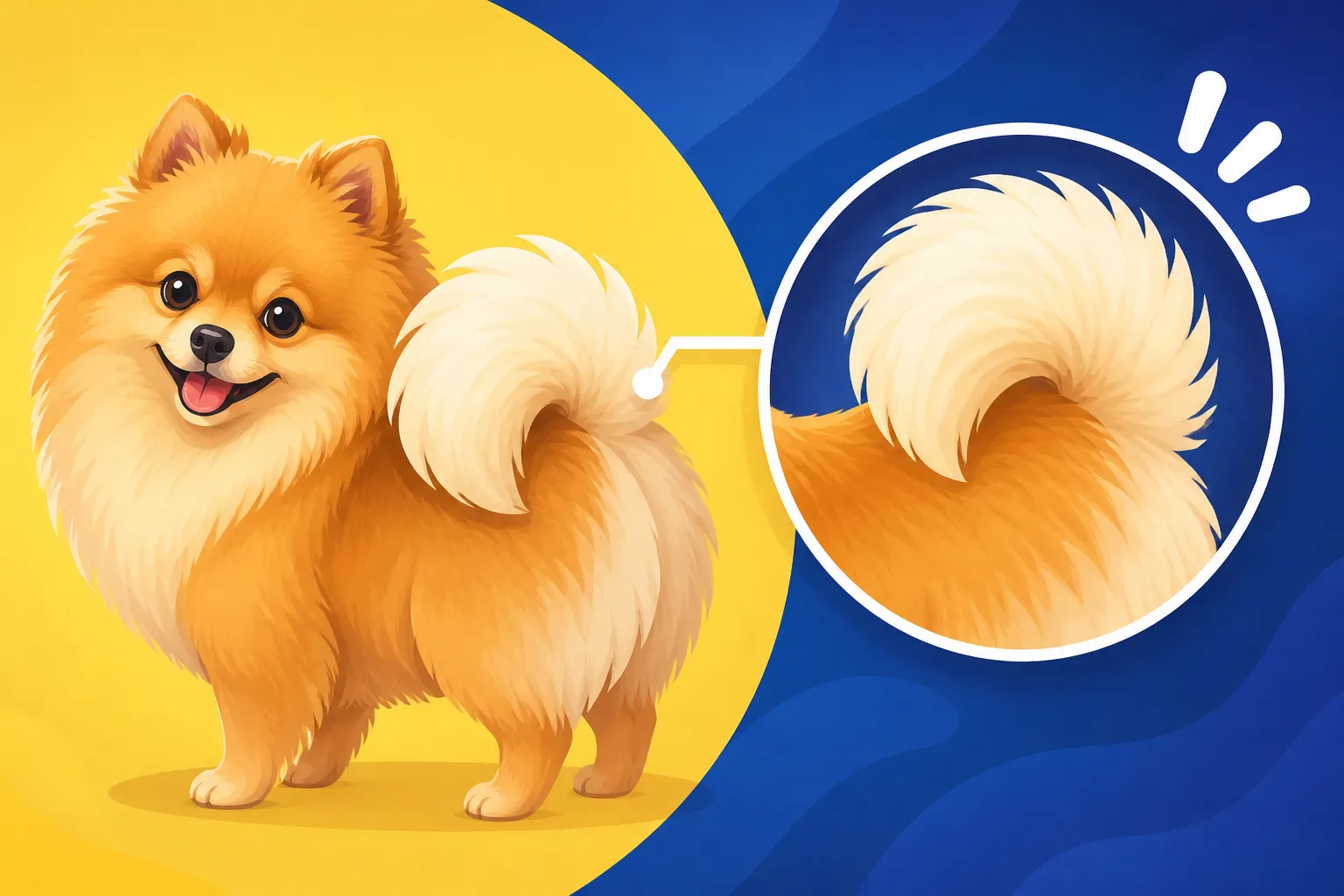
When you picture a Pomeranian, one of the first things that often comes to mind is that glorious, high-set tail, fanned out like a fluffy question mark resting on their back. It’s undeniably one of their most striking features, contributing immensely to their overall silhouette and charming appeal. This isn't just any dog tail; it's a signature aspect of the breed that sets them apart.
What Makes a Pomeranian Tail Unique?
A Pomeranian's tail is unique for several reasons, primarily its carriage, shape, and the luxurious coat that adorns it. Unlike many breeds where the tail hangs down or is carried straight out, a Pom's tail is high-set, meaning it originates from a point well up on their rump. From there, it typically curls or arches forward, lying flat and straight over their back. This isn't a tight, spiraled curl like some spitz breeds, but more of a gentle sweep.
The true magic, however, lies in its lavish plume. The tail itself is covered in long, abundant hair that spreads out, creating that characteristic fan or plume effect. This dense, flowing hair makes the tail appear much larger and more substantial than the bony structure beneath. It’s part of their double coat, with both the harsh guard hairs and soft undercoat contributing to its impressive volume.
The Importance of the Tail in Breed Standard
For those interested in the intricacies of the breed, the tail is a significant element within the Pomeranian breed standard. Judges in conformation shows pay close attention to its placement, carriage, and overall appearance. The standard calls for a tail that is "set high and lies flat and straight on the back." It should ideally reach to or beyond the head in its arch, completing the compact, balanced look of the dog. Any deviation from this ideal can be considered a fault.
A low-set tail, for instance, or one that hangs limply, is not desired. Similarly, a tail that "flags" or flops over to one side rather than lying centrally on the back is also a departure from the perfect presentation. The abundant plumed hair should also be well-distributed, giving a full, luxurious appearance without gaps or sparse areas. This attention to detail in the tail carriage and coat quality ensures that Poms maintain their distinctive and elegant profile across generations.
The Structure Behind the Fluff: Anatomy and Function
While we often marvel at the fluffy spectacle of a Pomeranian's tail, there's a practical and fascinating anatomical structure underneath all that hair. Understanding this foundation helps us appreciate why the tail behaves the way it does and why its health is important, not just for aesthetics but for your dog's overall well-being. It's much more than just a decoration.
The Skeletal and Muscular Foundation
Beneath the thick double coat, your Pomeranian's tail is a continuation of their spine, composed of a series of small bones called caudal vertebrae. These bones decrease in size towards the tip of the tail. The number of vertebrae can vary slightly from dog to dog, but they are designed to be flexible, allowing for a wide range of motion. Ligaments connect these bones, providing stability, while a complex network of muscles allows your Pom to lift, wag, tuck, and curl their tail with incredible precision.
These muscles are surprisingly strong, enabling the tail to maintain its characteristic high-set, arched position over the back for extended periods. It's a natural, comfortable posture for them. The tail also contains nerves and blood vessels, making it a sensitive part of their body. This means that even a minor injury to the tail can be painful and impact your dog's ability to communicate or move comfortably.
Beyond Beauty: The Tail's Role in Communication
While beautiful, the Pomeranian's tail isn't just for show; it's a crucial part of their communication toolkit. Dogs use their tails to express a vast array of emotions and intentions, and Poms are no exception, even with their tail resting on their back. A high-set, loosely wagging tail typically signals happiness, excitement, or a friendly greeting. When your Pom greets you with a rapid, full-body wag, it's a clear sign of joy and affection.
Conversely, a stiff, slightly raised tail, with only the tip wagging, might indicate curiosity or alertness to something new in their environment. If a Pomeranian's tail is held rigidly, especially without much movement, it could suggest tension, anxiety, or even aggression, particularly if combined with other body language cues like tense muscles or direct eye contact. While a truly tucked tail is less common in Poms due to their natural carriage, a tail held tighter to the back than usual or lowered slightly can still signal submission or fear. Paying attention to these subtle shifts can give you invaluable insight into your dog's emotional state.
Common Tail Issues and Concerns for Pomeranian Owners
As lovely as a Pomeranian's plumed tail is, it can also be a source of specific issues for owners. From frustrating tangles to potential injuries, understanding these common concerns can help you proactively care for your Pom and ensure their tail remains a healthy, happy asset. It's not just a set-it-and-forget-it feature; it requires mindful attention.
Matting and Grooming Challenges
The luxuriant, long hair on a Pomeranian's tail, while gorgeous, is highly prone to matting. Because the tail lies flat against the back, the hair around its base and where it touches the rump can easily become compressed and tangled. This is especially true if your Pom isn't brushed regularly, if they get wet and aren't thoroughly dried, or if they rub against surfaces. Mats can also form due to static electricity, which can be a bigger issue during dry winter months. These mats aren't just unsightly; they can be incredibly painful, pulling on the skin, causing irritation, and even leading to skin infections if moisture gets trapped underneath.
Preventing mats requires consistent effort. Working a Pomeranian's Coat in Sections to the Skin is a fundamental technique you'll need to master, and the tail is no exception. Gently lifting the tail hair and brushing it from the skin outwards, rather than just skimming the surface, is key. Many owners find that the underside of the tail, where it meets the back, is a particular hotspot for tangles. Regular brushing with a good quality slicker brush and a metal comb, perhaps from a brand like Chewy, is essential to keep the plume free of knots and looking its best.
Injuries and Health Considerations
Despite its fluffy appearance, a Pomeranian's tail is still a vulnerable part of their body. One lesser-known issue, though more commonly associated with larger breeds, is "happy tail" syndrome. While Poms typically carry their tails curled over their back, a highly exuberant dog can still wag their tail so vigorously that it repeatedly strikes a hard surface, leading to cuts, abrasions, or even fractures. Imagine a tiny, enthusiastic wagging machine hitting the edge of a coffee table multiple times a day! This can be painful and slow to heal due to the constant movement.
More serious injuries can occur if the tail gets caught in a door, stepped on, or even twisted during rough play. A tail fracture can be extremely painful and might require veterinary intervention. Beyond physical trauma, skin issues under the tail can also arise. If the hair around the anus isn't kept clean, especially after bathroom breaks, stool can get caught in the long tail hair, leading to skin irritation, infections, or even blockages of the anal glands. This is why Sanitary Trimming on a Pomeranian is not just about cleanliness but also about preventing health issues.
Deviations from the Ideal Tail Set
Sometimes, a Pomeranian's tail might not conform to the breed standard, which can be a concern for owners who are breeding or showing their dogs, but also sometimes indicates underlying issues. As mentioned, the ideal is a high-set tail that lies flat and straight over the back. A low-set tail, where the tail appears to originate lower on the rump, can sometimes be a structural fault. This might not cause physical discomfort but changes the dog's overall appearance.
A "flagging" tail, which falls to one side or doesn't lie symmetrically over the back, is another common deviation. This could be due to muscle weakness, a slight skeletal abnormality, or even just a habit the dog has developed. While these deviations are primarily cosmetic from a show perspective, in rare cases, an unusual tail carriage could indicate discomfort in the lower back or hips, especially if it's a new development or accompanied by other signs of pain or stiffness. Always consult your veterinarian if you notice any sudden changes in your Pomeranian's tail carriage or if they appear to be in pain.
Grooming and Care for a Magnificent Pomeranian Tail
Maintaining that spectacular plumed tail requires dedication and the right techniques. It's not a once-a-month job; consistent care is the secret to keeping it healthy, mat-free, and as beautiful as it can be. Think of it as caring for a precious, fluffy fan that's constantly on display.
Daily Brushing and Detangling Routine
The tail is one of the areas of a Pomeranian's coat that demands the most attention due to its density and high-traffic position. You should aim to brush your Pomeranian's tail daily, or at the very least, every other day. Begin by gently misting the tail hair with a conditioning spray to minimize breakage and static, which can contribute to matting. Then, using a high-quality The Slicker and Pin Brush a Pomeranian Needs, carefully brush through the tail in small sections, working from the tip towards the base.
It's crucial to reach all the way down to the skin to ensure you're removing any loose undercoat and preventing mats from forming deep within the hair. Many owners find it easiest to gently lift the tail away from the back to get at the hair underneath. After the slicker brush, follow up with a metal comb to check for any missed tangles, especially where the tail meets the rump – a notorious spot for mats. If you encounter a mat, never pull. Instead, use a mat splitter or carefully work it apart with your fingers and the very tip of your comb, applying more conditioning spray as needed. This meticulous approach will save you from bigger, more painful matting issues down the line. It's a key part of The Routine a Pomeranian Needs Every Day.
Bathing and Drying the Tail
When it's bath time for your Pomeranian, pay special attention to their tail. Ensure you thoroughly wet the dense hair, using a gentle, dog-specific shampoo. Work the shampoo through the entire plume, making sure to rinse every strand completely. Residual shampoo can irritate the skin and even attract dirt, making mats form faster. Follow with a good quality conditioner, letting it sit for a few minutes before rinsing thoroughly. This helps to soften the hair and make it more manageable for brushing.
The drying process is just as critical, if not more so, for the tail than any other part of the body. Allowing the tail to air dry, or even partially air dry, is an open invitation for mats to form, especially at the base. You'll need to use a pet-specific force dryer or a human blow dryer on a cool or low heat setting. Drying a Pomeranian Without Damaging the Coat involves using the dryer while simultaneously brushing the tail hair upwards and outwards with a slicker brush. This technique helps to fluff out the coat, giving it that characteristic full, stand-off appearance, and ensures every layer of the double coat is completely dry.
Professional Grooming vs. At-Home Care
Many Pomeranian owners choose to take their Poms to a professional groomer regularly, and for good reason. Groomers have specialized equipment, like high-velocity dryers, and expertise in handling dense double coats. They can provide a thorough bath, blow-out, and trim, ensuring the tail looks its absolute best. A professional groomer will also be adept at identifying and safely removing any stubborn mats that you might have missed or couldn't tackle at home. They can also perform necessary Sanitary Trimming on a Pomeranian to keep the area clean and prevent issues.
However, even with regular professional grooming, daily at-home care of the tail is indispensable. The sheer density of a Pomeranian's coat means mats can form quickly, sometimes in a matter of days. Relying solely on professional grooming appointments, typically scheduled every 4-8 weeks, will likely lead to significant matting between visits, especially on the tail. Think of professional grooming as a deep clean and trim, and your home care as daily maintenance. Investing in good grooming tools from a place like Chewy and committing to a routine of brushing, especially for that beautiful tail, will save you money, stress, and your Pom a lot of discomfort. Without this consistency, you might find that The Grooming Bill Nobody Warns a Pomeranian Owner About quickly adds up when professional groomers have to spend extra time dematting.
| Tail Characteristic | Ideal Pomeranian Tail (Breed Standard) | Common Faults/Issues |
|---|---|---|
| Set | High-set, originating well up on the rump | Low-set, appearing to start too far down the back |
| Carriage | Lies flat and straight over the back; forms a curve | Flags (falls to one side), hangs limply, or is tucked |
| Length | Reaches or goes beyond the head when curled over the back | Too short, not completing the balanced silhouette |
| Plume | Lavishly plumed with abundant, long hair; forms a fan | Sparse, thin hair; uneven distribution of coat |
| Condition | Clean, mat-free, healthy skin underneath | Matted, tangled, skin irritation, "happy tail" injuries |
| Movement | Carried with confidence, expressive in communication | Held stiffly, tucked (indicating fear/submission), or limp |
Myths and Misconceptions About the Pomeranian Tail
Like many distinctive breed features, the Pomeranian's tail is often the subject of various myths and misunderstandings. Clearing up these inaccuracies can help new owners better understand their dog and appreciate the true nature of this charming characteristic. Let's debunk a few common misconceptions.
"Poms Have Curly Tails"
One common misconception is that Pomeranians have tightly curled tails, similar to some other Spitz breeds like the Akita or Shiba Inu. While their tail does curve or arch over their back, it's not a tight, corkscrew curl. The breed standard specifically describes it as lying "flat and straight on the back," forming a gentle sweep or curve, often described as a "plume" or "fan." The hair itself is straight or slightly wavy, and it's the high set and the way it drapes over the back that creates the distinctive silhouette, not a tight curl in the bone structure of the tail itself.
If a Pomeranian's tail does appear to have a very tight, coiled curl, it might be a deviation from the ideal breed type, or perhaps there's another breed mixed in its lineage. The characteristic look comes from the abundant, long, straight hair of The Stand Off Coat a Pomeranian Must Have fanning out beautifully, not from a naturally tight curl in the tail's anatomy. Understanding this distinction helps in appreciating the nuanced beauty of the true Pomeranian tail.
Tail Carriage as a Sign of Purebred Status
It's easy to assume that a Pomeranian with a less-than-perfect tail carriage isn't purebred, but this isn't necessarily true. While the ideal high-set, flat-lying plume is a hallmark of the breed standard, not every purebred Pomeranian will meet every single criterion. Just like humans, dogs within a breed can have variations in their physical traits due to genetics, even if both parents are purebred. A "faulty" tail, such as one that flags to the side, is merely a deviation from the show ring ideal and doesn't automatically mean your dog is a mix.
Many wonderful, healthy, and happy purebred Pomeranians have tails that don't perfectly conform to the standard. These dogs are just as much Poms and make fantastic companions. The tail carriage is a specific detail important for conformation showing, but it doesn't define the dog's breed identity or its ability to be a loving family member. What truly indicates purebred status are verifiable pedigrees and registration papers, not just a visual assessment of a single feature.
Does Tail Docking Occur in Pomeranians?
A significant misconception, possibly stemming from the practice in other breeds, is that Pomeranians have their tails docked. This is absolutely not true for the Pomeranian breed. Tail docking is the surgical removal of part or all of a dog's tail, usually performed on puppies shortly after birth, and is traditional for breeds like Rottweilers, Boxers, or certain terriers. However, it is not, and never has been, part of the Pomeranian breed standard or practice.
The Pomeranian's magnificent, plumed tail is one of its defining characteristics, and it is naturally long and carried high over the back. Docking a Pomeranian's tail would completely alter its breed-specific appearance and is considered mutilation within the breed community. If you ever encounter a Pomeranian with a docked tail, it would be an anomaly, possibly due to an injury requiring amputation or an unfortunate mistake by someone unfamiliar with the breed. Reputable breeders would never dock a Pomeranian's tail.
Disclaimer
This article is for general informational purposes only and does not constitute professional advice. Laws, prices and regulations vary by location and change over time. Consult a qualified professional for guidance on your specific situation.