Sanitary Trimming on a Pomeranian
It’s a frustration many Pomeranian owners know well: you love your fluffy companion, but that glorious double coat can sometimes lead to some rather unsanitary situations, especially around their private areas. Fur can quickly become matted with waste, stained with urine, or simply make daily hygiene a challenge for your little one. This comprehensive guide will walk you through the ins and outs of performing a sanitary trim on your Pomeranian, ensuring they stay clean, comfortable, and free from irritation.
Understanding the Importance of Sanitary Trims for Your Pomeranian
For such a small dog, Pomeranians come with an incredible amount of coat. While beautiful, this dense fur, particularly around their rear and belly, can become a magnet for trouble. Sanitary trims aren't about altering your Pomeranian's breed standard look; they're about essential health and comfort.
More Than Just Aesthetics: Health and Hygiene Benefits
Imagine trying to go about your day with a permanent tangle of fur around your most sensitive areas. That’s often the reality for a Pomeranian whose sanitary regions aren’t regularly maintained. Long fur around the anus can easily trap fecal matter, leading to uncomfortable mats that pull on the skin, cause irritation, and even open the door for bacterial infections. These mats can be incredibly painful, making defecation difficult and causing your Pom unnecessary distress.
Similarly, excess hair around the genitals, particularly for males, can become saturated with urine, leading to staining, a persistent odor, and skin scalding or dermatitis. For females, longer fur around the vulva can also trap urine, leading to similar hygiene issues. Regular sanitary trims minimize these risks by removing the fur that attracts and holds waste, making it much easier for your Pomeranian to keep themselves clean and significantly reducing the chance of skin problems. Beyond direct hygiene, maintaining this area can also help you monitor your Pomeranian for issues like anal gland problems, which are common in small breeds. If the fur is constantly matted, it's easy to miss early signs of swelling or discomfort that might indicate an issue with their anal glands, an area we cover in more detail in Whether a Pomeranian Needs Its Glands Expressed.
The Double Coat Challenge: Why Poms Need This Specific Attention
A Pomeranian's coat isn't just one layer; it’s a magnificent double coat composed of a soft, dense undercoat and longer, harsher guard hairs. This combination is designed to protect them from the elements, but it also creates a unique challenge when it comes to hygiene. The undercoat can quickly absorb moisture and become incredibly dense, while the guard hairs can easily tangle.
Around the sanitary area, this means that even a small amount of liquid or solid waste can get deeply embedded in the fur. Once wet or soiled, the dense undercoat becomes a perfect breeding ground for bacteria, and it can mat tightly, often right against the skin. These mats are not only difficult to remove without causing pain but also prevent air circulation, further exacerbating skin issues. Trying to clean a heavily soiled area on a double-coated dog without a proper trim is often an uphill battle, as the fur simply doesn't allow for thorough cleansing. It's not just about preventing new messes, but also about making it feasible to properly brush and clean the areas that are prone to becoming dirty, especially after those inevitable bathroom breaks.
Essential Tools for a Safe and Effective Sanitary Trim
Before you even think about picking up shears, it's crucial to have the right tools. Using inappropriate equipment can lead to a frustrating experience for both you and your Pomeranian, or worse, accidental injury. Think of it like a surgeon preparing their operating theater – a calm environment and the correct instruments are paramount. When gathering your supplies, you might find a good selection available on sites like Amazon or Chewy, offering various brands and price points to suit your needs.
Clippers and Scissors: Choosing the Right Blades and Size
When it comes to the actual trimming, you'll generally choose between electric clippers and blunt-nosed scissors, or often a combination of both.
Electric Clippers: For most owners, a small, quiet set of electric clippers designed for pet grooming is the safest and most efficient choice for the bulk of the sanitary trim. Look for clippers that are cordless, operate quietly, and have a fine-toothed blade. A #10 or #15 blade is often recommended for sanitary areas, as it leaves the hair very short but not skin-tight, which can prevent irritation. The quiet operation is crucial because many Pomeranians are sensitive to noise, and a loud buzzing can cause undue stress and fear, making them squirm and increasing the risk of nicks. Using clippers allows for a more even and consistently short trim, which is harder to achieve with scissors alone, especially in thick double coats. Always ensure the blades are clean, sharp, and cool before you start, as dull or hot blades can pull hair and burn the skin.
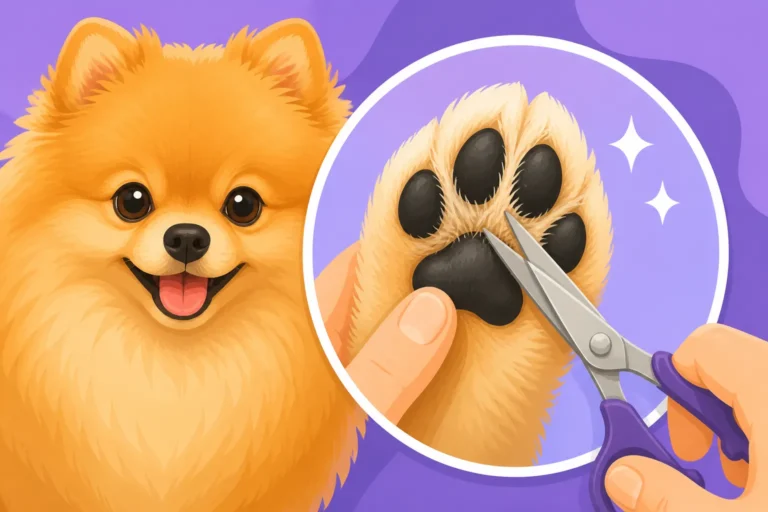
Blunt-Nosed Scissors: While clippers are great for clearing larger areas, sometimes you'll encounter extremely delicate spots or very small patches of fur where clippers feel too cumbersome or risky. This is where blunt-nosed grooming scissors become invaluable. The blunt tips are a non-negotiable safety feature, designed to minimize the risk of accidentally poking or cutting your dog's sensitive skin. Never use sharp-tipped household scissors for grooming your Pomeranian, as a sudden movement could lead to a serious injury. Scissors are particularly useful for tidying up very small wisps of hair or for those Poms who are absolutely terrified of clippers, allowing for a more gradual approach. However, be aware that getting a perfectly even trim with scissors on a double coat can be challenging, and they require a steady hand and excellent lighting.
Supporting Supplies: Combs, Wipes, and Styptic Powder
Beyond the main cutting tools, a few supporting items are essential for a successful and safe sanitary trim:
Fine-toothed Comb: Before you even think about cutting, you need to prepare the fur. A fine-toothed metal comb is perfect for gently detangling any small mats and separating the hairs in the sanitary area. This ensures you're cutting clean, untangled fur and can clearly see the skin, reducing the risk of accidental nicks. It also helps you get an idea of how much fur you're dealing with and where exactly you need to trim. Trying to clip or cut matted fur is a recipe for disaster, as the blades can easily get caught, pull the skin, and cause significant pain or injury. This prep step is an integral part of Working a Pomeranian's Coat in Sections to the Skin.
Pet-Safe Wipes: These are a lifesaver for pre-trim cleaning and post-trim tidying. Before you start, gently clean the area to remove any lingering debris, especially dried fecal matter or urine residue. This not only makes the trimming process cleaner but also helps prevent bacterial transfer and ensures your clippers or scissors glide smoothly. After the trim, a quick wipe-down can remove any stray hairs and ensure the area is fresh. Always opt for fragrance-free, hypoallergenic wipes specifically designed for pets to avoid skin irritation.
Styptic Powder: This is an absolute must-have in your grooming kit. Even the most careful groomer can have an accident, and a small nick on delicate skin can bleed. Styptic powder quickly stops bleeding from minor cuts, providing immediate relief and peace of mind. Keep it within arm's reach every time you perform a trim. While it's a tool you hope never to use, having it readily available is a critical safety measure, allowing you to quickly manage any small mishaps and keep the experience as stress-free as possible for your Pomeranian. You can often find these essential grooming tools, including styptic powder, alongside other helpful items mentioned in Tools a Pomeranian Owner Buys to Groom at Home, on major pet supply retailers.
A Step-by-Step Guide to Sanitary Trimming Your Pomeranian
Performing a sanitary trim doesn't have to be daunting. With patience, the right tools, and a calm approach, you can keep your Pomeranian clean and comfortable at home. Remember, short, positive sessions are always better than a long, stressful struggle.
Preparation is Key: Setting the Stage for Success
Before you even bring out the clippers, set yourself and your Pomeranian up for success. This preparation phase is crucial for making the experience as smooth and stress-free as possible.
First, choose a calm, well-lit environment where you can comfortably position your Pomeranian. A sturdy grooming table with a non-slip surface, or even a countertop with a bath mat, works well. Avoid slippery surfaces where your dog might feel insecure. Ensure the area is free from distractions – turn off the TV, put away noisy toys, and try to do it when other family members aren't creating a commotion. Your Pom needs your full attention, and you need theirs.
Next, it's ideal if your Pomeranian has recently relieved themselves and, if possible, has been bathed and thoroughly dried. Trying to trim a dirty or wet coat is not only harder but can also dull your blades and spread bacteria. Make sure their fur is completely dry, as wet fur will not cut cleanly. Having all your tools laid out and ready – clippers, scissors, comb, wipes, and crucially, your styptic powder – means you won't have to stop mid-trim to search for something. This minimizes downtime and keeps your Pom from getting antsy. If your Pomeranian is particularly wiggly, consider enlisting a second person to gently hold and reassure them. For tips on getting your dog used to handling, check out Teaching a Pomeranian to Stand Still for the Brush.
The "Anal Area" Trim: Keeping Things Clean Down Under
This is often the most critical part of the sanitary trim, as this area is most prone to fecal matting.
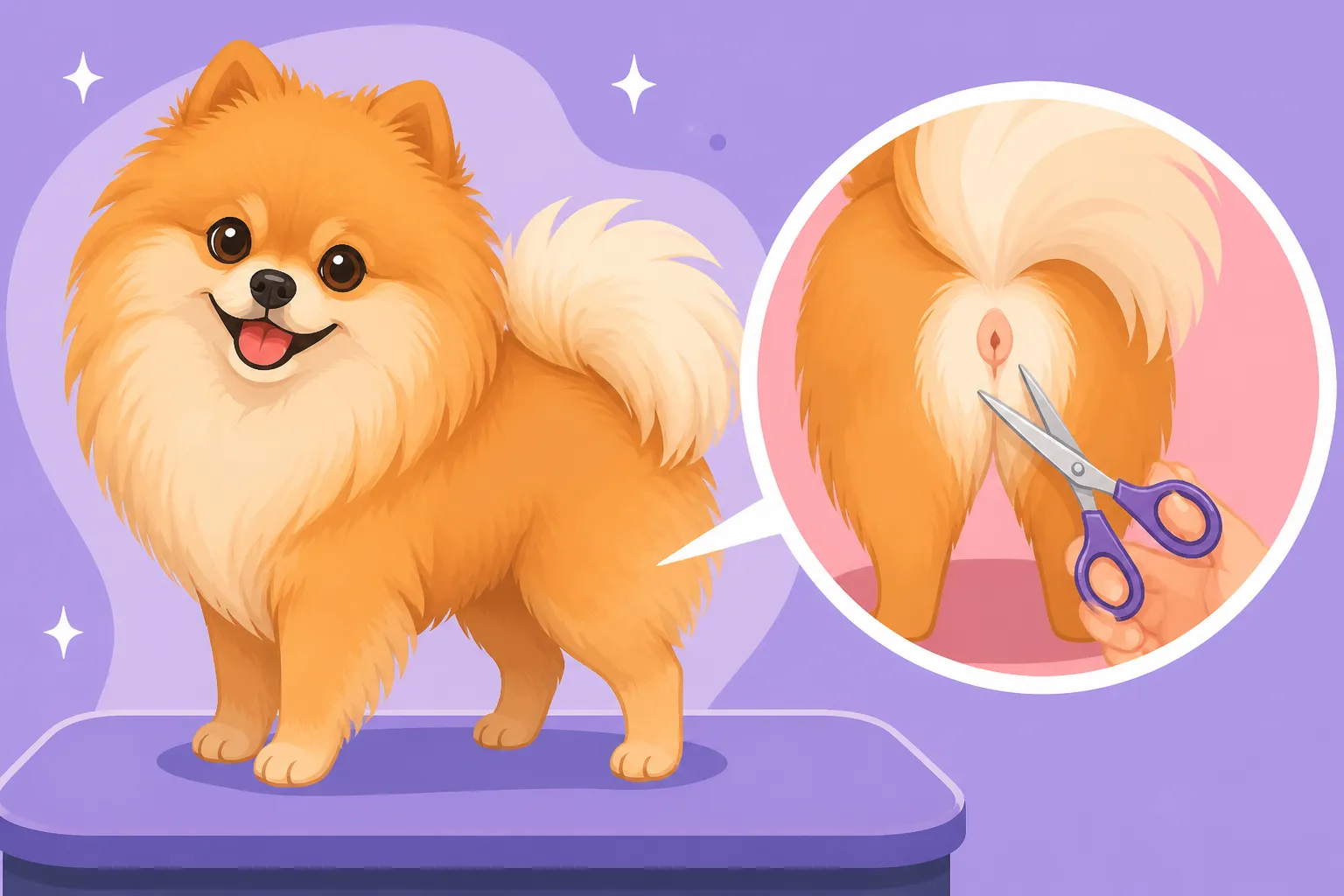
- Lift the Tail: Gently lift your Pomeranian's tail straight up, towards their back. This exposes the anus and the fur surrounding it. If your Pom is resistant, hold it firmly but gently.
- Comb Out the Fur: Using your fine-toothed comb, carefully comb out the fur directly around the anus. You're looking to remove any tangles or small mats and to separate the individual hairs so they stand out. This allows for a clean, precise cut.
- Trim with Clippers: With your quiet clippers, carefully and gently trim the fur around the anus. You want to create a small, clean circle, often referred to as a "poop chute," free of long hair. Work slowly, moving the clippers against the direction of hair growth for a closer cut, or with the direction for a slightly longer trim. Always keep the clippers flat against the skin to avoid accidental nicks. A common technique is to gently stretch the skin taut with your free hand to create a smooth surface for the clippers. Aim for a margin of about an inch or so around the anus. For very dense fur, you might need to make multiple passes.
- Use Scissors (Optional, with caution): If you're using blunt-nosed scissors, hold them parallel to the skin and trim only the very tips of the fur. Never point the scissors directly at your Pomeranian's body. This method is more for tidying up wisps or for Poms who are very fearful of clippers. It's much harder to get a truly short, clean trim with scissors alone.
- Check for Anal Glands: While you’re in this area, take a quick moment to gently feel for any swelling or hardness around the 4 and 8 o’clock positions near the anus, which could indicate issues with their anal glands. This is something your vet or groomer usually handles, but being aware of what feels normal is part of responsible care, tying into the information found in Whether a Pomeranian Needs Its Glands Expressed.
Addressing the "Genital Area": For Both Males and Females
After the anal area, the genital region needs attention to prevent urine staining and irritation.
For Male Pomeranians:
- Locate the Sheath: The penile sheath is the skin that covers the penis. You'll want to trim the fur around this area, not on the sheath itself.
- Gently Push Back Fur: Use your comb to gently push the fur away from the tip of the sheath. This helps you identify the area that needs trimming.
- Trim Around the Sheath: With clippers, carefully trim the fur on the belly directly surrounding the sheath. The goal is to create a small, clean area where urine won't cling to the fur. This prevents yellow staining, odor, and potential skin irritation or "urine scald." Work slowly and gently, keeping the skin taut and being extremely mindful of the sensitive anatomy underneath. You generally want to trim the hair short enough so it doesn't hang down and collect urine, but not so short that it irritates the skin.
For Female Pomeranians:
- Locate the Vulva: The vulva is nestled between the back legs, and often hidden by a profusion of fluffy fur.
- Gently Separate Fur: Carefully part the fur around the vulva. You might need to gently hold the skin taut to get a clear view.
- Trim Around the Vulva: With clippers (or blunt-nosed scissors, if preferred for this very delicate area), trim the fur directly around the vulva opening. The aim is to ensure no long hairs are constantly touching or soaking up urine. This helps prevent urine from wicking up into the fur, causing staining, odors, and skin irritation. Again, use extreme caution and light strokes. You are aiming for a neat, tidy area that promotes cleanliness.
Post-Trim Care and Inspection
Once the trimming is complete, the final steps involve cleaning up and praising your cooperative companion.
- Wipe Down: Use a pet-safe wipe to gently clean the trimmed areas. This removes any loose hairs that might cause itching and ensures the skin is clean.
- Inspect: Carefully inspect the trimmed areas for any missed spots, nicks, or signs of irritation. If you see any redness or swelling that wasn't there before, keep an eye on it. If you had a tiny nick, apply styptic powder as needed.
- Praise and Reward: Lavishly praise your Pomeranian and give them a special treat. This positive reinforcement helps them associate grooming with good things, making future sessions much easier. A particularly enticing reward, as discussed in The Reward a Pomeranian Actually Cares About, can make all the difference. Remember, even if they were a bit squirmy, focus on rewarding the moments of stillness.
| Aspect | Electric Clippers (Small, Quiet) | Blunt-Nosed Scissors |
|---|---|---|
| Best For | Clearing larger areas, achieving a consistent short trim, dense fur. | Very delicate areas, small wisps, fearful dogs, tidying edges. |
| Speed | Faster and more efficient for significant hair removal. | Slower, more meticulous for fine detail. |
| Safety | Generally safer for skin if used correctly (flat against skin). | High risk of accidental pokes/cuts if not blunt-tipped and used with extreme care. |
| Evenness | Provides a very even, uniform length. | Can result in a less even, more "choppy" look. |
| Noise | Can be a deterrent for noise-sensitive dogs, choose quiet models. | Silent, less intimidating for anxious Poms. |
| Matted Fur | Can get caught in severe mats, best used on clean, combed fur. | Better for carefully snipping small mats out (extreme caution needed). |
Handling Challenges: When Your Pomeranian Isn't Cooperating
Let's be real: not every Pomeranian is going to lie perfectly still for their sanitary trim. Some might be nervous, others might simply be wiggly. It's completely normal to face some resistance, but with the right approach, you can turn a potentially stressful experience into a manageable one.
Gradual Introduction and Positive Reinforcement
If your Pomeranian is new to grooming or particularly sensitive, the key is to take it slow and make it a positive experience. Don's try to do everything at once. Start by simply letting them see and sniff the clippers (turned off at first). Offer a high-value treat. Then, turn the clippers on for a second or two, far away from them, and immediately give another treat. Gradually bring the buzzing clippers closer, rewarding any calm behavior. You're building a positive association, not forcing the issue.
Break the sanitary trim into tiny steps. One day, you might only lift their tail and comb the area, giving lots of praise and treats. The next, you might do one quick pass with the clippers. The goal is to keep each session short, successful, and positive. Never scold or punish your Pomeranian for being squirmy; this will only make them more fearful and resistant next time. Instead, if they're really struggling, end the session calmly and try again later or the next day. Consistency and patience are your best friends here. For more insights on this, refer to The Reward a Pomeranian Actually Cares About.
Seeking Professional Help: When DIY Isn't the Answer
It's important to recognize when a DIY sanitary trim is beyond your comfort level or your Pomeranian's tolerance. There's absolutely no shame in seeking professional help. In fact, for some dogs, it's the safest and most humane option.
When to call a professional groomer:
- Extreme Fear or Aggression: If your Pomeranian becomes overly stressed, tries to bite, or thrashes violently during grooming, a professional groomer is equipped to handle such behaviors safely. They often have specialized tools, techniques, and experience that can manage difficult dogs. As mentioned in A Pomeranian That Bites the Groomer, some dogs simply aren't suited to at-home grooming for certain tasks.
- Severe Matting: If the sanitary area is heavily matted and tight against the skin, attempting to remove it yourself can be very painful for your dog and risky. Professional groomers have the expertise to carefully and safely shave out severe mats, often needing specialized equipment that can get under tight mats without cutting the skin.
- Lack of Confidence: If you simply don't feel confident holding clippers or scissors near such a delicate area, it's better to leave it to someone who does. The risk of accidental injury isn't worth it.
When speaking to a groomer, specifically ask for a "sanitary trim" or "sani trim." Be clear about your concerns and what you're looking for – typically a clean, short area around the anus and genitals to promote hygiene. Many groomers offer this as a standalone service or as part of a full groom, which also usually includes a full brush out, bath, and nail trim.
Maintaining Hygiene Between Trims
A sanitary trim is a crucial step, but it's part of an ongoing commitment to your Pomeranian's overall cleanliness and health. What you do between trims is just as important in preventing problems and keeping that beautiful coat pristine.
Regular Brushing and Spot Cleaning
The Pomeranian's dense double coat, while lovely, is a magnet for debris and tangles, especially in the areas prone to soiling. Regular, thorough brushing is your first line of defense. Aim for daily or every-other-day brushing, focusing particularly on the hindquarters, under the tail, and around the inner thighs. This helps to prevent small tangles from turning into large, painful mats that can trap waste. Using a slicker brush followed by a metal comb will ensure you're getting down to the skin and removing loose undercoat. Brushing not only keeps the coat free of mats but also stimulates the skin and distributes natural oils. For a deeper dive into brushing, read The Minutes a Full Pomeranian Brush Out Takes to understand the time commitment involved.
Beyond brushing, spot cleaning is essential. After every bathroom break, especially for puppies, older dogs, or those with looser stools, quickly check your Pomeranian’s sanitary area. Use pet-safe wipes to gently clean away any residue. This immediate action prevents urine from drying and staining the fur, and stops fecal matter from hardening and becoming deeply embedded. It's much easier to wipe a fresh smudge than to try and remove a caked-on mess later. Keep a pack of wipes handy by the door or wherever your dog goes out most frequently. For females, a quick wipe around the vulva can prevent urine from soaking into the fur, and for males, a check around the sheath for any drips.
Diet and Overall Health: Supporting a Clean Bottom
It might seem indirect, but your Pomeranian's diet plays a significant role in the cleanliness of their sanitary area. The type of food your dog eats directly impacts the consistency of their stools. Well-formed, firm stools are much less likely to stick to fur than soft, loose, or runny stools. If your Pomeranian frequently has digestive upset or very soft stools, it will be an ongoing battle to keep their rear end clean, no matter how often you trim.
Consider the quality of your Pomeranian's food. High-quality dog foods, often found on platforms like Chewy or even specialized brands like Ollie, use easily digestible ingredients and provide balanced nutrition. This can lead to healthier digestion and more consistent stool quality. If your dog frequently experiences loose stools, discuss it with your veterinarian. It could be due to food sensitivities, a sudden change in diet, or an underlying health issue. Your vet might recommend a different food, a probiotic supplement, or further investigation. Ensuring your Pomeranian has a healthy digestive system, as impacted by their food choices, will naturally contribute to a cleaner sanitary area and reduce the frequency and intensity of necessary clean-ups. More information on managing your Pom's dietary needs can be found in Feeding a Dog That Weighs What a Pomeranian Weighs.
Disclaimer
This article is for general informational purposes only and does not constitute professional advice. Laws, prices and regulations vary by location and change over time. Consult a qualified professional for guidance on your specific situation.