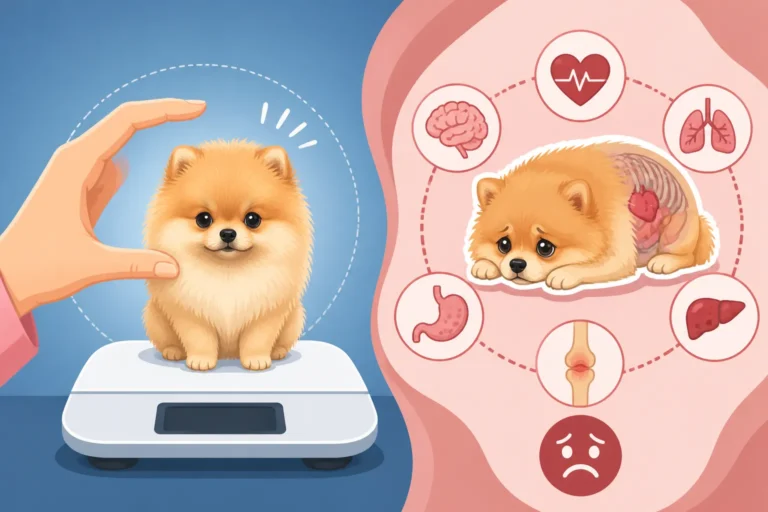
Whether a Pomeranian’s PDA Can Be Repaired
Finding out your sweet Pomeranian puppy has a heart defect can feel like a punch to the gut. The diagnosis of Patent Ductus Arteriosus, or PDA, often brings a flood of worry about their future, quality of life, and if anything can even be done. This guide is here to walk you through exactly what PDA is, how it's diagnosed, the highly effective treatment options available, and what you can expect for your beloved little Pom.
Understanding Patent Ductus Arteriosus (PDA) in Pomeranians
When your veterinarian delivers the news that your Pomeranian has Patent Ductus Arteriosus, it's natural to feel overwhelmed. This complex-sounding condition is actually one of the most common congenital heart defects found in dogs, and thankfully, it's often treatable, especially in our tiny Poms. Understanding what it is and why it's a particular concern for breeds like ours is the first step toward feeling empowered.
What Exactly Is PDA?
Imagine your puppy, snug and safe inside their mom, before they're even born. During this time, they have a special blood vessel called the ductus arteriosus. This vessel acts as a shortcut, allowing blood to bypass the lungs, which aren't yet working since the puppy is getting oxygen directly from the mother. Think of it like a temporary detour on a highway; it's essential for fetal development.
However, once your Pomeranian puppy is born and takes their first breath, their lungs inflate and start doing their job. At this crucial moment, the ductus arteriosus is supposed to close off on its own, usually within a few hours or days after birth. When it fails to close, remaining "patent" or open, that's what we call Patent Ductus Arteriosus. This open vessel creates an abnormal connection between the aorta (which carries oxygen-rich blood to the body) and the pulmonary artery (which carries oxygen-poor blood to the lungs). Instead of all the oxygenated blood going to the body, some of it takes this "shortcut" back to the lungs, creating a dangerous cycle. This is often described as a "left-to-right shunt," meaning blood flows from the higher-pressure aorta into the lower-pressure pulmonary artery, putting extra strain on the heart and lungs.
Why PDA Is a Concern for Pomeranians
While PDA can occur in any dog breed, small breeds, including our beloved Pomeranians, are unfortunately predisposed to this particular heart defect. It's believed to have a genetic component, which is why responsible breeders are so diligent about health screenings. When the ductus arteriosus remains open, it means the heart has to work much harder than it should. The left side of the heart, in particular, becomes overloaded because it's constantly pumping the same blood multiple times – once to the body, and then a portion of it reroutes back to the lungs and the left side of the heart again. This increased workload causes the heart to enlarge over time. You might hear your vet refer to this as left-sided congestive heart failure.
This constant recirculation of blood also leads to abnormally high blood pressure in the pulmonary arteries, which can damage the delicate blood vessels in the lungs. Over months or years, if left untreated, this can lead to irreversible lung damage and a condition called pulmonary hypertension, which is much more difficult to manage and significantly shortens a dog's lifespan. This is why addressing The Heart Defect Found in Pomeranian Puppies like PDA early is so incredibly vital. Without intervention, a Pomeranian with a significant PDA might not live to see their first birthday, or will experience a severely reduced quality of life marked by progressive heart failure. The good news, as we'll discuss, is that PDA is often fixable.
Diagnosing PDA in Your Pomeranian Puppy
Catching PDA early is paramount for a successful outcome. The journey from suspicion to definitive diagnosis involves careful observation and a series of veterinary tests designed to pinpoint the issue and assess its severity. Don't feel bad if you didn't spot it yourself – sometimes the signs are subtle, or even absent to the untrained eye.
Recognizing the Early Signs
Often, the first hint that something might be amiss comes during a routine puppy check-up when your veterinarian listens to your Pomeranian's heart. The classic hallmark of PDA is a continuous, loud murmur that sounds like a washing machine or "machinery" throughout the cardiac cycle. This distinct sound is usually heard over the left side of the chest, near the armpit. Many owners bring their puppies in simply for a wellness exam and are surprised to hear about a murmur. It's a testament to the importance of those initial vet visits for The Heart Murmur Heard on a Pomeranian Puppy.
Beyond the murmur, some Pomeranian puppies with PDA might show other, more noticeable signs, though these often indicate a more severe case or one that has been present for a while. These can include:
- Stunted Growth: They might be noticeably smaller than their littermates or fail to thrive.
- Exercise Intolerance: They tire easily during playtime or walks. A young Pom might struggle to keep up with even short bursts of activity.
- Persistent Cough: Especially after exercise or excitement, which can be a sign of fluid buildup in the lungs due to heart failure.
- Difficulty Breathing: Rapid or labored breathing.
- Weakness or Collapse: In advanced stages, or during periods of excitement or stress.
- Pale Gums: A sign of poor oxygen circulation.
It's crucial to understand that many puppies, especially in the early stages, might seem completely normal to their owners, playing and eating without obvious issues. This makes regular veterinary check-ups for puppies incredibly important, as the vet's stethoscope can often detect the problem long before symptoms become apparent.
The Diagnostic Journey
Once a heart murmur is detected, your veterinarian will typically recommend further diagnostic steps to confirm if it's indeed PDA and to understand its severity. This journey usually involves:
- Chest X-rays (Radiographs): These images allow the vet to visualize the heart and lungs. In a PDA case, they might reveal an enlarged heart, particularly the left atrium and ventricle, and potentially signs of pulmonary congestion (fluid in the lungs), which indicates early heart failure. The pulmonary artery might also appear dilated.
- Electrocardiogram (ECG): An ECG measures the electrical activity of the heart. While not directly diagnostic for PDA, it can show if the heart chambers are enlarged and if there are any abnormal heart rhythms (arrhythmias) associated with the increased workload.
- Echocardiogram (Cardiac Ultrasound): This is the definitive diagnostic tool. Performed by a veterinary cardiologist, an echocardiogram provides a real-time, moving image of the heart's structure and function. The cardiologist can directly visualize the open ductus arteriosus, measure its size, and assess the direction and velocity of blood flow through it. They can also precisely evaluate the size of the heart chambers, the function of the heart muscle, and check for any other concurrent heart defects that might influence treatment. For instance, they will look for signs of pulmonary hypertension, which can complicate treatment. This detailed imaging is critical for planning the most appropriate course of action, whether it's surgery or a less invasive procedure.
This comprehensive approach ensures that the diagnosis is accurate and that a tailored treatment plan can be developed, offering your Pomeranian the best possible chance at a healthy life.
The Good News: Repair Options for Pomeranian PDA
The overwhelming relief for Pomeranian owners whose puppies are diagnosed with PDA is that, in most cases, it can be repaired. Early intervention is key, and the success rates for both traditional and modern techniques are incredibly high when performed by experienced professionals.
Surgical Ligation: The Traditional Approach
For many years, the gold standard for treating PDA was a procedure called surgical ligation. This is a traditional open-chest surgery where the veterinary surgeon physically locates and ties off the patent ductus arteriosus. Imagine the "shortcut" vessel we discussed earlier – the surgeon essentially places ligatures (sutures) around it, cinching it closed, effectively stopping the abnormal blood flow between the aorta and the pulmonary artery.
Here's what surgical ligation typically involves:
- Preparation: Your Pomeranian will undergo thorough pre-surgical bloodwork and examinations to ensure they are a good candidate for anesthesia and surgery. Whether a Pomeranian Needs Pre-Anesthetic Bloodwork is not just standard practice, but critical, especially for a small breed with a heart condition.
- Procedure: Under general anesthesia, a small incision is made on the left side of the chest, between the ribs. The surgeon carefully accesses the chest cavity, identifies the ductus arteriosus, and ligates it with sutures. The chest is then closed, and a chest tube might be placed temporarily to remove any air or fluid, ensuring the lungs can re-inflate properly.
- Effectiveness and Success: Surgical ligation is highly effective, with success rates often exceeding 95% if performed before irreversible heart damage occurs. The moment the ductus is ligated, the abnormal blood flow stops, and the heart immediately begins to recover from the overload.
- Recovery: Recovery typically involves a few days in the veterinary hospital for monitoring, pain management, and ensuring no complications arise. Once home, your Pom will need restricted activity for several weeks to allow the surgical site to heal fully. Most puppies bounce back remarkably quickly, often within weeks, and go on to live full, normal lives. The ideal window for this surgery is usually between 8 and 16 weeks of age, before the heart has sustained significant damage.
Minimally Invasive Catheter-Based Occlusion
In more recent years, advancements in veterinary cardiology have introduced less invasive options for PDA repair, often preferred for smaller breeds like Pomeranians due to the reduced trauma. This is where catheter-based occlusion comes into play. Instead of open-chest surgery, this technique involves using a catheter to deploy a device that closes the PDA from inside the blood vessel.
Here’s how it works:
- Procedure: Under general anesthesia, a small incision is made, usually in the groin area, to access the femoral artery. A thin catheter is then threaded through the artery, guided by real-time fluoroscopy (a type of X-ray imaging), up to the heart and into the patent ductus arteriosus.
- Device Deployment: Once the catheter is precisely positioned within the PDA, a specialized occlusion device is deployed. Common devices include the Amplatz Canine Ductal Occluder (ACDO) or various types of embolization coils. These devices are designed to expand within the PDA, physically blocking the blood flow and encouraging the vessel to thrombose (clot) and permanently close.
- Advantages: This technique offers several significant benefits, especially for a delicate Pomeranian. It's much less invasive, meaning a smaller incision, less pain, and a much faster recovery time compared to traditional surgery. Puppies can often go home the day after the procedure and resume normal activities sooner. There's also a reduced risk of certain surgical complications, like laryngeal nerve damage, which can sometimes occur with open-chest surgery.
- Specialized Care: While highly effective, catheter-based occlusion requires specialized equipment and the expertise of a board-certified veterinary cardiologist. Not every veterinary clinic offers this procedure, so you might need to be referred to a specialty hospital. The cost can also be a factor, which we'll discuss further. However, the benefits in terms of patient comfort and rapid recovery often make it the preferred choice for Whether a Pomeranian's PDA Can Be Repaired.
Both methods have excellent success rates when performed by skilled professionals. The choice between surgical ligation and catheter-based occlusion often depends on the specific characteristics of your Pomeranian's PDA, the available expertise, and your personal preferences after a thorough discussion with your veterinary cardiologist.
Success Rates, Risks, and Considerations
Learning about the repair options for your Pomeranian's PDA is a huge step, and understanding the potential outcomes, risks, and financial implications will help you make informed decisions. The good news is that PDA repair generally boasts excellent prognoses.
What to Expect Post-Procedure
When a PDA is successfully repaired, whether through surgical ligation or catheter-based occlusion, the outlook for your Pomeranian is overwhelmingly positive.
- Immediate Improvement: In most cases, the abnormal blood flow stops immediately after the procedure. This takes an immense strain off the heart, allowing it to begin recovering. You might not see a huge change in a puppy that wasn't showing severe symptoms, but internally, a critical correction has been made.
- Excellent Long-Term Prognosis: For Pomeranians treated early, before significant heart damage or pulmonary hypertension has developed, the prognosis is excellent. The majority of these dogs go on to live full, normal, active lives with no further heart-related issues. They often catch up in growth and energy levels if they were previously stunted or lethargic. Their life expectancy, after a successful repair, can be comparable to that of a healthy Pomeranian. This is a huge relief when you're thinking about How Long a Well Bred Pomeranian Actually Lives.
- Follow-Up Care: Your cardiologist will schedule follow-up appointments, typically including repeat echocardiograms, to ensure the PDA remains completely closed and to monitor the heart's recovery. Sometimes, a very faint residual murmur might persist even after successful closure, but if the shunt is insignificant, it usually doesn't impact long-term health. Most Poms won't require ongoing cardiac medications if the repair was done early and successfully.
Potential Complications and Challenges
While the success rates are high, it's important to be realistic about the potential risks, as with any medical procedure involving anesthesia and surgery, especially in a small breed like a Pomeranian.
- Anesthesia Risk: Small dogs, due to their size and sometimes underlying health conditions, can have a slightly higher risk with anesthesia. Your vet and veterinary cardiologist will perform extensive pre-anesthetic evaluations, including blood tests and possibly chest X-rays, to minimize these risks. Modern anesthetic protocols are very safe, but it's always a concern for owners of tiny breeds. This is why discussions around Anesthesia Risk in a Four Pound Pomeranian are so vital before any procedure.
- Surgical Ligation Specific Risks:
- Hemorrhage: There's a risk of bleeding during surgery, particularly if the ductus is fragile or friable.
- Laryngeal Nerve Damage: In rare cases, the recurrent laryngeal nerve, which controls vocal cord function, can be bruised or damaged during the chest incision, leading to a temporary or permanent voice change or even breathing difficulties.
- Pneumothorax: Air in the chest cavity, which can be managed with a chest tube.
- Catheter-Based Occlusion Specific Risks:
- Device Migration: Rarely, the occlusion device might dislodge and move to another part of the heart or lungs, requiring further intervention.
- Vascular Damage: Damage to the femoral artery or vein where the catheter is inserted.
- Residual Shunt: In some instances, the device might not achieve complete closure, leaving a small, residual shunt. While often insignificant, it might require monitoring.
- Pulmonary Hypertension: If the PDA has been present and significant for too long, leading to irreversible pulmonary hypertension, the risks of repair increase dramatically, and the prognosis becomes guarded. In such cases, surgical or interventional closure might not be possible or advisable. This underscores the critical importance of early diagnosis and intervention. The longer treatment is delayed, the higher the risks and the poorer the long-term prognosis.
Financial Considerations and Pet Insurance
Let's not sugarcoat it: specialized cardiac diagnosis and surgery for a PDA can be a significant financial undertaking. The costs vary widely depending on your geographic location, the veterinary specialty hospital, the chosen repair method, and the specific needs of your Pomeranian.
Here's a general breakdown of potential costs:
| Service/Procedure | Estimated Cost Range (USD) | Notes |
|---|---|---|
| Initial Vet Visit & Murmur Detection | $50 – $150 | Routine check-up fee. |
| Chest X-rays | $150 – $400 | Performed by your general vet or specialist. |
| Echocardiogram & Cardiologist Consult | $500 – $1,500 | Crucial for definitive diagnosis and treatment planning. |
| Pre-surgical Bloodwork | $100 – $300 | Essential for anesthesia safety. |
| Surgical Ligation (Open Chest) | $2,500 – $6,000+ | Includes anesthesia, surgeon's fees, hospitalization, medications. |
| Catheter-Based Occlusion | $3,500 – $8,000+ | Includes anesthesia, cardiologist fees, device cost, fluoroscopy, hospitalization. Often higher upfront. |
| Post-operative Medications | $50 – $200 | Pain relief, antibiotics. |
| Follow-up Echocardiograms | $300 – $800 | Essential for monitoring recovery. |
These figures can quickly add up, easily contributing to The Eighteen Thousand Dollar Lifetime of a Pomeranian when you factor in other care. This is precisely where pet insurance can be a lifesaver. Companies like Healthy Paws offer coverage for unexpected illnesses and accidents. If you enroll your Pomeranian before any heart murmur is detected or officially diagnosed, PDA treatment will likely be covered, significantly alleviating the financial burden. However, if a PDA is diagnosed before you have insurance, or during the waiting period, it will almost certainly be considered a pre-existing condition and will not be covered. This highlights the importance of getting pet insurance for your puppy as early as possible.
It's wise to discuss all potential costs with your veterinary cardiologist and their billing department upfront. Many specialty hospitals also offer payment plans or work with third-party financing options like CareCredit. While the price for Heart Surgery Prices for a Pomeranian Puppy may seem steep, the investment in your Pomeranian's health for a long, happy life is often priceless.
Living with a Repaired PDA Pomeranian
Once your Pomeranian has undergone a successful PDA repair, the biggest hurdle is behind you. It's a truly wonderful feeling to know that your furry family member has been given a new lease on life. However, there are still a few things to keep in mind to ensure they continue to thrive and to understand the long-term implications.
Long-Term Outlook and Management
The vast majority of Pomeranians who have a PDA successfully repaired, especially those treated early, go on to live completely normal, healthy lives with no restrictions. This is fantastic news for their overall How Long a Well Bred Pomeranian Actually Lives.
- Normal Activity Levels: Your Pom should be able to play, run, and exercise just like any other healthy dog their age. The heart, once freed from the extra workload, typically remodels and returns to a more normal size and function over time. You should notice improved stamina and vigor, especially if they were showing signs of exercise intolerance before.
- Routine Veterinary Care: While the heart defect is fixed, it's still crucial to maintain regular veterinary check-ups. Your general veterinarian will continue to monitor their overall health, listen to their heart, and address any other age-appropriate health concerns. Usually, a final check-up with the cardiologist confirms the complete closure of the PDA and clearance for normal life.
- Monitoring for Symptoms: Although rare after successful closure, it's always wise to remain observant. Any new or recurring symptoms such as a cough, lethargy, or difficulty breathing should prompt an immediate call to your vet. However, with a truly successful repair, these instances are extremely uncommon.
- Healthy Lifestyle: Just like any dog, a Pomeranian with a repaired PDA benefits from a healthy lifestyle, including a balanced diet, appropriate exercise, and maintaining an ideal weight. These factors contribute to overall cardiovascular health and longevity.
Preventing and Recognizing Recurrence (Rare)
It's natural to worry about a condition returning after such an intensive intervention. The good news is that actual "recurrence" of a PDA after a complete surgical ligation or successful device occlusion is exceedingly rare. When the ductus is completely closed, it stays closed.
- What Could Happen (Extremely Rare): In some very rare instances, particularly with certain types of coil embolization, or if the initial closure wasn't perfectly complete, a tiny "residual shunt" might persist. This is usually very small and often doesn't cause clinical problems. Your cardiologist will check for this during follow-up echocardiograms. If a significant residual shunt were present, further intervention might be discussed, but this is an exception rather than the rule.
- Continued Vigilance: The best way to "prevent" issues (which really means preventing overlooking any new problem) is to continue with routine veterinary care. Your vet will listen to your Pom's heart at every check-up. If any new or different murmur were detected, they would investigate it, but it would likely be an entirely separate issue, not a recurrence of the PDA.
Genetic Considerations and Responsible Breeding
Given that PDA has a recognized genetic component in many breeds, including Pomeranians, this is an important consideration for breeding animals.
- Heritable Condition: PDA is considered a heritable condition, meaning it can be passed down from parents to offspring. While the exact mode of inheritance can be complex, it's widely accepted that affected dogs should not be bred.
- Screening Breeding Dogs: Reputable Pomeranian breeders are committed to screening their breeding dogs for known health conditions. This includes cardiac examinations and sometimes even specific genetic tests if available for certain conditions. A pre-breeding cardiac screen often includes an echocardiogram to detect any congenital heart defects like PDA or other issues like The Heart Murmur Heard on a Pomeranian Puppy before they consider breeding. This responsible approach helps to reduce the incidence of PDA in future generations.
- The Case Against Breeding Affected Dogs: If your Pomeranian was diagnosed with PDA, even after successful repair, they should absolutely be spayed or neutered and removed from any breeding program. This is a critical ethical responsibility to prevent the perpetuation of this genetic predisposition. It ensures that you aren't unknowingly contributing to more puppies being born with this preventable defect. Discussions around Whether a Pomeranian Needs a Cardiac Screen Before Breeding highlight this important aspect of canine health.
By understanding these aspects, you can continue to provide the best possible care for your Pomeranian, ensuring they lead a happy, healthy, and long life post-PDA repair.
Disclaimer
The information provided in this guide is intended for educational purposes only and should not be considered a substitute for professional veterinary advice. Always consult with a qualified veterinarian or veterinary cardiologist for any health concerns or before making any decisions about your Pomeranian's medical care. Individual outcomes may vary.