Telling a Pomeranian’s Trachea From Kennel Cough
Distinguishing tracheal collapse from kennel cough helps owners identify Pomeranian respiratory symptoms and seek veterinary care.

Distinguishing tracheal collapse from kennel cough helps owners identify Pomeranian respiratory symptoms and seek veterinary care.
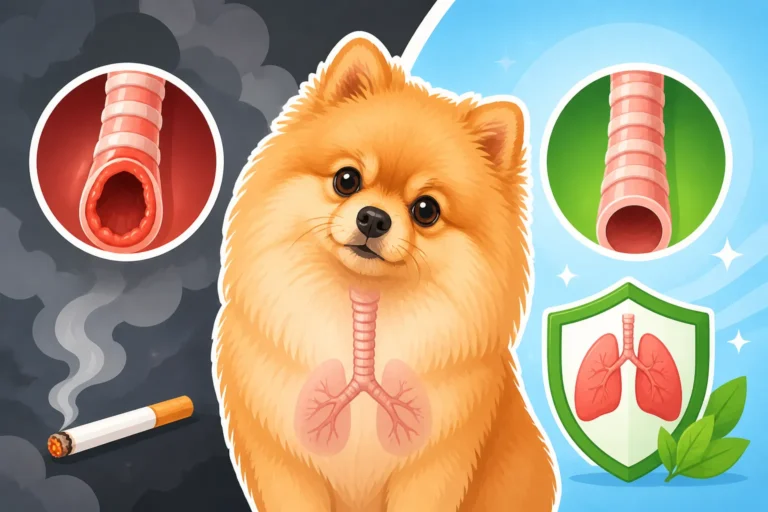
Smoke exposure damages the delicate trachea of Pomeranians, causing chronic inflammation, coughing fits, and increased risk of tracheal collapse.

Humid air makes breathing difficult for Pomeranians because their thick double coats and small airways trap moisture and heat.
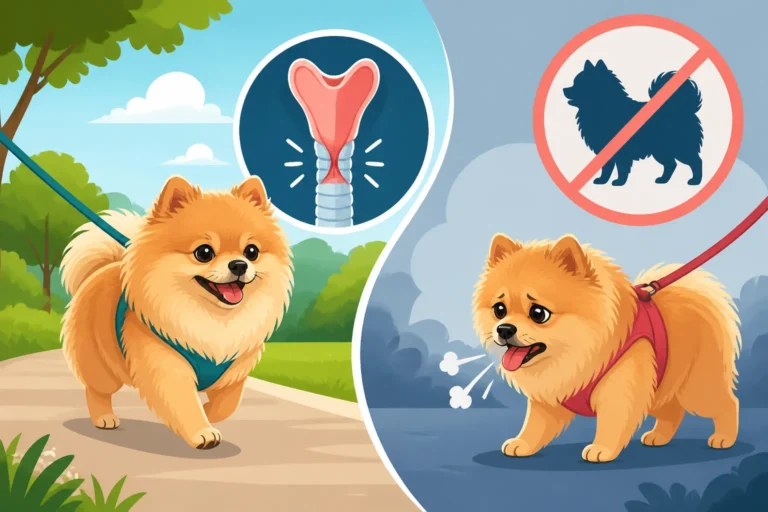
Pomeranian tracheal collapse limits safe walking distances, and this text explains how the condition affects exercise tolerance.

Tracheal stenting and non-surgical treatments for collapsing windpipes in Pomeranians help owners manage breathing difficulties.

Pomeranian excitement coughing often indicates tracheal collapse, allergies, heart conditions, or environmental irritants needing veterinary diagnosis.
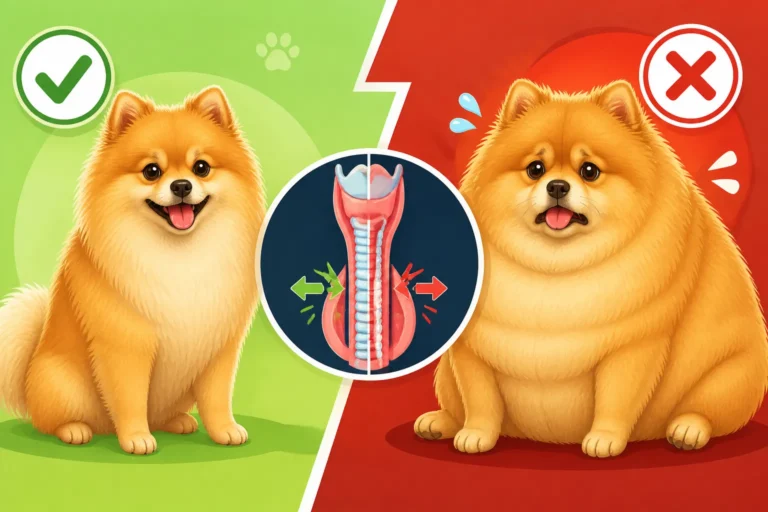
Excess weight on Pomeranians creates external neck pressure and reduces lung capacity, worsening tracheal collapse and breathing difficulties.

Pomeranian cough suppressants and remedies ease tracheal collapse, kennel cough, and heart disease symptoms to help your dog breathe.

Pomeranian coughing sounds and reverse sneezes help owners know when kennel cough or tracheal problems require a veterinary visit.
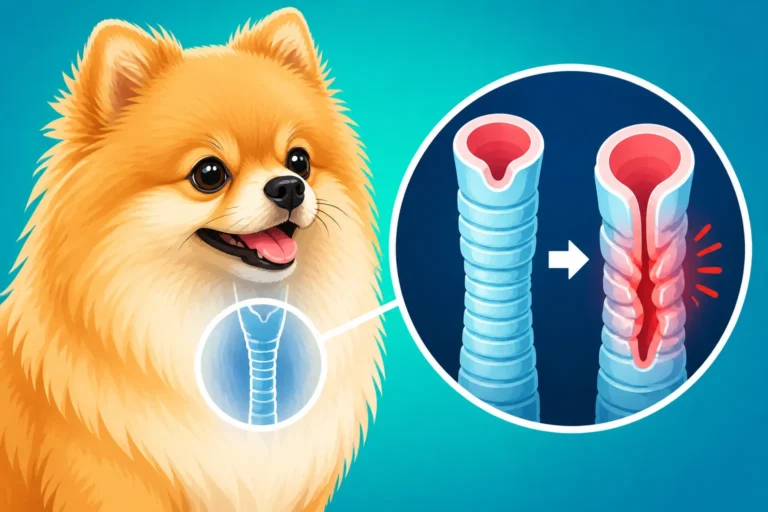
Tracheal collapse in Pomeranians typically begins between four and fourteen years of age, driven by genetic and congenital weaknesses.