Whether Victoria Bred Pomeranians Herself
Queen Victoria and her beloved red-sable dog Marco transformed large working dogs into small Pomeranians through royal shows.
Is this the right one for you?
Origins and temperament, size and coat, what living with one is actually like, and how it compares to the breeds people weigh against it.
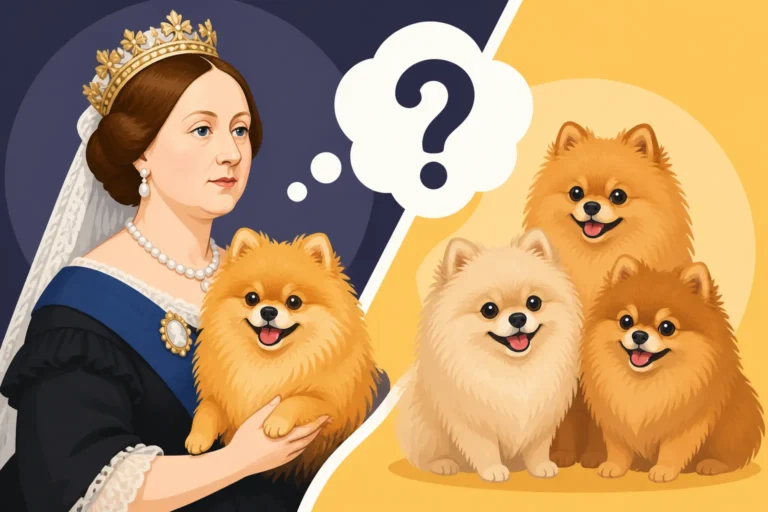
Queen Victoria and her beloved red-sable dog Marco transformed large working dogs into small Pomeranians through royal shows.

Queen Victoria’s Pomeranian Marco weighed around 12 pounds, sparking a significant reduction in the breed’s size.

Queen Victoria’s dog Marco and historical naming practices explain how the Pomeranian breed evolved from large working farm dogs.
Queen Victoria and her cherished Pomeranian Marco share a tender final moment, shaping the history of the breed.
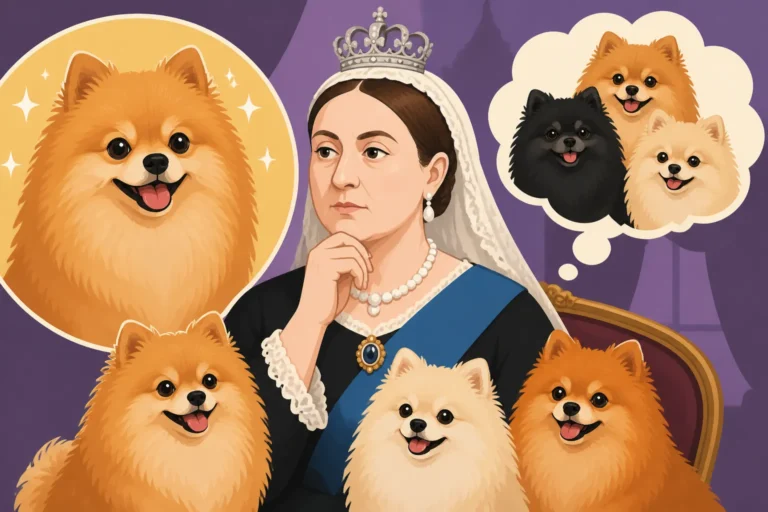
Queen Victoria owned many Pomeranians in her royal kennel, including Marco and Turi, and shaped the modern breed.

American and European Pomeranians differ in weight and physical traits because of varying kennel club standards and regional breeding choices.

British kennel club classifications and historical European roots explain whether Britain officially calls the Pomeranian a German Spitz.

The Fédération Cynologique Internationale classifies the Pomeranian as a German Spitz because historical breeding miniaturized larger ancestors.

National kennel club records reveal the countries where Pomeranians have historically achieved the highest registration numbers.

Pomeranian popularity trends, historical origins, and lifestyle factors explain why families choose these small dogs today.