Whether a Breeding Pomeranian Needs Eyes Certified
As a Pomeranian breeder or aspiring one, you're likely wrestling with a crucial question: how do you ensure the health and well-being of your beloved dogs and their future puppies? One of the most significant concerns, often overlooked until a problem arises, is eye health. This guide will walk you through why eye certification is not just a suggestion but a vital component of responsible Pomeranian breeding, shedding light on the processes, common issues, and ethical considerations involved.
The Importance of Eye Health in Breeding Pomeranians
The decision to breed Pomeranians carries immense responsibility, not just for the immediate welfare of the parents and puppies, but for the long-term health of the entire breed. Overlooking potential genetic health issues, particularly those affecting the eyes, can lead to heartbreak for future owners and contribute to the propagation of preventable conditions.
Why Eye Certification Matters for the Breed
When we talk about eye certification for breeding Pomeranians, we're really talking about safeguarding the breed's future. Pomeranians, like many purebred dogs, can be predisposed to certain inherited eye conditions. If breeders aren't actively screening for these, they risk unknowingly passing on genes that could cause blindness, discomfort, or require expensive surgeries for puppies down the line. Imagine bringing home a tiny, fluffy bundle of joy, only to discover a few months later that they're slowly losing their sight, all due to a preventable genetic issue. It’s devastating for families and incredibly unfair to the dog. This is why official eye certifications are so critical; they provide a snapshot of a breeding dog's ocular health and help breeders make informed decisions to minimize the risk of producing affected offspring. It’s an investment in the health legacy of the Pomeranian.
Common Ocular Conditions in Pomeranians
Pomeranians can be susceptible to a range of eye conditions, some of which are inherited and some that develop with age. Being aware of these helps breeders and owners understand what they're looking for and why screening is so important. One common issue is Progressive Retinal Atrophy (PRA), a group of genetic diseases that cause the retina to degenerate over time, leading to blindness. Another concern is Distichiasis, where extra eyelashes grow from abnormal spots on the eyelid and can rub against the cornea, causing irritation, pain, and potential damage. We also see conditions like entropion (inward-rolling eyelids) or ectropion (outward-rolling eyelids), which can lead to chronic irritation or exposure of the eye. Cataracts, which cloud the lens and impair vision, can also be hereditary in Pomeranians, appearing at a young age or developing later in life, much like how humans get them. For a deeper dive, you might want to read more about The Eye Problems a Pomeranian Carries. These conditions can range from mildly irritating to severely debilitating, impacting a Pomeranian's quality of life significantly, and often requiring costly interventions that many families aren't prepared for.
Navigating Eye Certification Programs for Breeders
The world of canine health certifications can feel like a maze, full of acronyms and specific procedures. For eye health, the Canine Eye Registry Foundation (CERF), now integrated under the Orthopedic Foundation for Animals (OFA) as the Companion Animal Eye Registry (CAER), is the gold standard in the United States. This program aims to identify and track inherited eye diseases in purebred dogs, offering breeders a structured way to ensure their dogs are free of detectable ocular problems before breeding.
Understanding OFA Eye Certification (CAER)
The OFA CAER exam is a specialized eye examination performed by a board-certified veterinary ophthalmologist. This isn't just your regular vet check-up; it's a thorough inspection of your Pomeranian's eyes, looking for any signs of inherited or congenital eye diseases. The ophthalmologist will use specialized equipment to examine all parts of the eye, from the eyelids and conjunctiva to the retina and optic nerve. They're meticulously searching for any subtle abnormalities that could indicate a problem, even those that aren't yet causing symptoms. The beauty of the CAER program is that it provides a standardized assessment across the country, creating a national database of eye health information. This allows breeders to not only certify their own dogs but also to research the eye health history of potential mates, helping to make more informed decisions and contributing to a healthier gene pool for the breed. It's a proactive step that goes a long way in preventing future suffering.
The Examination Process and What it Covers
When you take your Pomeranian in for an OFA CAER exam, it’s a detailed process. First, the ophthalmologist will typically administer eye drops to dilate your dog’s pupils. This allows for a much better view of the internal structures of the eye, particularly the retina. While you wait for the drops to take effect, which can take about 20-30 minutes, you might fill out some paperwork. Once dilated, your Pom will undergo a comprehensive examination using various tools. This usually includes an ophthalmoscope to look at the retina and optic nerve, and a slit-lamp biomicroscope to get a magnified, three-dimensional view of the front of the eye, including the cornea, iris, and lens. The vet will be checking for everything from corneal dystrophies, which can cause clouding, to persistent pupillary membranes (PPMs), which are strands of tissue from fetal development that don’t fully regress. They’ll specifically look for conditions like Progressive Retinal Atrophy (PRA) or cataracts, which are of particular concern in Pomeranians. They’ll also check for structural issues like entropion or ectropion, and even extra eyelashes like those seen in The Extra Eyelashes That Rub a Pomeranian's Eye. It’s a thorough check-up designed to catch even the most subtle signs of trouble.
Interpreting Certification Results
After the examination, the veterinary ophthalmologist will fill out a CAER form, indicating any observed abnormalities. The results are categorized as "normal" or "affected." If your Pomeranian is deemed "normal," it means no significant inherited eye diseases were detected at the time of the exam. This is excellent news for a breeding prospect! However, it's important to remember that some conditions, like certain types of cataracts or PRA, can develop later in life, which is why annual re-examination is often recommended for breeding dogs. If an "affected" result is given, the form will specify the condition found. This doesn't automatically mean the dog can't be bred, but it does mean a serious conversation needs to happen with your veterinary ophthalmologist and potentially a genetic counselor. For example, some minor, non-progressive conditions might be noted but not disqualify a dog if they are unlikely to cause significant health issues or if they are not considered hereditary. But for conditions with a clear genetic link and potential for severe impact, like inherited PRA, an "affected" dog should absolutely be removed from a breeding program. Understanding these results is paramount for responsible breeding and making sure you’re not passing on known problems.
Ethical Breeding Practices and Eye Health Beyond Certification
While OFA CAER certification is a crucial first step, responsible breeding goes beyond simply getting a stamp of approval. It involves a deeper commitment to understanding genetics, maintaining breed health, and making ethical choices for every single litter.
The Role of Pedigree and Family History
A good breeder doesn't just look at the individual dog; they look at the whole family tree. Reviewing a Pomeranian’s pedigree and knowing the health history of its ancestors, siblings, and offspring (if any) provides invaluable insight. Even if a dog passes its eye certification, if its parents or siblings have a history of a late-onset genetic eye disease, that dog could still be a carrier or develop the condition later. For instance, if a specific line has shown a pattern of Clouding Eyes in a Pomeranian Past Ten due to hereditary cataracts, a breeder should be cautious, even if the current generation screens clear at a young age. This is where an ethical breeder really shines – they delve into these details, ask tough questions of other breeders, and are transparent about their own lines. They understand that a dog's health isn't just about what's visible today, but what dormant genetic tendencies might be lurking. This holistic approach helps ensure that you're not just breeding healthy individuals, but contributing to the health of the entire breed.
Supporting Eye Health in Breeding Dogs and Their Offspring
Beyond genetic screening, responsible breeders actively support the overall eye health of their dogs and puppies. This includes ensuring excellent nutrition with vitamins and antioxidants that support ocular health, providing a clean living environment to prevent infections, and regular veterinary check-ups. For breeding females, specific nutritional needs should be met to support healthy fetal development, which can indirectly impact eye development in puppies. Additionally, diligent observation of puppies as they grow is key. Are their eyes clear? Do they track objects normally? Any discharge or unusual appearance should be investigated immediately. Breeders also need to educate new puppy owners about ongoing eye care and the importance of regular vet visits. When considering insurance, a robust plan from providers like Healthy Paws can be incredibly helpful for future owners, covering unexpected medical issues, including those related to eye conditions that might arise later. This comprehensive approach ensures that the care for your Pomeranians' eyes extends far beyond a single certification exam.
When to Seek Veterinary Ophthalmic Consultation
Even with diligent screening, sometimes unexpected eye issues can arise, or you might have concerns about a dog that isn't part of a breeding program but still needs specialized care. Knowing when to escalate your concerns to a veterinary ophthalmologist is key to preserving your Pomeranian's vision and comfort.
Recognizing Signs of Eye Issues in Pomeranians
Pomeranians can be masters at hiding discomfort, so it's vital for owners and breeders alike to be vigilant for subtle signs of eye trouble. Any change in your Pomeranian's eyes, no matter how minor, warrants attention. Look out for redness, excessive tearing (epiphora), discharge (clear, watery, or thick and discolored), squinting, blinking more than usual, or keeping one eye closed. If their normally bright eyes appear dull, cloudy, or if you notice any changes in the pupil size or shape, that's a red flag. Pawing at the face or rubbing their eyes on furniture are also clear indicators of irritation. Some conditions might manifest as a change in how they navigate their environment, bumping into things, or being hesitant to go into dimly lit areas, suggesting vision impairment. Even slight changes in behavior, like increased irritability or lethargy, can sometimes be linked to discomfort from an eye issue. Early detection is crucial, as many conditions can be managed or treated more effectively if caught early.
The Value of Specialist Care
For any serious eye concern, or even persistent minor ones, a referral to a board-certified veterinary ophthalmologist is invaluable. These specialists have advanced training and equipment specifically for diagnosing and treating ocular diseases in animals. Your regular veterinarian can handle many routine issues, but an ophthalmologist can differentiate between various conditions, some of which present similarly, and offer advanced diagnostic tests like electroretinography (ERG) to assess retinal function, or gonioscopy to examine the drainage angle for glaucoma. They also perform intricate eye surgeries, such as cataract removal or repairing prolapsed glands. For instance, if you suspect your Pomeranian has an inherited condition, a specialist can confirm the diagnosis and provide guidance on prognosis and potential genetic implications for breeding. The precision and expertise they bring can make all the difference in saving a Pomeranian’s sight or ensuring their long-term comfort. Remember, investing in specialist care is often the best course of action to achieve the most accurate diagnosis and effective treatment for complex eye problems. This is where having a good pet insurance plan like Healthy Paws, which covers specialist visits, can alleviate financial stress for owners.
Genetic Eye Conditions and Breeding Recommendations
To help summarize, here’s a table outlining some common eye conditions found in Pomeranians, their genetic implications, and the general breeding recommendations.
| Condition | Description | Genetic Implications | Breeding Recommendations |
|---|---|---|---|
| Progressive Retinal Atrophy (PRA) | Degeneration of the retina leading to progressive vision loss and eventual blindness. | Autosomal recessive inheritance for some forms. | Affected dogs should not be bred. Carriers should ideally not be bred, or only bred to clear dogs, with all offspring screened. Genetic testing is available for some specific PRA mutations. |
| Cataracts | Opacity of the lens, ranging from small spots to complete clouding, impairing vision. | Can be inherited (juvenile/early-onset) or age-related. | Dogs with inherited cataracts should not be bred. Dogs developing cataracts later in life from non-hereditary causes may still be bred if all other health clearances are good, but careful assessment of the dog's lineage for cataract history is vital. |
| Distichiasis/Ectopic Cilia | Extra eyelashes growing from abnormal spots on the eyelid, rubbing the cornea and causing irritation. | Often inherited, but mode of inheritance can vary. | Dogs with severe, symptomatic distichiasis should not be bred as it causes chronic discomfort. Mild cases may be considered with extreme caution and careful pairing with clear dogs, but it's generally best to avoid breeding affected individuals to prevent passing on the trait. |
| Entropion/Ectropion | Eyelids rolling inward (entropion) or outward (ectropion), causing irritation or exposure. | Inherited predisposition. | Dogs requiring surgical correction for entropion or ectropion should not be bred. Even mild cases may indicate a predisposition, making it advisable to remove such dogs from breeding programs to avoid propagating the conformational defect. |
| Persistent Pupillary Membranes (PPMs) | Remnants of fetal blood vessels in the eye that can block vision or cause other issues. | Often inherited, but variable expression. | Minor, non-vision-impairing PPMs are sometimes permitted if they are not severe and the dog is otherwise exceptional, but dogs with significant PPMs affecting vision or causing other problems should not be bred. Careful evaluation by a specialist is crucial. |
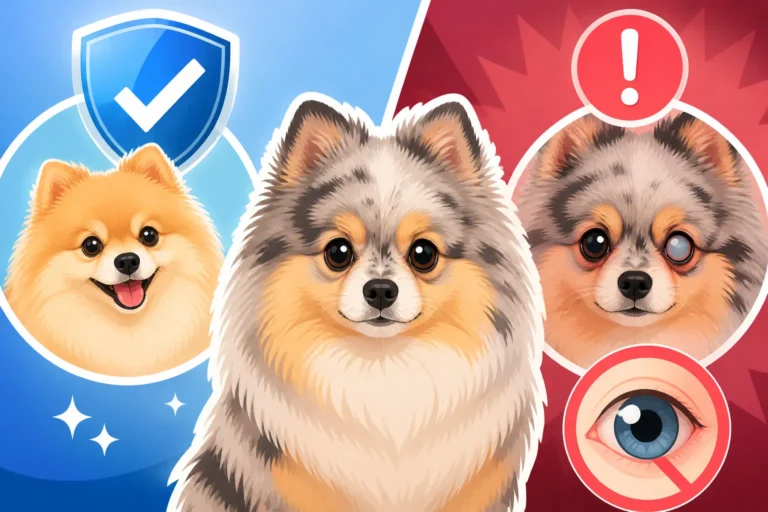
| Merle Ocular Dysgenesis | A range of eye defects (microphthalmia, colobomas, retinal detachment) linked to the merle gene. | Linked to the merle gene; homozygous merles (double merles) are at very high risk. | Merle x Merle breedings should never be done due to the severe health risks, including vision and hearing impairments. Breeding merle to non-merle is acceptable, but breeders should be aware of the potential for milder merle-related ocular issues. See also: Why Double Merle Pomeranian Puppies Are Born Deaf |
| KCS (Dry Eye) | Keratoconjunctivitis Sicca: Insufficient tear production, leading to dry, painful eyes. | Can be immune-mediated, or rarely, congenital/inherited. | If inherited, affected dogs should not be bred. If immune-mediated or age-related, breeders should assess overall health and genetic predisposition cautiously. |
This table isn't exhaustive, but it covers some of the more common and serious concerns when it comes to Pomeranian eye health and breeding decisions. Always consult with a board-certified veterinary ophthalmologist for specific guidance on your breeding dogs. It’s also wise for breeders to also get Checking a Pomeranian Breeder's Heart Clearances and look at other health issues such as What Teacup Breeding Costs a Pomeranian to ensure overall responsible breeding.
The Long-Term Commitment to Pomeranian Eye Health
Ensuring good eye health in Pomeranians is a long-term commitment that begins long before a puppy is born and continues throughout its life. It's a testament to the dedication of responsible breeders who prioritize the well-being of their dogs over profit or convenience. Every step, from initial screening to ongoing care, contributes to the health and happiness of these wonderful companions.
Taking the time to understand certifications, genetic risks, and the signs of ocular disease empowers breeders to make the best decisions for their lines. It prevents unnecessary suffering, reduces the financial burden on future owners, and helps preserve the integrity and vitality of the Pomeranian breed for generations to come. When you are looking for a puppy, always ensure that the breeder has transparent health clearances in place. A reputable breeder will always share information and even proactively encourage you to consider aspects like Whether a Pomeranian Puppy Comes With a Health Guarantee and discuss the overall health picture of their breeding animals.
Ultimately, the goal is to produce healthy, happy Pomeranians with clear vision and comfortable lives. This dedication to eye health, alongside other important considerations like Whether a Pomeranian Needs a Cardiac Screen Before Breeding, reflects a true passion for the breed and a profound respect for the animals we bring into the world.
Disclaimer
This article is intended for informational purposes only and does not constitute professional veterinary advice. Always consult with a qualified veterinary professional for any health concerns or before making any decisions related to your Pomeranian's health or breeding program.