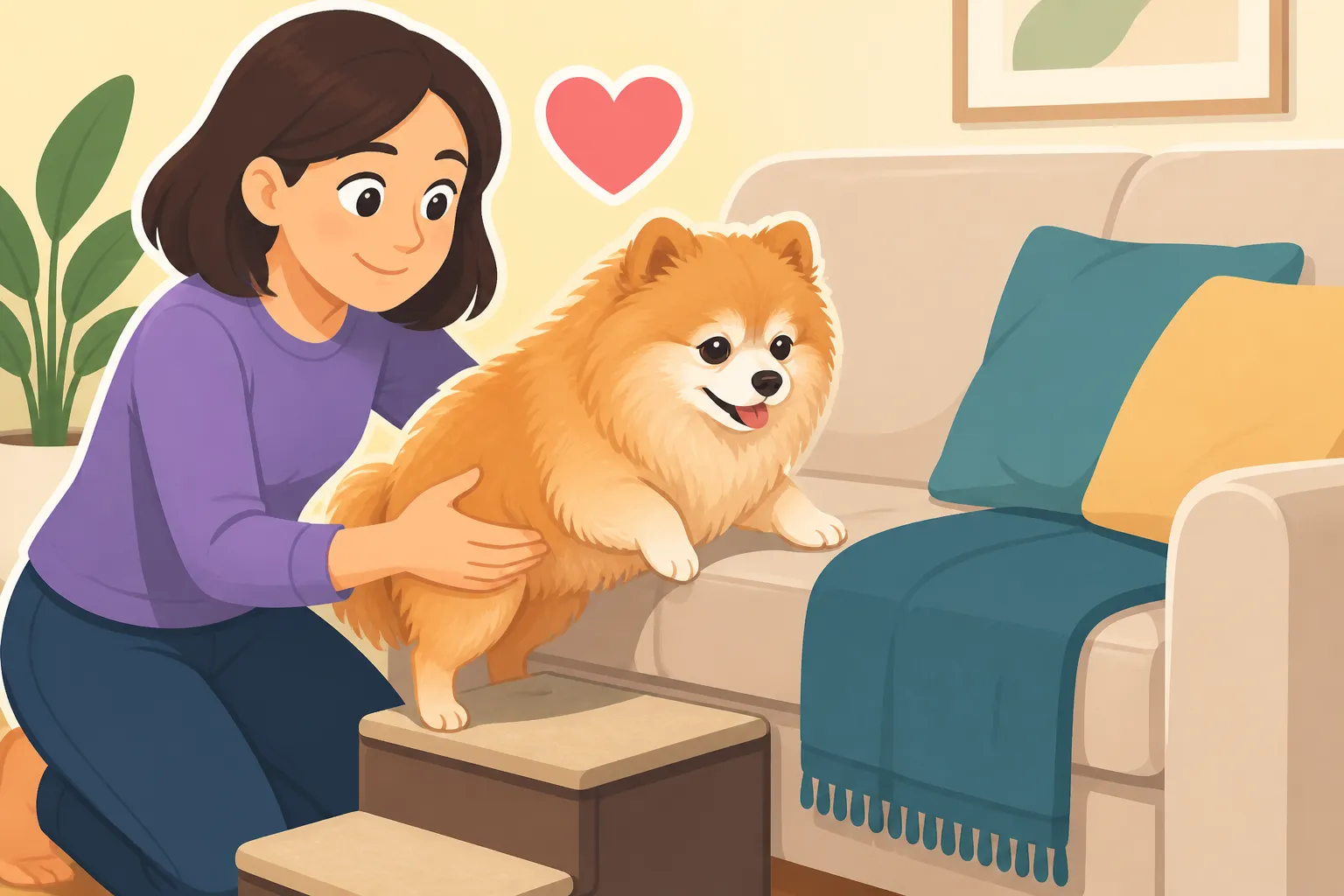
Helping an Old Pomeranian Onto the Couch
It’s a heart-wrenching moment for any Pomeranian parent: you watch your once-spry companion hesitate, maybe even whimper a little, as they try to leap onto their favorite spot on the couch. As our beloved Poms age, everyday activities that were once second nature can become painful struggles, and getting up onto the sofa is often one of the first challenges we notice. This guide is dedicated to helping you understand why your senior Pomeranian might be struggling and, more importantly, providing practical, compassionate solutions to keep them comfortable and close to you, where they belong.
Understanding the Physical Challenges of an Aging Pomeranian
Just like us, Pomeranians experience physical changes as they get older. What might seem like a simple jump to us can become an insurmountable hurdle for an aging dog. These changes aren't just about slowing down; they often involve specific physical limitations that make certain movements uncomfortable, painful, or even dangerous. Recognizing these underlying issues is the first step in providing the best support for your furry family member.
Joint Pain and Arthritis
One of the most common culprits behind an older Pomeranian's reluctance to jump is joint pain, particularly arthritis. Over years of joyful play, those tiny joints, especially in the hips, knees, and spine, can experience wear and tear. This is particularly true for a breed like the Pomeranian, known for their energetic bursts and agile movements in their younger years. Cartilage, which acts as a cushion between bones, begins to erode, leading to bone-on-bone friction, inflammation, and chronic discomfort.
Imagine trying to jump onto a high surface when every flex of your knee sends a sharp pang through your leg. That’s a bit like what many senior Poms face. They might have developed Arthritis in a Pomeranian at Ten or are experiencing the worsening of pre-existing conditions like luxating patellas (Slipping Kneecaps in a Five Pound Pomeranian) that become more symptomatic with age. The simple act of bending their back legs to propel themselves upwards, or absorbing the impact of landing, can be excruciating. This isn't them being stubborn; it's genuine physical limitation, and it requires our understanding and proactive intervention to alleviate their suffering.
Muscle Weakness and Loss of Coordination
Aging also brings about a natural decline in muscle mass, a condition known as sarcopenia, and a general weakening of the muscles needed for powerful movements like jumping. Even if their joints aren't screaming, weakened hind leg muscles simply might not have the strength to launch them onto the couch. Furthermore, their core strength, essential for balance and stability, can also diminish. This means even if they manage the jump, landing gracefully might be a wobbly, unstable affair that puts them at risk of a fall or further injury.
This loss of muscle tone and coordination isn't just about jumping; it can affect their gait, make climbing stairs difficult, and even cause them to stumble on uneven surfaces. This can be frustrating for them, as they still have the mental desire to be with you on the couch, but their body just won't cooperate. It’s a subtle but significant change that impacts their confidence and overall mobility, reminding us that The First Signs a Pomeranian Is Aging often manifest in these seemingly minor physical limitations.
Vision and Spatial Awareness Changes
While often overlooked, declining eyesight and changes in spatial awareness can also play a role in an older Pomeranian's hesitation to jump. As Poms age, they can develop conditions like cataracts or nuclear sclerosis, which can cloud their vision, making it harder to accurately judge distances or the height of the couch. What was once a familiar target can become a blurry, uncertain landing zone.
Even if their vision is relatively good, cognitive decline, which can affect an older dog's spatial reasoning, might make them misjudge jumps. They might hesitate, approach the couch, back away, and try again, exhibiting a clear uncertainty that wasn't there in their youth. This combination of physical discomfort, muscle weakness, and sensory/cognitive changes paints a complex picture, emphasizing why a multi-faceted approach to helping them is so important.
Practical Solutions for Couch Access
Once you understand why your senior Pomeranian is struggling, you can start implementing practical solutions. The goal is to eliminate the need for jumping altogether, providing safe and comfortable alternatives that still allow them to enjoy their favorite spots and cuddle up next to you.
Ramps: The Gentle Gradient Solution
When it comes to aiding an aging Pomeranian, ramps are often considered the gold standard over steps. The key benefit of a ramp is its gentle incline, which completely removes the jarring impact associated with jumping up or down steps. This is incredibly beneficial for dogs with arthritis, hip dysplasia, or back issues, as it allows them to walk up and down smoothly, distributing their weight evenly and minimizing stress on their delicate joints. For a tiny Pomeranian, a long, gradual ramp is much easier to navigate than a steep, short one.
When choosing a ramp, look for one that is stable and has a non-slip surface, like carpet or a rubberized tread, to ensure your Pom has good traction. Wooden ramps are sturdy, but make sure the surface offers grip. Consider the height of your couch and choose a ramp that is long enough to provide a comfortable, gentle slope. A ramp that's too steep will be almost as challenging as jumping. You might need to gently guide your Pom up and down the ramp a few times with treats and positive reinforcement until they get the hang of it. Many owners find Ramps for a Pomeranian That Jumps Off the Sofa to be a life-saver, as they prevent injury and encourage independence.
Steps: When They Might Be Appropriate
While ramps are generally preferred, dog steps can still be a viable option for some older Pomeranians, especially if space is limited or if your Pom's mobility issues are not severe. The key is to select steps that are specifically designed for small breeds and prioritize stability and appropriate sizing. The steps should be wide enough for your Pom to comfortably place all four paws on each step, and the rise (height) of each step should be low enough for their short legs to manage without straining.
Look for steps with anti-slip surfaces, just like ramps, and make sure they are heavy or sturdy enough not to wobble or tip when your Pomeranian uses them. Lightweight foam steps can be great for puppies but might not offer the stability an older, less confident dog needs. Introduce them slowly, using treats to encourage your Pom to use them. If your Pomeranian has significant joint pain or advanced arthritis, steps might still put too much strain on their body, making a ramp a better choice. However, for those with mild stiffness, carefully selected Sofa Steps a Pomeranian Will Actually Use can be a convenient solution to grant them access to their favorite spots.
Safe Lifting Techniques
Sometimes, despite your best efforts with ramps or steps, your older Pomeranian might still need a little help getting onto or off the couch. It's crucial to learn safe lifting techniques to avoid injury to both your dog and yourself. Never grab your Pomeranian by their legs, scruff, or under their armpits. Their tiny bones and fragile frames are susceptible to injury, and improper lifting can exacerbate existing joint pain or even cause new issues.
The safest way to lift a Pomeranian is to support their entire body. Gently slide one hand under their chest, just behind their front legs, and the other hand under their hindquarters, supporting their belly and back legs. Lift smoothly and evenly, keeping their body as level as possible. Hold them close to your body for stability and comfort. Lower them just as gently. Making this a calm, comfortable experience will build trust and reassurance for your senior Pom, ensuring that when they need your help, it's a positive interaction rather than a stressful one. Consistent and careful handling is key for their comfort and well-being.
Creating a Safe and Accessible Home Environment
Beyond the immediate challenge of couch access, thinking holistically about your entire home environment can make a world of difference for an aging Pomeranian. Small adjustments can prevent accidents, reduce discomfort, and improve their overall quality of life as they navigate their golden years.
Ergonomic Furniture and Pet-Friendly Design
Consider the height and type of furniture in your home. While the couch is a primary concern, other pieces like beds or chairs might also become inaccessible. Investing in Beds an Old Pomeranian Can Climb Into or even a low-profile dog bed placed right next to your own bed can be a huge comfort. Evaluate your furniture layout to create clear pathways, especially for Poms whose vision might be deteriorating or who might be prone to An Old Pomeranian That Wanders at Night due to cognitive changes.
Sometimes, the best solution is simply lowering the couch itself, if possible, or opting for an ottoman or a footstool that serves as an intermediate step. The goal is to minimize high-impact movements and create spaces where your Pomeranian can relax and feel secure without needing to exert themselves excessively. Thinking about their perspective – low to the ground, with short legs and potentially stiff joints – helps in designing a truly pet-friendly and age-friendly home.
Floor Traction and Hazard Prevention
Slippery floors are a major hazard for older dogs, especially those with muscle weakness, arthritis, or diminished coordination. Hardwood, tile, and laminate floors offer little to no traction, making it difficult for Poms to stand up, walk, or change direction without slipping. A sudden slip can lead to painful falls, sprains, or even serious injuries like a torn cruciate ligament or further damage to already compromised joints.
Combat this by strategically placing non-slip rugs, runners, or carpet tiles in high-traffic areas and wherever your Pomeranian tends to walk or rest. Ensure these rugs have rubber backings to prevent them from sliding themselves. Keeping your Pomeranian's paw pads trimmed of excess hair and their nails short can also improve their grip. Additionally, keep pathways clear of clutter that could be tripping hazards, both for your Pom and for you, especially if you're carrying them. A safe floor environment is foundational to an aging dog's mobility and confidence.
Regular Veterinary Care and Pain Management
No amount of ramps or soft beds can replace the importance of consistent, high-quality veterinary care for an aging Pomeranian. Regular check-ups are essential to monitor their overall health, catch potential issues early, and adjust pain management strategies as needed. Your vet can diagnose conditions like arthritis, recommend appropriate medications (NSAIDs, gabapentin, etc.), and discuss supplements like glucosamine and chondroitin, or fish oil, to help support joint health. It's important to ask Whether Joint Support Helps a Pomeranian's Knees and tailor a plan.
Don't wait until your Pomeranian is visibly limping or crying out in pain to seek veterinary attention. Subtle signs like hesitation, slowing down, or reluctance to engage in once-loved activities can indicate discomfort. Be proactive with their The Checkup Schedule a Pomeranian Should Keep and discuss any changes you observe, no matter how small. Many pet insurance providers, such as Healthy Paws, offer coverage that can help manage the ongoing costs of senior care, including diagnostics, medications, and physical therapy, making it easier to provide the best possible treatment without financial stress. Whether it's managing chronic pain or ensuring they get necessary procedures like Whether an Old Pomeranian Should Have a Dental, proper veterinary oversight is paramount to their comfort and longevity.
Comparison of Couch Access Aids
When deciding between a ramp or steps, it's helpful to consider the pros and cons relative to your Pomeranian's specific needs and your home environment.
| Feature | Ramps | Steps |
|---|---|---|
| Ease of Use | Gentle, continuous incline; ideal for severe joint pain/mobility issues. | Requires some lifting/stepping motion; suitable for mild stiffness. |
| Impact on Joints | Zero impact; minimizes stress on joints. | Low impact, but still requires joint flexion and weight bearing. |
| Space Required | Generally requires more floor space due to the gradual slope. | More compact; better for smaller living areas. |
| Stability | Must be very stable and non-slip to prevent falls. | Each step must be stable; width and depth are crucial. |
| Training Time | May take a little longer for some dogs to adjust to the concept. | Often more intuitive if steps have been used previously. |
| Versatility | Can often be used for beds, cars, and other higher surfaces. | Primarily for couches or low beds; less versatile for varying heights. |
| Aesthetics | Can be bulky, but many stylish options exist. | Can blend more easily into home decor, especially smaller units. |
Ultimately, the best choice depends on your individual Pomeranian's health status, their willingness to learn a new method, and the specific layout of your home. Sometimes, a combination of solutions in different areas of the house works best.
Disclaimer
This article is intended for informational purposes only and does not constitute professional veterinary advice. Always consult with a qualified veterinarian regarding any health concerns or before making any decisions about your Pomeranian's care, diet, or treatment. Individual results and experiences may vary.