What the National Pomeranian Club Actually Does
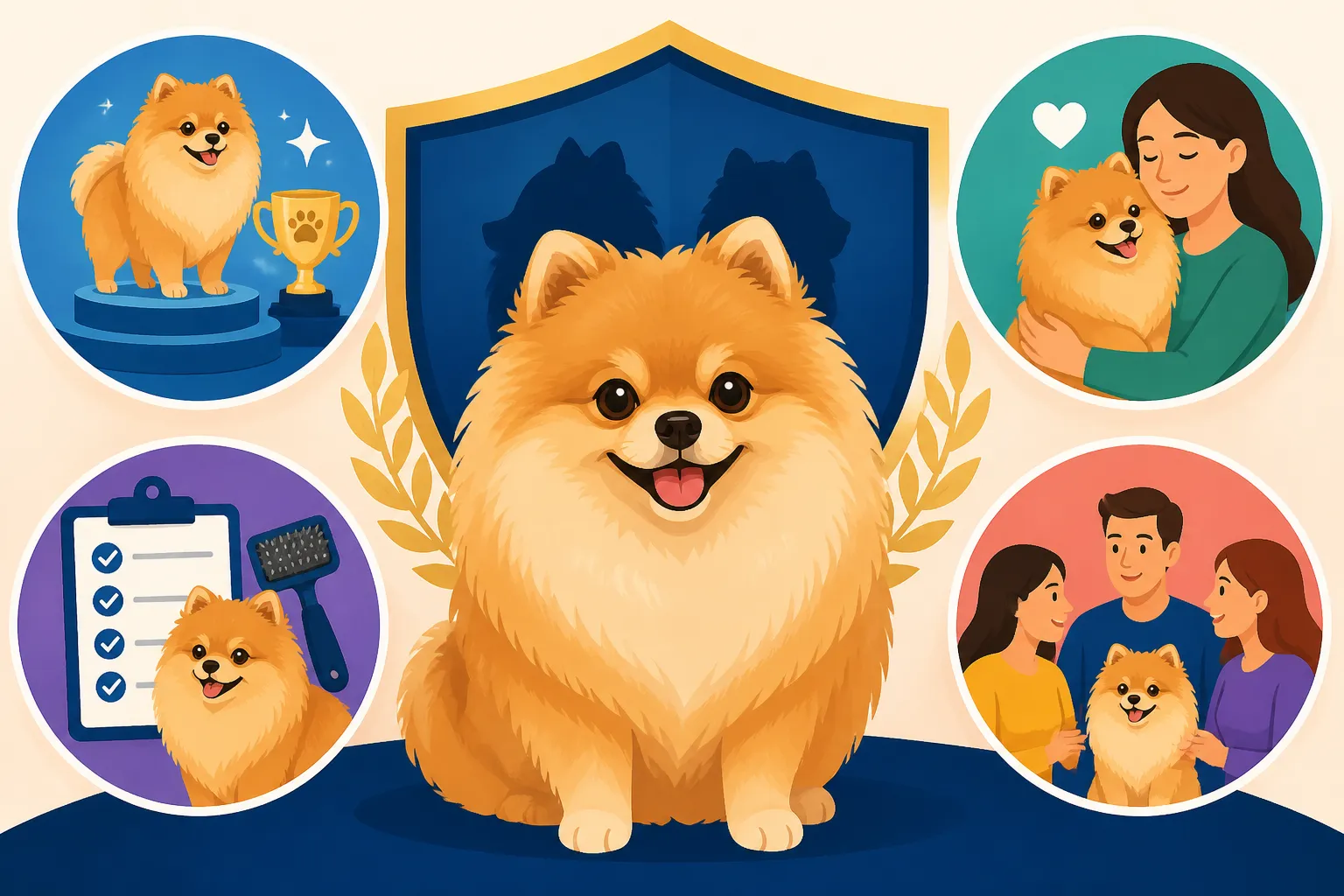
A national Pomeranian club can sound like a private group for show breeders, but its work reaches much further: it helps preserve breed type, educate owners and breeders, and connect people with Pomeranian events and resources. Knowing what the club can—and cannot—do makes it easier to find trustworthy guidance without assuming it regulates every breeder or dog.
What the National Pomeranian Club Is
A breed club, not a government regulator
In the United States, the American Pomeranian Club is the national parent club associated with the breed and the American Kennel Club. It represents Pomeranian interests within the organized dog world, but it is not a government agency, licensing authority, or general enforcement body. It does not inspect every home where Pomeranians are bred, approve every litter, or guarantee the health or temperament of an individual dog.
That distinction matters when you are trying to sort out conflicting claims online. A breeder may say they belong to a club, but membership alone does not prove that a puppy is healthy, well socialized, or a good match for your household. Ask about the parents’ health, the puppies’ care, and the breeder’s written policies. For a closer look at what responsible breeder paperwork should include, see The Papers a Pomeranian Breeder Should Provide.
A club’s influence is more about setting and sharing standards, encouraging education, and supporting breed activities. It can help people understand what the breed is meant to look and behave like, but individual breeders and owners still make the day-to-day choices that shape a dog’s life.
A voice for the breed
A parent club helps represent the breed in settings such as conformation shows and communication with the wider dog community. In conformation, judges assess how closely a dog matches the written breed standard, including its structure, coat, movement, and overall appearance. That standard gives breeders, judges, and enthusiasts a shared reference point; it is not a complete checklist for choosing a companion dog.
For example, a family comparing two friendly Pomeranians may care most about confidence, health, and whether a dog can comfortably fit their routine. A show judge has a different task: evaluating how each dog’s physical traits compare with the standard. Understanding that difference can make discussions about “show quality” less confusing. Whether a Show Pomeranian Differs From a Pet explains why those labels do not tell the whole story about an individual dog.
The standard also gives clubs and breed educators a way to explain the Pomeranian’s recognized size and appearance. If you are trying to understand how judges interpret the breed’s proportions, The Weight the Pomeranian Standard Requires offers useful background. Breed standards guide evaluation; they should not be mistaken for a promise that every dog will have the same adult size, coat, or personality.
What the Club Does for Pomeranians and Their People
Promotes breed education and responsible ownership
A national club can help make breed information easier to find, whether you are learning the basics before adopting or trying to understand a particular feature of your dog. Pomeranians are small, lively dogs with a dense double coat, and their care can involve questions about grooming, training, dental health, and safe handling. A good educational resource helps owners ask better questions rather than replacing advice from a veterinarian or qualified trainer.
This kind of guidance is useful when everyday care feels unexpectedly complicated. A new owner may not know whether a fluffy coat should be clipped, or why a harness is usually preferable to putting pressure on a small dog’s neck. Club material can help point owners toward the relevant issues and encourage them to discuss individual concerns with a professional. For the background behind the breed’s coat, see The Double Coat That Makes a Pomeranian and Why It Stays On.
Education also includes helping people understand that Pomeranians are not simply decorative lap dogs. They need gentle handling, enrichment, and consistent training. Their size can make them vulnerable to accidental injury, while their alert nature can make barking a challenge in some homes. A club’s general information may help set realistic expectations, but it cannot assess your dog’s specific behavior or health from a distance.
Supports shows and other breed activities
Breed clubs help sustain opportunities for people to meet Pomeranians, learn about the breed, and take part in organized dog activities. Conformation shows are one visible example, but events can also offer a chance to talk with experienced owners and breeders. A show is not just a beauty contest: dogs are evaluated against a written standard, and the event provides a structured setting for learning about breed traits.
For a first-time visitor, the atmosphere can feel unfamiliar. You may hear terms about coat, expression, movement, or structure that are not part of everyday pet ownership. It is fine to ask questions, but remember that exhibitors may be focused on preparing for competition. Look for event information in advance and check whether visitors are welcome to approach handlers at a particular time.
Seeing several dogs together can help you notice how much individual Pomeranians vary while still sharing recognizable breed characteristics. If you want to understand the type of features discussed around the ring, The Head and Expression a Pomeranian Judge Wants and What Puts a Pomeranian Out of the Ribbons provide helpful context. A show can be educational, but a ribbon is not a guarantee of a dog’s health, suitability as a pet, or quality as a breeding prospect.
May help people locate breed-specific resources
A club may provide contact points or referrals for people looking for breeders, events, or breed-related information. Treat a referral as a place to begin your research, not as a guarantee. You still need to ask questions, meet the breeder when possible, understand the contract, and consider whether the dog’s needs match your household.
The same care applies if you are looking for help with a Pomeranian in need of a new home. Breed clubs and volunteers may be able to direct you toward rescue or rehoming resources, but the exact services available can differ. A club is not necessarily a shelter, and it may not have a dog available when you need one. If you are considering adoption, ask who is responsible for the dog’s medical records, behavior information, and transition support.
| What you need | How a national club may help | What you should still check |
|---|---|---|
| Breed information | Offers general education and links to breed resources | Whether the advice fits your dog’s individual needs |
| A breeder lead | May help you find contacts or starting points | Health information, living conditions, references, and contract terms |
| Show or event details | Shares information about breed activities | Visitor rules, event schedules, and whether dogs may attend |
| Rescue or rehoming help | May direct you to relevant contacts | Medical history, behavior notes, and post-adoption support |
| Health guidance | May share breed-related education | Diagnosis and treatment advice from your veterinarian |
What a National Pomeranian Club Does Not Do
It does not guarantee a breeder or puppy
A club listing, referral, or membership can be useful, but it should not replace your own careful screening. Ask how the puppies are raised, what veterinary care they have received, and what health information is available for the parents. A responsible breeder should be willing to answer thoughtful questions and should also ask about the home a puppy will enter.
Be wary of anyone who uses a club name as a substitute for clear answers. “I’m affiliated with a breed club” does not explain how the breeder handles health concerns, what happens if an owner can no longer keep the dog, or whether a puppy’s paperwork matches the claims in an advertisement. For more on how the breed developed into its familiar small size—and why size claims deserve care—read How Breeders Selected Pomeranians Down in Size and Whether the Pomeranian Is Being Bred Too Small.
A club’s educational role is different from a puppy guarantee. If a breeder provides a written health guarantee, read the actual terms rather than relying on a verbal description. Ask what the guarantee covers, what actions you must take, and what support the breeder offers if a serious issue arises.
It does not replace veterinary care or official breed records
A breed club can share broad information about common concerns, but it cannot examine your dog, diagnose an illness, or tell you which treatment is appropriate. If your Pomeranian is coughing, limping, refusing food, or showing a sudden change in behavior, contact a veterinarian rather than relying on a general club resource or online discussion.
Nor should a club’s advice be confused with official registration or health documentation. Registration records and veterinary records serve different purposes. Registration can document a dog’s place in a recognized registry; it does not certify that the dog is free of every inherited condition or that a particular breeding decision was responsible.
When the issue is urgent, the most useful resource is usually a veterinary clinic or emergency service, not a club contact. Clubs are better suited to breed education and community connections than to making individual medical decisions.
It does not make every member’s opinion official policy
Dog communities include people with different experience, priorities, and opinions. A breeder, exhibitor, rescue volunteer, and pet owner may all care deeply about Pomeranians but focus on different aspects of the breed. A comment made by one member at a show or on social media is not automatically an official position of the national club.
If a claim seems important, look for a formal club statement or educational resource rather than relying on a secondhand quote. This is especially useful when discussions become heated around coat colors, size, breeding practices, or show preferences. You can learn about the broader breed context in The German Spitz Family a Pomeranian Belongs To, but individual debates may still involve differing views.
It is reasonable to ask, “Is this the club’s published guidance, or your personal experience?” That simple question can help separate an organization’s formal work from informal conversation.
How to Use Club Resources as an Owner
Start with the question you need answered
Before contacting a club or attending an event, write down what you are trying to learn. If you are choosing a puppy, your questions may be about breeder practices, health records, and temperament. If you already have a Pomeranian, you may need information about grooming, training, or breed activities. A focused question is more likely to get a useful answer than a broad request to “tell me everything about Pomeranians.”
For grooming questions, club education can help you understand what a double coat needs, but you will still need to choose tools and a routine that suit your dog. If you are searching for a slicker brush, comb, or dog-safe shampoo, a pet retailer such as Chewy may be one place to compare options. Check that products are appropriate for your dog and ask a groomer or veterinarian if a skin or coat problem is involved.
If your concern is behavior, note what happens before and after the problem. “My dog barks at the window every afternoon” gives a trainer more to work with than “My dog is bad.” Club resources can point you toward general breed information, while a qualified trainer can help build a plan around your home and your dog.
Confirm details before relying on a referral
If you receive a breeder, rescue, or event contact, follow up directly and verify the details. Ask who will answer your questions, what information they can provide, and whether there is a formal application or process. Keep copies of important paperwork, including veterinary records, contracts, and registration documents.
For supplies, Chewy can be useful when a local shop does not carry a small size or a particular grooming item, but product availability and suitability vary. Compare measurements, read the care instructions, and avoid assuming that a product marketed for small dogs will automatically fit a very small Pomeranian. A poorly fitting harness or oversized chew can create a practical problem even when the product category sounds right.
If you are considering a breed club event, check the organizer’s visitor guidance before arriving. Some events are busy working environments, and the dogs may not be available to meet. Planning ahead helps you respect exhibitors’ time and gives you a better chance of finding the right person to answer your questions.
Keep the club in perspective
The national Pomeranian club is best understood as part of a larger support network. Your veterinarian helps with medical care, a responsible breeder or rescue helps with a dog’s background and transition, a trainer can address behavior, and a groomer can help with coat maintenance. The club’s role is to support breed education and community—not to replace all of those relationships.
For many owners, that is enough to make club resources worthwhile. You might use them to learn what a show is evaluating, discover local events, or find a starting point for responsible breeder research. You may never attend a show or contact the national organization directly, and your Pomeranian can still have a full, healthy life.
If your interest is practical rather than show-focused, use club information as a reference point and build your own trusted team around the dog. Chewy may help you source routine supplies, while your veterinarian and groomer can advise on what is safe and suitable for your particular Pomeranian. That combination keeps general breed guidance in its proper place: helpful context, not a substitute for individual care.
Disclaimer
This article is for general informational purposes only and does not constitute professional advice. Laws, prices and regulations vary by location and change over time. Consult a qualified professional for guidance on your specific situation.