Whether a Pomeranian Works as a Companion for Another Dog
A Pomeranian can enjoy living with another dog, but a second pet is not an automatic cure for loneliness or barking. The best match depends on both dogs’ temperaments, play styles, health, and ability to share space safely. This guide explains how to judge compatibility, introduce dogs gradually, and avoid the small-dog conflicts that can catch owners off guard.
Do Pomeranians Usually Get Along With Other Dogs
Social, confident, and still very individual
Pomeranians are often lively, alert, and interested in what is happening around them. Many enjoy canine company, especially when they have grown up around other dogs or had calm, positive encounters as puppies. But breed tendencies are only a starting point. One Pom may happily nap beside a gentle senior dog; another may prefer being the only dog in the home.
A Pomeranian’s confidence can also be bigger than its body. Some will approach much larger dogs without hesitation, while others feel safer with a quiet, smaller companion. This is not necessarily a sign that a dog is “bad with dogs.” It may simply mean that the dog needs more space, slower introductions, or a different kind of playmate.
Pay attention to the individual dog in front of you. Does your Pom relax around other dogs, or remain tense and watchful? Does it choose to approach and sniff, then move away comfortably? Or does it bark, hide, freeze, or try to control every interaction? Those details tell you more than the general reputation of the breed.
If you are still deciding whether the breed’s energy and social habits fit your home, The Home a Pomeranian Belongs In offers a wider look at the kind of household in which a Pom tends to thrive.
Why a second dog may not solve loneliness
It is tempting to think that another dog will keep a Pomeranian company whenever you leave. Sometimes the dogs do enjoy each other’s company, but it is not a reliable fix for distress about being alone. A Pom that panics when its person leaves may continue to panic even with another dog nearby. A new pet can also add excitement and disruption rather than comfort.
Watch how your Pomeranian behaves when you are home and the other dog is present. Do they choose to rest near each other? Can they spend time in the same room without constant play or tension? Does your Pom seem calmer, or does it repeatedly seek your attention and react to the other dog? Their everyday behavior is more useful than an assumption that “dogs need a friend.”
If separation is the main concern, work on the dog’s ability to feel safe during brief, gradual periods apart from you. A second dog can be part of a happy home, but it should be chosen because you want and can care for both dogs—not as a treatment for an existing behavior problem. For a closer look at the breed’s tendency to form intense bonds with people, see The Pomeranian That Cannot Be Left Alone.
How size and play style affect safety
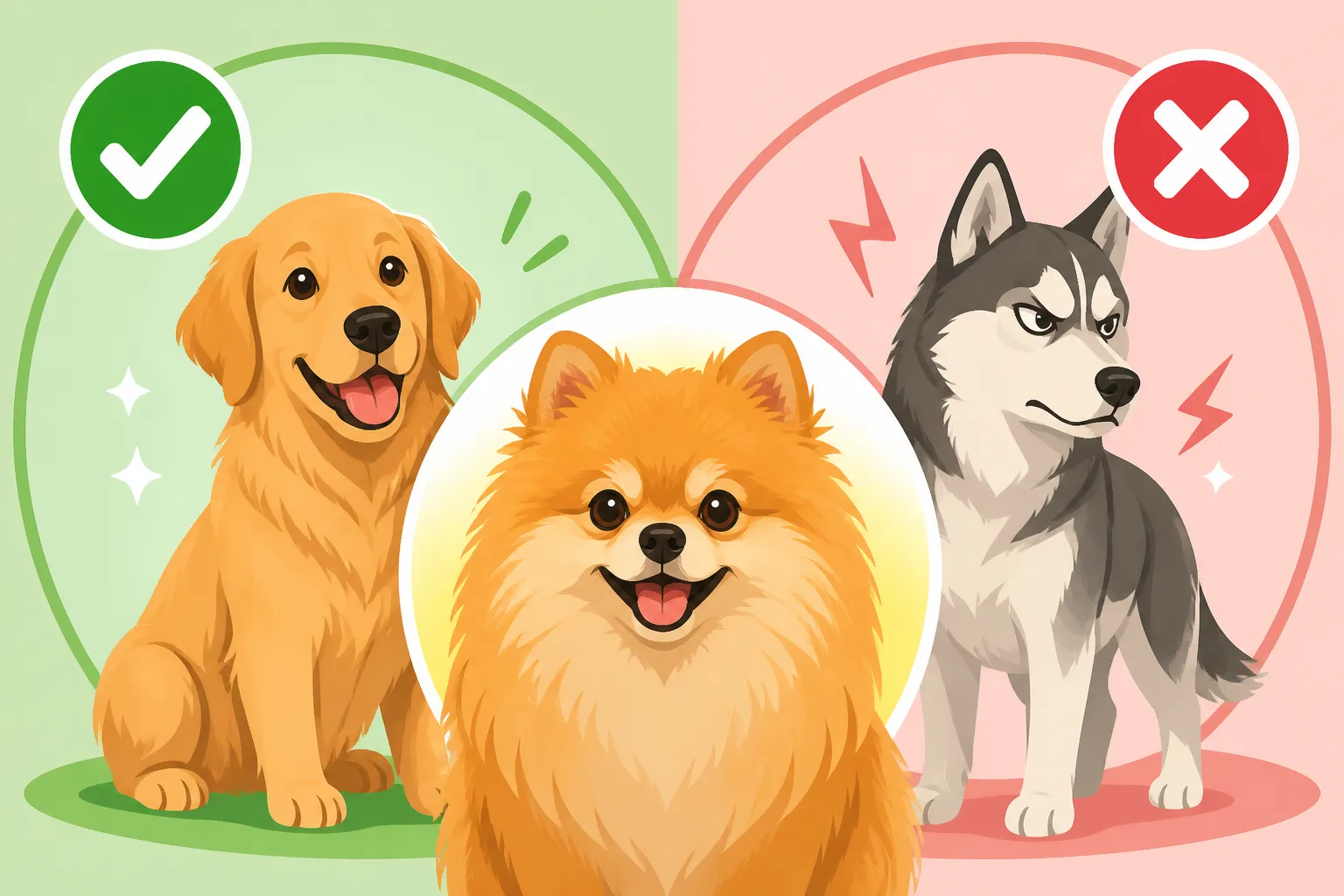
A major concern with a toy-sized dog is the physical mismatch between playmates. A large dog may be friendly and still injure a Pomeranian by stepping on it, bowling it over, or playing too roughly. Even a young, excitable dog that means no harm may be too much for a Pom with delicate legs or a history of joint problems.
That does not mean every Pomeranian must live only with tiny dogs. A calm, well-mannered larger dog can be a good companion if the household manages interactions carefully. Look for a dog that responds to cues, can disengage from play, and does not chase or body-slam a smaller animal. A dog’s behavior matters more than its size alone, but size changes the consequences when play goes wrong.
Give the Pom places to retreat where the other dog cannot follow, such as a gated room or a secure pen. Keep play supervised, particularly at first, and end it while both dogs are still relaxed. If you are considering a much larger dog, A Five Pound Pomeranian Around Big Dogs explains why supervision and physical separation can matter even when the larger dog is friendly.
Choosing a Good Companion for Your Pomeranian
Match temperament before focusing on breed or sex
A good companion is not simply another dog of a particular breed, size, or sex. Think about activity level, sociability, confidence, and how each dog handles frustration. A busy, persistent puppy may overwhelm an adult Pomeranian who prefers quiet. A steady, gentle adult may be a more comfortable fit, though age alone does not guarantee compatibility.
Consider the daily rhythm of both dogs. If your Pom enjoys short bursts of play followed by long naps, a dog that expects constant roughhousing may be a poor match. If your Pomeranian is playful and curious, a socially confident companion that can take breaks and respond to signals may suit it better. Dogs that enjoy similar activities are easier to manage, but they do not need identical personalities.
When possible, arrange a controlled meeting before making a decision. A neutral outdoor area is often less stressful than bringing a newcomer straight into the Pomeranian’s home. Keep both dogs on loose leads with enough space to move away, and let them approach at their own pace. Do not force nose-to-nose greetings or hold one dog in your arms while the other investigates; that can make either dog feel trapped.
Puppies, adult dogs, and senior Pomeranians
A puppy can be a joyful addition, but puppies often miss subtle signals and keep trying to play after an adult dog has had enough. If your Pomeranian is older, sore, or easily startled, provide protected rest areas and interrupt the puppy’s pestering before your Pom has to growl or snap to be heard.
An adult dog may have a more settled routine, which can make its needs easier to assess. Ask about its history with small dogs, resource guarding, and reactions to household activity. A calm dog in a foster home may offer more useful information about its day-to-day behavior than a brief meeting in a busy setting.
For a senior Pomeranian, consider comfort first. A new companion should not be allowed to crowd the dog’s bed, steal food, or startle it when it is resting. Senior dogs can live happily with younger dogs, but they need escape routes and protected downtime. If your older Pom already struggles with stairs or jumping, Helping an Old Pomeranian Onto the Couch has related guidance on making everyday movement easier and safer.
When two Pomeranians might suit each other
Another Pomeranian may share your dog’s scale and familiar style of play, but that does not guarantee an easy pairing. Two Poms can compete for your lap, alert bark together, or become excited by the same visitors and sounds. On the other hand, compatible Pomeranians may enjoy playing, exploring, and resting together.
Look at how each dog handles attention and resources. If either dog guards food, toys, resting places, or a person’s lap, adding another dog may require careful management and professional guidance. Separate feeding spaces and individual one-on-one time are useful even in a peaceful two-dog home.
A second Pom also means duplicating care responsibilities. Both dogs need individual training, grooming, veterinary attention, exercise, and opportunities to build confidence apart from each other. The goal is not simply to have two dogs occupy the same home; it is to help each one feel secure and receive enough attention.
Introducing a Second Dog to a Pomeranian
Prepare the home before the first meeting
Before bringing a new dog inside, set up separate areas for sleeping, eating, and resting. Use gates or closed doors so each dog can decompress without being followed. Put away high-value chews and favorite toys at first; even friendly dogs may feel uneasy when a newcomer approaches something they treasure.
Make the first meeting in a calm, neutral place if possible. Have one adult handle each dog, use secure equipment that fits properly, and keep leads loose rather than pulling the dogs toward each other. A harness can help you guide a small dog without putting pressure on its throat. If you need guidance on safe dog-to-dog introductions, Introducing a Pomeranian to a Larger Dog covers additional considerations for a big size difference.
Supplies can make the transition easier when they create clear boundaries. For example, a sturdy gate or a separate bed gives each dog space to settle. If you are sourcing everyday pet supplies, Chewy is one retailer people may use to look for options such as gates, beds, and bowls; check product dimensions and safety details before choosing anything for a small dog.
Let the relationship build at the dogs’ pace
Start with short, low-pressure sessions. Walk parallel at a comfortable distance, allowing the dogs to notice each other without being required to interact. If both stay loose and curious, you can gradually reduce the distance. If one becomes stiff, repeatedly barks, hides, or tries to escape, increase space and try again later rather than insisting on a greeting.
At home, keep early visits brief and supervised. Reward calm behavior, including choosing to look away or settle. Those quiet moments are valuable: dogs do not have to play or lie together to be getting along. A peaceful ability to share a room is a better early sign than frantic chasing or wrestling.
Use separate feeding areas, particularly at first. Pick up bowls afterward, and supervise access to chews and toys. Chewy may be a convenient place to compare separate feeding bowls or enrichment items, but equipment alone will not prevent conflict; thoughtful placement and supervision matter more. Keep the dogs apart when no one can watch them until you have seen consistent, relaxed behavior over time.
Read body language and intervene early
Loose, wiggly movement, brief sniffing, and the ability to pause or move away can suggest that an interaction is comfortable. In contrast, a rigid posture, hard staring, pinned ears, repeated blocking, or one dog continually pursuing another deserves attention. A growl is communication, not a reason to punish the dog; calmly create space and identify what made the dog uncomfortable.
Watch the smaller dog closely during play. A Pomeranian that keeps trying to escape, hides behind a person, or stops engaging may be overwhelmed, even if the larger dog is still wagging its tail. Dogs can also become overexcited, so pause play for a short break before either dog is exhausted or irritated.
If tension repeats around food, toys, beds, or people, manage those situations separately and seek help from a qualified, reward-based trainer or veterinary behavior professional. Persistent fighting, injuries, or escalating fear are not problems to leave the dogs to “sort out.” A gradual introduction is helpful, but safety and humane handling come first.
Making a Two-Dog Home Work Long Term
Keep routines and resources predictable
Dogs often settle more comfortably when the important parts of their day are predictable. Feed them in separate places, keep their sleeping areas available, and give each dog individual time with you. This helps avoid a pattern where one dog constantly interrupts the other or has to compete for attention.
Make sure each dog has its own well-fitting walking equipment. Pomeranians are small and can be vulnerable if a larger dog lunges or pulls during a shared walk. Practise walking them separately before attempting outings together. Once both are calm on their own, brief parallel walks may help them build a familiar routine without requiring constant face-to-face interaction.
Grooming and care routines also need individual attention. A second dog should not mean your Pom’s coat, nails, teeth, or health appointments get less attention. The practical work of maintaining a Pomeranian’s dense coat is covered in The Grooming Schedule a Pomeranian Runs On, and regular care can help keep both dogs comfortable around one another.
Give each dog a way to opt out
A successful multi-dog household includes time apart. Use a pen, gate, crate, or separate room to let each dog sleep or enjoy a chew without interruption. Do not let the larger dog crowd the Pomeranian’s bed, and do not expect the Pom to tolerate constant attention just because the other dog is friendly.
Teach simple household skills individually, such as coming when called, settling on a bed, and waiting before approaching food. These skills make everyday moments easier: the new dog can wait while you give your Pom medication, or your Pomeranian can relax behind a gate while the other dog eats. Small, calm routines are often more useful than trying to make the dogs spend every moment together.
If you are planning to add another dog, remember that the best outcome may be companionship at a comfortable distance rather than inseparable playmates. A Pomeranian can thrive with another dog when both animals are compatible, introductions are patient, and people protect each dog’s space. The decision is less about whether Pomeranians “like dogs” in general and more about whether these two particular dogs can share a home safely and comfortably.
Disclaimer
This article is for general informational purposes only and does not constitute professional advice. Laws, prices and regulations vary by location and change over time. Consult a qualified professional for guidance on your specific situation.