Whether Queen Victoria Owned More Than One Pomeranian
It's a common and delightful curiosity to ponder the pets of historical figures, and for Pomeranian enthusiasts, Queen Victoria's connection to our fluffy companions is legendary. We often hear tales of her beloved "Marco," but it leaves many wondering: was Marco her only Pomeranian, or did her royal household buzz with the lively presence of many tiny, spirited dogs? The truth is, Queen Victoria's affection for Pomeranians ran deep, extending far beyond a single pet, and her profound influence truly shaped the breed we cherish today. This guide will explore the full scope of her royal Pomeranian pack and the lasting legacy she left on this wonderful breed.
The Royal Introduction to the Pomeranian Breed
Queen Victoria's long reign saw her embrace many changes and, famously, many dogs. Her introduction to the Pomeranian wasn't immediate, but once she discovered them, her devotion was unwavering. Before her time, Pomeranians were quite different – larger, more working-type dogs, often weighing over twenty pounds, a far cry from the dainty companions we recognize.
Her Initial Fascination
The story of Queen Victoria and the Pomeranian often begins in Florence, Italy, during one of her many visits. It was there, in 1888, that she first encountered the smaller, more refined version of the German Spitz-type dog that would capture her heart. Up until this point, the Pomeranian, while recognized, was not nearly as widespread or as small as it would become. Imagine seeing these vibrant, intelligent dogs, full of character, especially when one was accustomed to larger, more traditional breeds. It must have been quite a charming sight! She was captivated by their compact size, their luxurious coats, and their bright, engaging personalities. This encounter sparked a fascination that would lead her to become a pivotal figure in the breed's development. This pivotal moment is often highlighted when discussing Queen Victoria, Marco and the Pomeranian.
Marco: The Star of Her Kennel
While she undoubtedly encountered several Pomeranians in Italy, one in particular stands out in history: Marco. Marco was a tiny, red sable Pomeranian, reportedly weighing a mere 12 pounds – quite small for a Pomeranian of that era, though still larger than many modern show dogs. He quickly became her constant companion, accompanying her almost everywhere. It's said that Marco’s presence in her life was a testament to the comforting and loyal nature of these dogs. He wasn't just a pet; he was a close confidant, offering silent companionship during a time when her life as monarch was often isolating. Marco's prominence was such that he was even exhibited at Crufts, one of the world's most famous dog shows, where he won first prize. His public appearances and the Queen's open adoration of him did wonders for the breed's burgeoning popularity. We delve deeper into Marco, Victoria's Pomeranian, and the Year 1888 in another article.
A Royal Pack and a Lasting Impact
Queen Victoria's love for Pomeranians wasn't a fleeting fancy; it blossomed into a genuine passion that saw her acquire many more of these delightful dogs. Her personal kennel eventually housed a significant number of Pomeranians, and her dedication to the breed had a profound and irreversible impact on its size, appearance, and popularity.
A Growing Royal Kennel
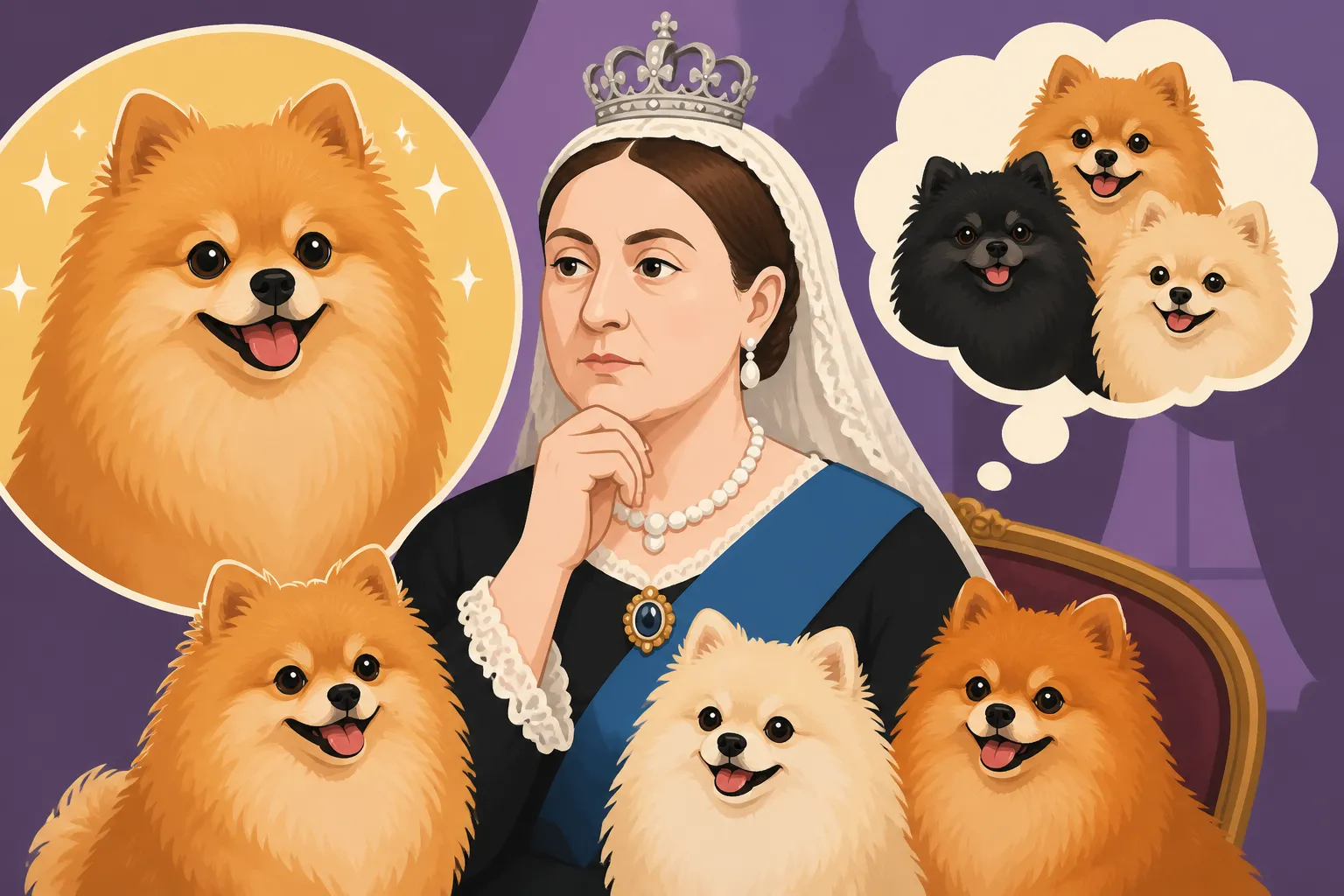
Indeed, Queen Victoria owned many Pomeranians throughout her later life. Marco was just the first to capture her heart, but he was soon joined by others. Her royal household became home to a veritable collection of these small, fluffy companions. Some sources suggest she owned a dozen or more at any given time, each with their own unique personality and place within her affections. Think about the joy and liveliness a pack of Poms would bring to a royal residence! Among her other notable Pomeranians were "Gina," a beautiful white Pom, and "Turi," another favorite who was famously by her side during her final illness. This devotion to multiple dogs really illustrates her deep affection for the breed, seeing them not just as novelty pets but as true companions. The number of Pomeranians in her life grew considerably, leading to a vibrant and active "Pomeranian club" within her own royal circle.
The Breed Standard She Inspired
The greatest legacy of Queen Victoria's ownership wasn't just the sheer number of Pomeranians she owned, but how she influenced the breed's direction. She actively encouraged the breeding of smaller Pomeranians, preferring those with the more compact, fluffy appearance we associate with the breed today. At the time she first encountered them, Pomeranians were still closer in size to their larger German Spitz relatives, with many weighing over twenty pounds. Her preference for smaller dogs directly led to breeders focusing on reducing their size. This intentional breeding over several decades transformed the breed, dramatically shrinking it to the three to seven pounds typically seen now. It’s truly amazing to consider How the Pomeranian Halved in Size in One Lifetime thanks to one person’s dedication. Her involvement was instrumental in promoting the breed's visibility and solidifying its place in the dog-fancy world. It was around this time, specifically in The 1891 Show That Changed the Pomeranian, that the breed truly began to gain international traction.
The Enduring Legacy of Queen Victoria's Pomeranians
Queen Victoria's patronage did more than just fill her palace with charming dogs; it cemented the Pomeranian's status as a popular companion animal and significantly influenced its development for generations to come. Her choices and preferences echo even today in how the breed is viewed and bred.
Pomeranians as Royal Companions
The image of Queen Victoria with her Pomeranians, particularly Marco or Turi, helped to elevate the breed's status from a somewhat lesser-known European Spitz to a fashionable companion animal across the globe. Her public affection for them, and their constant presence, made these little dogs desirable to the upper classes and, eventually, to the wider public. Imagine the conversations at garden parties or royal events, all revolving around the Queen's delightful little companions. This endorsement from the highest echelon of society was invaluable. It truly validated the idea of a small dog, not just for hunting or working, but purely for companionship and joy. It's fascinating to consider The Pomeranian That Sat With Victoria at the End and how that image has resonated through history.
| Name | Known for | Impact |
|---|---|---|
| Marco | Small, red sable male, purchased in Florence. | Her first and most famous Pomeranian, significantly popularizing the smaller type and winning prizes at Crufts, bringing international attention to the breed. |
| Gina | White female Pomeranian. | Contributed to the diversity of colors within her kennel and in the emerging breed lines, showcasing that not all Poms were the then-common orange or sable. |
| Turi | Unspecified color, believed to be a favorite. | Famously by her side during her final hours, underscoring the deep emotional bond she shared with her dogs and the comforting presence they provided even in her last moments. |
| Fluffy | One of many Poms in her large collection. | Represents the numerous other Pomeranians she owned, collectively contributing to her influence on breeding for smaller sizes and a variety of appealing temperaments, solidifying the breed's appeal. |
| Nino | Another cherished member of her royal kennel. | Further illustrates the breadth of her ownership and her personal investment in developing a diverse and healthy lineage of Pomeranians, ensuring the breed's future viability and appeal beyond just a few famous individuals. |
Enduring Influence on Breed Popularity
Even after Queen Victoria's passing, the momentum she created for the Pomeranian continued. Her influence can be seen in the breed's trajectory throughout the 20th century and into today. The desire for a smaller, fluffier Pomeranian, directly stemming from her preferences, became the prevailing ideal, shaping breeding programs for decades. This is why when you see discussions about Whether Victoria's Dogs Would Be Pomeranians Today, the answer often involves a consideration of size. Today, when you visit a pet supply store or browse online at places like Chewy for your Pomeranian's favorite food or toys, you’re indirectly experiencing the ripple effect of her royal patronage. The breed's popularity allowed for extensive development, making it easier for owners to find specialized small-breed products, from tiny dental chews to ergonomic harnesses perfect for a delicate Pomeranian frame. This widespread availability and breed-specific focus would have been unimaginable in Victoria’s time, highlighting how far the breed has come.
Her efforts weren't just about aesthetics; they were about cementing the Pomeranian as a cherished companion. Without her passionate advocacy and direct involvement, it’s quite possible the Pomeranian would have remained a larger, less known breed, or might have developed along entirely different lines. Her commitment helped establish the characteristics that breeders aimed for, making the "toy" Pomeranian the standard. This means that every time we see a fluffy, vibrant Pomeranian trotting along, we're witnessing a direct descendant of the breed that captivated a Queen. Whether you're looking for a special shampoo to keep that double coat looking its best, or simply stocking up on treats for your little companion, platforms like Chewy make it incredibly convenient to cater to the specific needs of a modern Pomeranian, a breed forever linked to its royal champion.
Disclaimer
This article is for general informational purposes only and does not constitute professional advice. Laws, prices and regulations vary by location and change over time. Consult a qualified professional for guidance on your specific situation.