How a Region Gave the Pomeranian Its Name
Have you ever wondered about the origins of your fluffy companion's rather grand-sounding name? Many Pomeranian owners are curious why this tiny dog carries the name of a historical region, and it's a fantastic question! It speaks volumes about the breed's remarkable journey, from its larger ancestors in Northern Europe to the charming lapdog we adore today, and this guide will unpack exactly how a specific geographical area gave the Pomeranian its distinctive identity.
The Region of Pomerania and Its Historical Significance
Before your Pomeranian became a popular household pet, scampering across your floor and demanding treats (perhaps from a carefully curated selection on Chewy), its ancestors roamed a region with a rich and complex history. The name "Pomeranian" isn't just a fancy designation; it's a direct link to a specific geographical area in Central Europe known as Pomerania. This isn't just a quaint historical tidbit; understanding this geographical context helps us appreciate the rugged origins of these dogs before they became the tiny, regal companions we know.
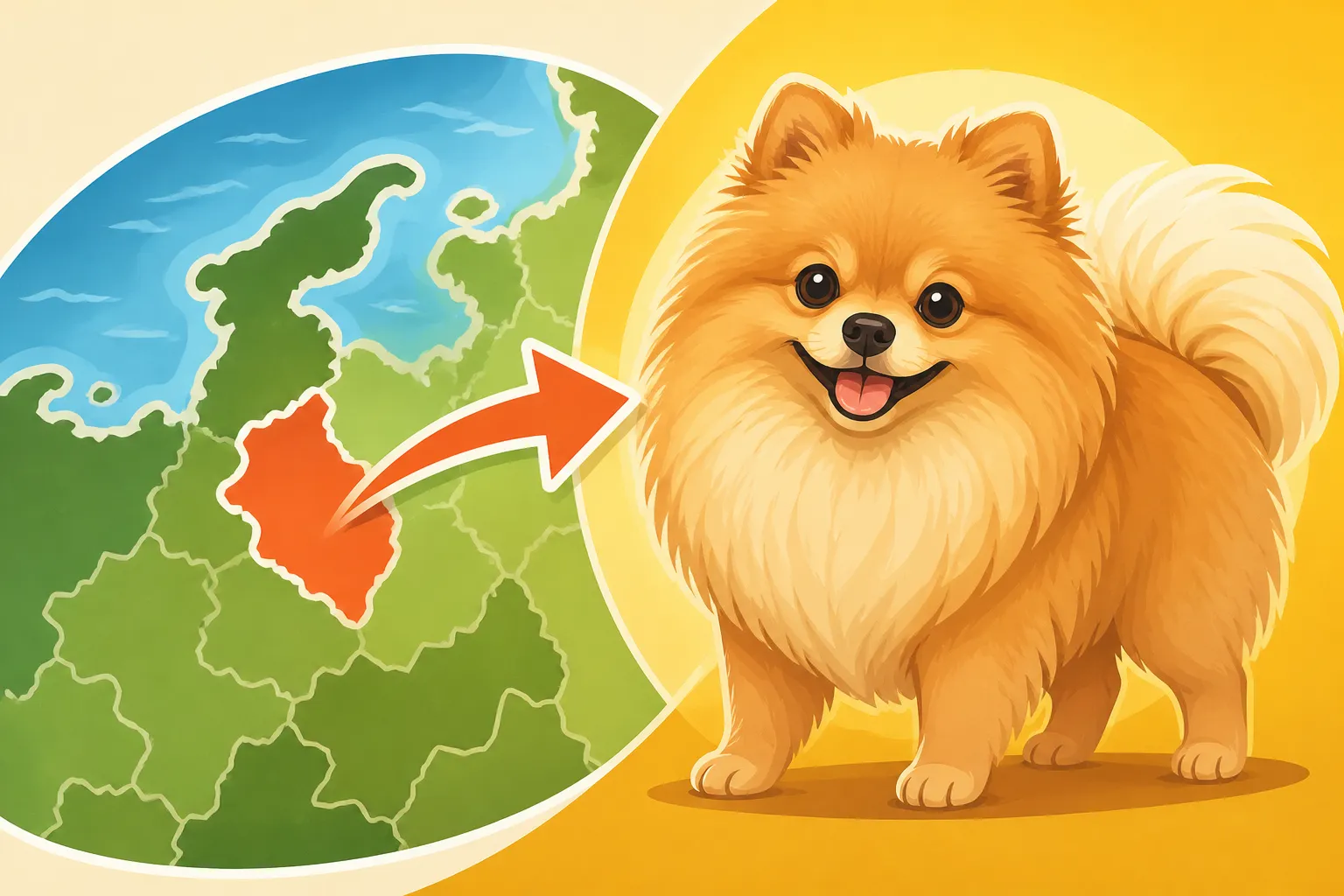
Pomerania itself is a historical region along the southern coast of the Baltic Sea, divided today between modern-day Germany and Poland. Historically, it was a duchy and later a province, marked by its forested landscapes, long coastlines, and a history of various cultural and political influences. This region was known for its hardy livestock, its fishing communities, and a certain resilience in its people and, indeed, its animals. The climate could be quite harsh, with cold winters and varied terrain, which meant that any dog thriving there needed to be robust and capable.
When we talk about Pomerania, we're discussing an area that fostered dogs built for endurance and utility. These were not delicate creatures bred for soft couches, but strong, active dogs. It's easy to picture a larger, more formidable version of today's Pomeranian alongside farmers or fishermen in this region, doing various tasks. The dogs weren't named after a specific city, but after the broader region where their particular type and lineage became prominent and recognized. This geographical identifier was a common way to name breeds during those times, reflecting their place of origin rather than their specific function.
The Pomeranian's Ancestry: From Working Dogs to Small Companions
The Pomeranian's journey from a working dog in the vast, windswept region of Pomerania to the pint-sized fluffball on your lap is truly one of the most fascinating transformations in dog breeding history. It wasn't an overnight change but a gradual process influenced by changing human needs, environments, and ultimately, royal preferences. To truly appreciate your current companion, it helps to cast your mind back to these much larger, more robust ancestors.
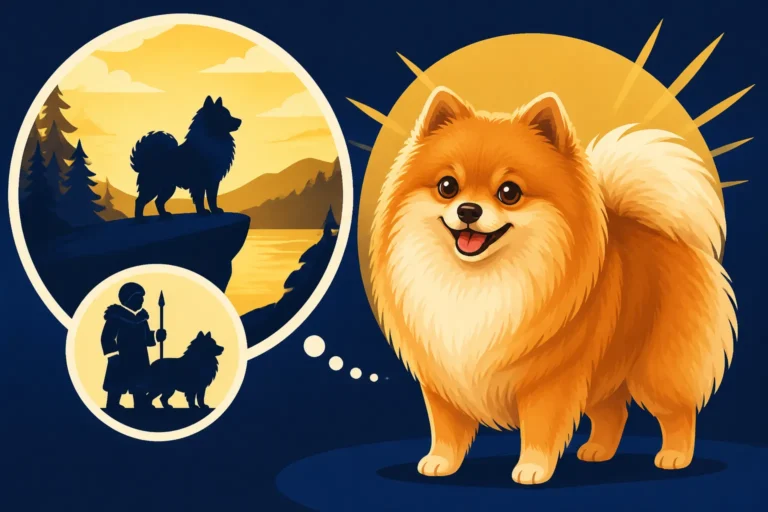
The original dogs of Pomerania were part of the larger Spitz family – hardy, intelligent dogs with thick coats, pricked ears, and tails curled over their backs. These were utility dogs, not pets in the modern sense. They were significantly larger than today's Pomeranians, often weighing anywhere from 20 to 30 pounds, and sometimes even more. Imagine a dog closer in size to a modern American Eskimo Dog or a Keeshond, with a similar dense, weather-resistant coat, and you're getting closer to the breed's initial form. These dogs were primarily used for herding sheep, guarding property, and pulling small sleds or carts. They were valued for their alertness, their protective instincts, and their ability to withstand the challenging Northern European climate. You can learn more about The German Spitz Family a Pomeranian Belongs To and how its roots tie into the breed's origins.
The shift towards miniaturization began gradually as these dogs migrated from their native region to other parts of Europe, particularly Germany and then England. As societies evolved, the demand for large working dogs decreased, while the desire for smaller, more manageable companions grew, especially among the burgeoning middle and upper classes. Breeders started selecting for smaller sizes, a process that takes many generations. They weren't just breeding for size; they were also inadvertently altering other characteristics, such as temperament and coat density, though the core Spitz traits remained.
This change in purpose and size is a critical part of the Pomeranian's story. It wasn't about creating a new breed from scratch, but refining and miniaturizing an existing one. This historical context underscores the remarkable adaptability of the breed and explains why, despite their tiny stature today, Pomeranians often exhibit a bold, confident, and sometimes surprisingly stubborn personality that harks back to their larger, more self-sufficient ancestors. The genetic memory of those sturdy working dogs still flickers in the spirit of our modern companions.
| Feature | Ancestral Pomeranian (18th Century) | Modern Pomeranian (21st Century) |
|---|---|---|
| Origin Region | Pomerania (Germany/Poland) | Worldwide |
| Typical Weight | 20-30+ pounds | 3-7 pounds |
| Primary Role | Herding, guarding, cart pulling | Companion animal, show dog |
| Coat Type | Thick, double coat, weather resistant | Dense, double coat, requires regular grooming |
| Temperament | Robust, alert, protective | Bold, intelligent, lively, can be vocal |
| Appearance | Larger, more rugged, varied colors | Smaller, refined, wide range of recognized colors |
| Energy Level | High working drive | Moderate, enjoys walks and indoor play |
Queen Victoria and the Pomeranian's Rise to Fame
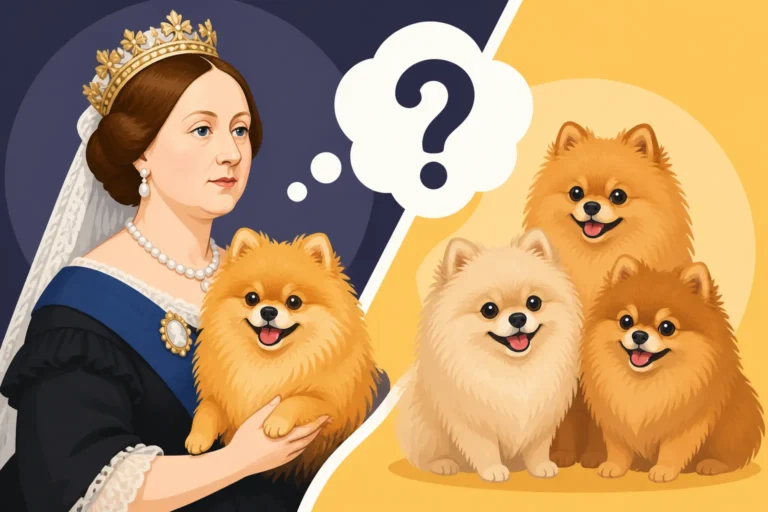
While the Pomeranian's name links directly to its geographical origin and its ancestry as a larger working dog, it was one very influential individual who truly solidified the breed's destiny as a beloved small companion: Queen Victoria. Her deep affection for Pomeranians, particularly her tiny companions, sparked a phenomenal surge in their popularity and forever altered their physical characteristics. It was a royal endorsement that changed the breed's trajectory entirely. You can read more about Queen Victoria, Marco and the Pomeranian.
When Queen Victoria visited Italy in 1888, she was captivated by the smaller Spitz-type dogs she encountered there. She brought several back to England, most famously a red sable Pomeranian named Marco. Marco was considerably smaller than the Pomeranians that were common at the time, weighing only about 12 pounds. The Queen became an ardent breeder and exhibitor of Pomeranians, and her preference for smaller dogs set a new trend. Breeders, eager to cater to royal taste and public demand, began to selectively breed for even smaller sizes. This push to miniaturize happened rapidly over just a few generations.
Victoria's influence cannot be overstated. She showed her Pomeranians at prestigious dog shows, drawing immense attention to the breed. The public, always keen to emulate royal trends, flocked to acquire these fashionable, smaller dogs. Suddenly, the robust, 20-pound dogs of Pomerania were being replaced by the delicate, three-to-seven-pound companions we recognize today. This period was crucial in refining the Pomeranian breed standard, focusing on not just size, but also the lush double coat, the expressive foxy face, and the plumed tail that curls elegantly over the back. This rapid reduction in size is a fascinating aspect of How the Pomeranian Halved in Size in One Lifetime.
The Queen's legacy is why we have the Pomeranian as we know it today. Her dedication transformed a regional working dog into an international sensation, proving that sometimes, the smallest paws can leave the biggest historical imprints. This royal connection helped cement the "Pomeranian" name, giving it a regal association that belied its humble, hardworking origins. The breed's popularity soared in England and then spread across the globe, reaching America and becoming a recognized breed in various kennel clubs, including the American Kennel Club, where they were officially entered into the stud book in The Year Pomeranians Entered the AKC Stud Book.
The German Spitz Connection and Breed Recognition
Understanding the Pomeranian means appreciating its place within the larger German Spitz family. This isn't just a taxonomic detail; it speaks to the shared heritage, physical traits, and ancient lineage that connect the Pomeranian to its larger cousins across Europe. It helps to clarify why, in some parts of the world, the Pomeranian is still very much considered a variation of the German Spitz.
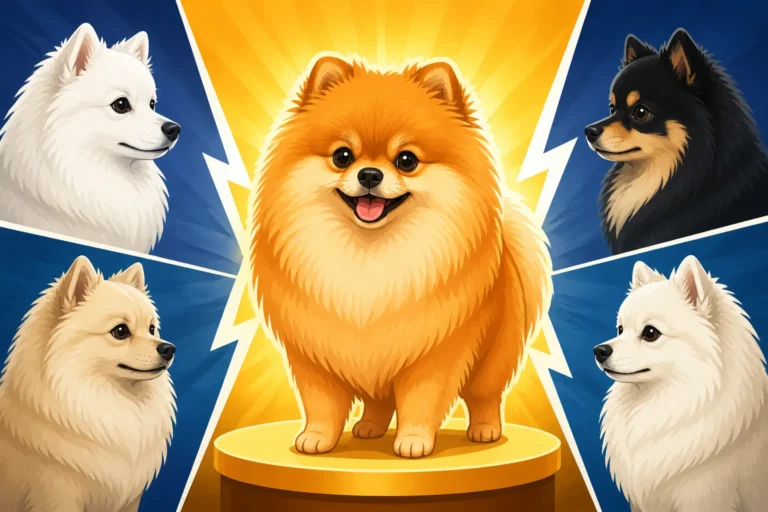
The German Spitz is not a single breed but a category encompassing several breeds of varying sizes, all originating from Germany. These include the Keeshond, the Grossspitz (Giant Spitz), Mittelspitz (Medium Spitz), Kleinspitz (Miniature Spitz), and the Zwergspitz (Toy Spitz). The Zwergspitz is, in essence, the continental European name for what we in the English-speaking world primarily know as the Pomeranian. This explains why organizations like the FCI (Fédération Cynologique Internationale), which governs many European kennel clubs, still classify the Pomeranian as a specific size variation of the German Spitz. This distinction often surprises new owners, but it highlights the deep genetic and historical ties that bind these dogs. You can delve deeper into Why the FCI Files the Pomeranian as a German Spitz.
The common characteristics across the German Spitz family are striking: the dense double coat, the foxy head, small pricked ears, and the high-set, curled tail. These traits are all clearly visible in your Pomeranian, despite its reduced size. They are indicators of an ancient lineage of northern dogs, bred for resilience and vigilance. The Pomeranian simply represents the smallest end of this spectrum, a result of selective breeding driven by fashion and royal preference, as discussed earlier.
When a breeder sells you a puppy, or you look for supplies on a site like Chewy, you're interacting with the result of centuries of refinement. The name "Pomeranian," while geographically specific, also acts as a bridge to this broader Spitz heritage. It signifies a dog that, despite its adorable appearance, carries the spirit and genetic legacy of much larger, older breeds. This connection is not merely academic; it informs our understanding of the Pomeranian's unique personality, its grooming needs (that dense double coat isn't just for looks!), and its remarkable robustness for such a small creature. It's a testament to how an ancient lineage can be molded and adapted, yet still retain its core identity, all while carrying the name of a distant, historical land.
Disclaimer
This article is for general informational purposes only and does not constitute professional advice. Laws, prices and regulations vary by location and change over time. Consult a qualified professional for guidance on your specific situation.