The 1891 Show That Changed the Pomeranian
It’s easy to look at our fluffy, pint-sized Pomeranians today and imagine they’ve always been these dainty little bundles of joy, but that couldn’t be further from the truth. Many new Pom owners are completely surprised to learn that their tiny companion descends from much larger, hardier working dogs. This guide will walk you through the pivotal moment in history – the 1891 Crufts show – that irrevocably changed the Pomeranian breed, shaping it into the beloved toy dog we know today.
Before the Spotlight: The Pomeranian's Humble Beginnings
Imagine a world before social media, before breeders could instantly share photos of their latest litters, a time when dogs were primarily bred for utility. This was the era where the Pomeranian's ancestors thrived, not as lap warmers, but as sturdy, resilient working dogs. Their history isn't one of pampered luxury from the start; it's a tale rooted in the rugged landscapes of Central Europe.
The Working-Class Spitz: A Larger Ancestry
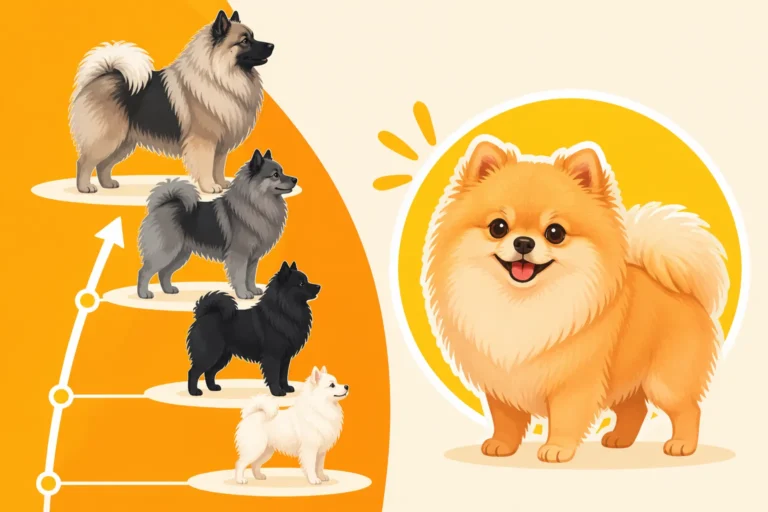
The Pomeranian traces its lineage back to the ancient Spitz breeds of the Arctic regions. These dogs were built for tough environments, with thick double coats, erect ears, and tails that curled over their backs – all traits still visible in our modern Poms, albeit scaled down significantly. Early Pomeranians were substantial dogs, often weighing between 20 to 30 pounds, sometimes even more. Can you picture a Pomeranian the size of a Beagle? It’s hard to reconcile with the fluffy little creature curling up on your sofa, right? These larger ancestors were robust farm dogs, herding sheep, guarding property, and pulling small sleds in the region of Pomerania, an area now split between modern-day Germany and Poland. They were valued for their intelligence, alertness, and courage, not for their ability to fit into a handbag.
They were working dogs through and through, companions to farmers and fishermen. Their thick coats weren't just for show; they provided essential insulation against harsh weather, allowing them to perform their duties regardless of the elements. This heritage of hardiness and purpose is a far cry from the delicate image often associated with the breed today, and it’s important to remember where these resilient little spirits truly came from. If you're curious about their larger relatives, you might enjoy learning about The German Spitz Family a Pomeranian Belongs To.
A Breed of Regional Charm, Not Royal Fancy
For centuries, the Pomeranian remained largely a regional breed, popular in its namesake area but relatively unknown beyond its borders. They weren't gracing the palaces of kings or queens; they were bustling about farms, keeping vermin at bay, and acting as loyal sentinels. Their existence was practical, their appearance secondary to their function. There wasn't a concerted effort to standardize their look or miniaturize them; natural selection and regional breeding for working traits guided their development.
The idea of a "breed standard" as we understand it today was still in its infancy for many dogs. Local varieties existed, and while dogs might be recognized by their general type, there wasn't the meticulous focus on specific weights, heights, or aesthetic nuances that would later define breeds. This unrefined state, though lacking the glamour of later eras, highlights the pure utility and genuine companionship these dogs offered their working-class owners. It was an honest, no-frills existence where a dog's worth was measured by its contribution, not its cuteness.
The Journey to England: From Workhorse to Companion
The Pomeranian's journey from a working dog in rural Europe to a celebrated companion dog began when it caught the eye of visitors from England in the late 18th century. Wealthy travelers and nobility started to bring these interesting "Spitz" dogs back to Britain. However, even then, the dogs were still larger than what we envision as a Pomeranian today. They were still considered medium-sized dogs, admired for their vivacious personalities and beautiful coats rather than their petite stature.
It wasn't until the late 19th century that the breed's fortunes truly began to change, driven by an almost accidental endorsement that would send ripples through the dog breeding world. This shift from robust farm dog to fashionable pet was gradual but irreversible, paving the way for the dramatic transformation that the 1891 show would solidify. This transition demonstrates how human preference can swiftly alter a breed's destiny, sometimes with unforeseen consequences, as we'll explore when we discuss The Twenty Five Pound Pomeranian of the 1800s.
The Great Catalyst: Crufts 1891 and Queen Victoria's Influence
The year 1891 stands as a monumental landmark in Pomeranian history, often cited as the turning point that reshaped the breed forever. It wasn't just another dog show; it was an event where the stars aligned – a new, prestigious show, a popular monarch, and a dog that perfectly embodied a burgeoning trend.
The Inaugural Crufts and its Setting
The first official Crufts dog show, founded by Charles Cruft, was held in Islington, London, in 1891. Even in its inaugural year, it was a grand affair, attracting thousands of entries across numerous breeds. Crufts quickly established itself as the premier dog show in the UK, a place where breeders showcased their best stock and new trends were often set. While dog shows had existed before, Crufts brought a new level of professionalism and public interest. It was the perfect stage for a breed to make a splash and capture the imagination of the public and the dog fancy alike.
Imagine the bustling atmosphere: the anticipation, the finely groomed dogs, the judging rings, and the eager crowds. For many breeds, a win at Crufts could launch them into national prominence. For the Pomeranian, this particular Crufts would do more than just raise its profile; it would redefine its very essence. It's a reminder that sometimes, a single event can have an outsized impact on the trajectory of an entire breed.
The Reigning Monarch's Beloved Companion: Marco
Crucial to the Pomeranian's transformation was the undeniable influence of Queen Victoria. The Queen was a passionate dog lover, and her affection for her own Pomeranians became widely known. She had encountered the breed during her travels to Italy in the 1880s, where she was particularly smitten with the smaller varieties she saw. Among her favorites was a small, red sable Pomeranian named Marco. Marco reportedly weighed around 12 pounds, already significantly smaller than the typical Pomeranians of the era, which often tipped the scales at 20-30 pounds.
Victoria's visible devotion to Marco and other smaller Poms sparked a trend. What the Queen adored, the public desired. Her patronage gave the breed immense cachet, turning it from an obscure working dog into a fashionable accessory for the elite. When Queen Victoria entered her Pomeranians, including Marco, at the 1891 Crufts show, it wasn't just a royal endorsement; it was a clear signal to breeders about the direction of the breed. This influence is so significant that it has its own story: Queen Victoria, Marco and the Pomeranian.
A Smaller Dog Steals the Show: The New Ideal Emerges
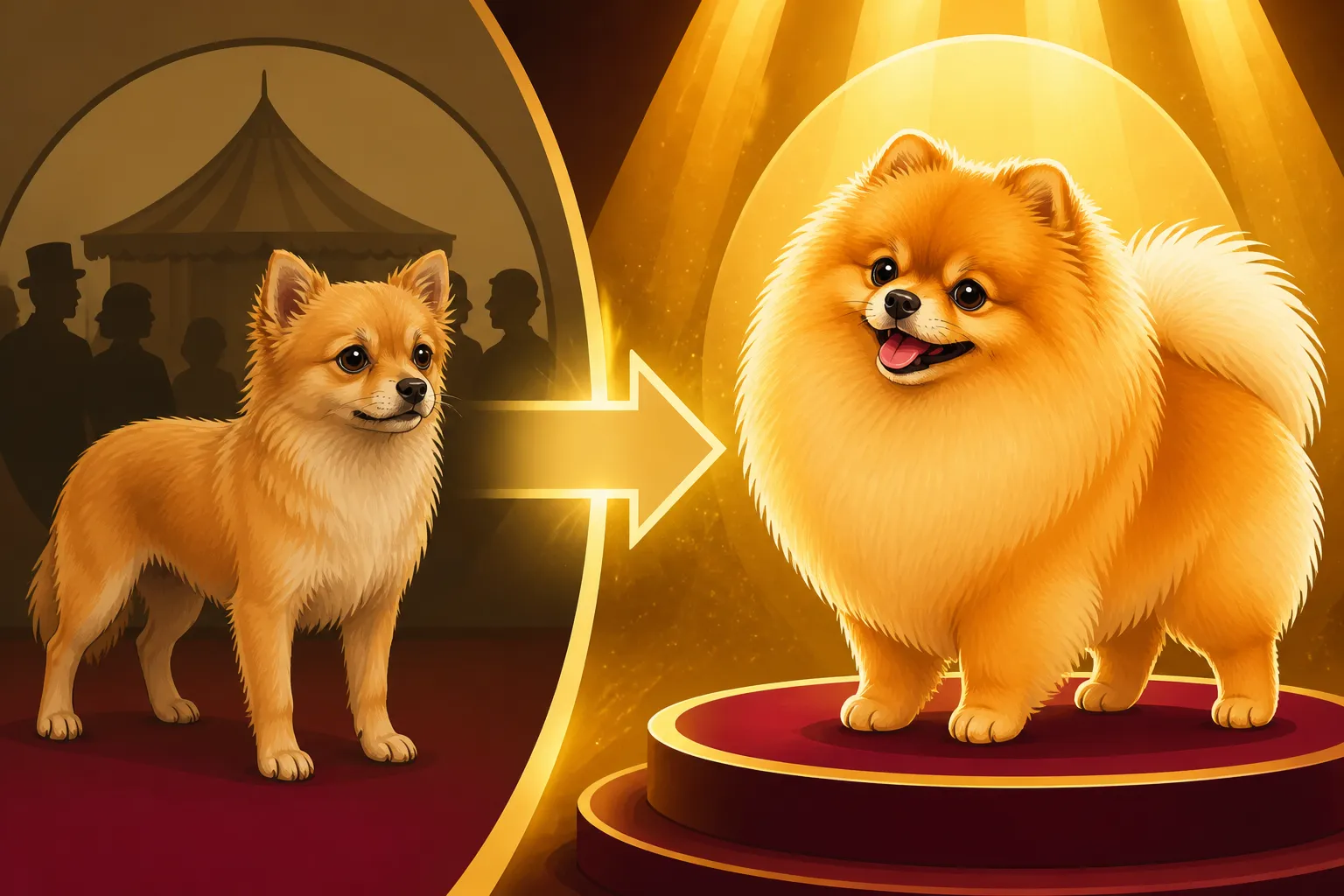
At the 1891 Crufts, Queen Victoria exhibited several of her Pomeranians. While many breeds were judged that day, it was the impact of her smaller Poms, particularly Marco, that captured the attention of both judges and the public. These dogs, with their vibrant personalities and compact size, presented a stark contrast to the larger Pomeranians that had previously been more common. The judges, recognizing the Queen's preference and the evolving taste for smaller companion dogs, began to favor the more diminutive specimens.
This wasn't just a victory for Queen Victoria's dogs; it was a victory for the idea of a smaller Pomeranian. From this moment, the direction of breeding goals shifted dramatically. The robust, 20-30 pound farm dog began its rapid descent in size, as breeders scrambled to produce dogs that mirrored the popular, petite image championed by the Queen and validated by the show ring. The 1891 Crufts solidified the public's perception of what a Pomeranian should be, and that vision was undeniably small.
The Immediate Aftermath: Shifting Standards and Breeding Goals
The reverberations of the 1891 Crufts show were felt almost immediately across the Pomeranian breeding community. It marked a definitive fork in the road, where the path diverged sharply from the breed's working origins towards a future dominated by miniaturization and a refined, toy-dog aesthetic.
The Unofficial Standard: Prioritizing Diminutive Size
With Queen Victoria's preference made clear and the success of smaller Poms at Crufts, breeders had a new, albeit unofficial, mandate: breed smaller. Before 1891, the Pomeranian standard was more flexible, allowing for a wider range of sizes. Post-Crufts, the pressure to produce dogs that fit this new, delicate mold intensified. Suddenly, the larger, hardier examples were less desirable, and the race was on to selectively breed for reduced size. This was not a gradual evolution over centuries; it was a rapid, focused effort that dramatically altered the breed within a few decades.
Breeders began to prioritize smaller breeding stock, often selecting the smallest puppies from litters to carry on the desired traits. This intense focus on miniaturization meant that other characteristics, such as robust health or working ability, might have taken a back seat. The shift was less about formal written standards at first, and more about the prevailing sentiment and market demand. Everyone wanted a "Queen Victoria Pom."
The Explosion of Popularity: Everyone Wanted a "Victoria Pom"
The visibility gained at Crufts, coupled with the royal seal of approval, launched the Pomeranian into unprecedented popularity. Suddenly, this charming, compact dog was everywhere. The demand for Pomeranian puppies skyrocketed, especially for those that were smaller and more refined. This surge in popularity meant that breeders who could produce these desirable, tiny specimens found a ready and eager market. Pet owners, captivated by their dainty appearance and lively personalities, embraced the breed with enthusiasm.
This popularity also meant that more people, perhaps less experienced with selective breeding, entered the fray, eager to capitalize on the demand. While some breeders were meticulous and responsible in their pursuit of smaller size, others may have been less scrupulous, potentially leading to issues that would only emerge later. The public's fascination with these "Victoria Poms" truly cemented their place as one of the most fashionable companion dogs of the era. The impact of this shift is so significant that we often discuss How the Pomeranian Halved in Size in One Lifetime.
The Quest for the Perfect Pint-Sized Pomeranian
The years following 1891 saw a dedicated, almost obsessive, quest for the ideal pint-sized Pomeranian. Breeders focused not just on reducing overall size but also on refining other features to match the toy aesthetic. This included intensifying the coat, giving it that characteristic "stand-off" appearance, and aiming for smaller, more delicate bone structure. The desired "fox-like" face became more pronounced, and the high-set, plume-like tail became a hallmark.
This focused breeding effort, while successful in achieving miniaturization, also presented new challenges. Breeding exclusively for small size can sometimes inadvertently concentrate other traits, some desirable, some less so. For instance, the very small size could lead to delicate bone structures, open fontanelles, and other issues that weren't as prevalent in their larger ancestors. Understanding these historical breeding pressures helps us appreciate the health considerations for Pomeranians today, as discussed in What Teacup Breeding Costs a Pomeranian. Even now, reputable breeders using resources like Chewy for their supplies are still striving for healthy, sound dogs within the small size parameters.
The Lasting Legacy: How One Show Defined a Breed's Future
The 1891 Crufts show wasn't just a fleeting moment; it set the course for the Pomeranian breed for over a century, permanently altering its physical characteristics, its role in society, and the very expectations people have when they welcome one into their homes.
The Pomeranian as a Defined Toy Breed
Before 1891, the Pomeranian was simply a Spitz type dog, known for its regional origins. After this pivotal show, it solidified its identity as a distinct "Toy" breed. The breed standard, which eventually crystallized, unequivocally called for small size, often specifying a weight range that aligns with the modern 3 to 7 pounds. This means that every Pomeranian you see today, from the smallest show dog to the most cherished family pet, is a direct descendant of that shift initiated at Crufts. The Weight the Pomeranian Standard Requires today is a testament to this historical moment.
This reclassification wasn't just bureaucratic; it fundamentally changed how people viewed and interacted with the breed. They were no longer working dogs; they were companions, show dogs, and symbols of luxury. This new role came with new care requirements, new expectations for behavior, and a new emphasis on their delicate beauty. The Pomeranian became an indoor dog, a lap dog, often carried rather than expected to roam fields. This transformation from brawn to beauty is a truly remarkable chapter in canine history.
The Impact on Health and Breeding Practices
While the push for miniaturization brought immense popularity, it also introduced potential health considerations that conscientious breeders have grappled with ever since. The rapid reduction in size, especially when not carefully managed, can sometimes lead to an increased incidence of certain genetic conditions. Issues such as luxating patellas (slipping kneecaps), tracheal collapse, and dental problems are more common in very small breeds, and while they existed before, the intensified breeding for extreme smallness can exacerbate these predispositions.
Modern breeders are constantly working to balance the breed's desired small size with robust health. Genetic testing, careful selection of breeding pairs, and prioritizing overall soundness are paramount. It's a challenging task, but one that dedicated individuals undertake to ensure the Pomeranian remains not just beautiful, but also healthy and long-lived. This careful balance is a key part of conversations around health, such as those concerning The Heart Defect Found in Pomeranian Puppies or The Eye Problems a Pomeranian Carries.
Understanding the Modern Pomeranian's Distinctive Traits
Today's Pomeranian, with its compact body, profuse double coat, foxy expression, and lively disposition, is a living embodiment of the legacy of the 1891 Crufts show. Those defining features – the small size, the upright ears, the high-set tail plume – were either refined or amplified as a direct result of that moment. They are truly distinctive traits that set the Pomeranian apart in the toy group.
When you look at your Pomeranian, you're not just seeing a cute dog; you're seeing a carefully crafted piece of canine history. The breed's entire appearance, temperament, and even some of its vulnerabilities can be traced back to the conscious decisions made by breeders in the wake of that influential show. It's why our Poms are so perfectly suited for apartment living and being cherished indoor companions, a far cry from their ancestors pulling sleds! This is the kind of legacy that shapes the very concept of The Home a Pomeranian Belongs In.
More Than Just a Show: Cultural and Social Shifts
The 1891 Crufts show, and the subsequent transformation of the Pomeranian, wasn't just about dogs; it reflected broader cultural and social shifts in Victorian society and beyond. It highlighted a growing fascination with purebred animals, the influence of celebrity (in this case, royalty), and an evolving relationship between humans and their canine companions.
The Rise of the Pet Fancy and Breed Specialization
The late 19th century was a time of burgeoning interest in purebred dogs and the establishment of formal kennel clubs and breed standards. Crufts itself was a symbol of this growing "dog fancy," where dogs were admired not just for their utility but for their aesthetic perfection and adherence to specific breed characteristics. The Pomeranian's journey from a general Spitz type to a highly specialized toy breed perfectly illustrates this trend. People were increasingly seeking specific "types" of dogs, with distinct appearances and predictable temperaments.
This era saw an explosion in the number of recognized breeds and a meticulous focus on lineage and conformation. It was a golden age for selective breeding, where dedicated individuals spent years honing traits. The Pomeranian was merely one, albeit a very prominent one, of many breeds undergoing intense specialization. This period truly laid the groundwork for modern dog breeding and the entire culture surrounding pedigree dogs, even influencing the way we look for specific coats, like wanting Every Color a Pomeranian Comes In.
The Enduring Allure of the Small Companion Dog
The shift in the Pomeranian's size also speaks to the enduring human appeal of small companion animals. As societies became more urbanized and lifestyles shifted, the need for large working dogs decreased. Instead, there was a growing desire for pets that could thrive in smaller living spaces, be easily transported, and offer pure companionship without demanding heavy labor. The Pomeranian, in its newly miniaturized form, perfectly fit this evolving niche.
Small dogs are often seen as less intimidating, easier to manage, and wonderfully portable – qualities that resonated strongly with the Victorian upper and middle classes, and continue to resonate today. This cultural preference ensured the Pomeranian's continued popularity, making it a staple in homes seeking a lively, affectionate, and conveniently sized pet. It’s part of why we often see them being carried in slings or enjoying rides in pet strollers.
Looking Back: Appreciating the Breed's Remarkable Evolution
When we reflect on the 1891 Crufts show and its impact, we gain a deeper appreciation for the Pomeranian's remarkable evolution. It’s a breed that has undergone one of the most significant transformations in canine history, moving from a stocky, utilitarian dog to the fluffy, feisty companion we adore. Understanding this history helps us connect with our Poms on a different level, recognizing the generations of selective breeding and historical events that shaped them.
It also reminds us that breed characteristics are not immutable; they are products of human choice, fashion, and circumstance. This knowledge encourages responsible ownership and breeding, ensuring that while we admire their beauty, we also prioritize their health and well-being. From their larger ancestors to the tiny treasures they are today, Pomeranians have a captivating story, proving that sometimes, even a single show can change everything. It's a story that includes considering if Whether Victoria's Dogs Would Be Pomeranians Today or if they'd be entirely different.
Pomeranian Characteristics Before and After 1891 Crufts
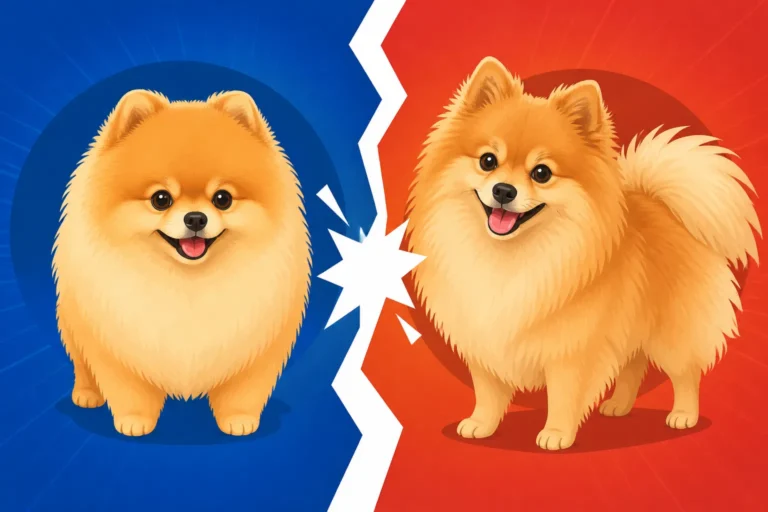
To illustrate the dramatic shift, let's look at a comparison of the typical Pomeranian before and after the pivotal 1891 Crufts show. This table highlights how quickly and profoundly human preference, influenced by royal taste and a prestigious dog show, could redefine a breed.
| Characteristic | Pre-1891 Pomeranian (General Spitz Type) | Post-1891 Pomeranian (Modern Ideal) |
|---|---|---|
| Average Weight | 20-30+ pounds (some up to 50 lbs) | 3-7 pounds |
| Primary Role | Herding, guarding, farm work, pulling small sleds | Companion, show dog, lap dog |
| Appearance | Robust, sturdy build, dense coat, often simpler colors | Delicate, compact, profuse "stand-off" double coat, wide range of colors |
| Face Type | More wolf-like, stronger muzzle | Finer, fox-like expression, shorter muzzle |
| Temperament | Alert, hardy, courageous, independent | Lively, intelligent, affectionate, sometimes bold |
| Bone Structure | Medium to heavy bone | Fine bone |
| Popularity | Regional working dog, modest popularity in UK | Highly fashionable, widespread popularity |
| Recognition | Part of general Spitz group | Distinct "Toy" breed |
This table makes it abundantly clear just how much the breed evolved in a relatively short period, driven by the desire for a smaller, more refined companion. When you're looking for things like a perfectly sized harness or the right grooming tools for their now-profuse coat, retailers like Chewy are excellent resources for accommodating these specialized needs.
Disclaimer
This article is for general informational purposes only and does not constitute professional advice. Laws, prices and regulations vary by location and change over time. Consult a qualified professional for guidance on your specific situation.