Whether a Pomeranian’s Knees Count as Pre-Existing
It's a common, gut-wrenching worry for any Pomeranian parent: that little skip in their beloved floof's step, the momentary yelp, or the sudden holding up of a back leg. Immediately, our minds race to luxating patellas, or slipping kneecaps, a condition far too common in our small, energetic companions. The next thought often turns to vet bills and, inevitably, pet insurance. But does pet insurance even cover patellar luxation if your Pomeranian already shows signs, or if the breed is simply predisposed? This guide is here to untangle the often confusing world of pet insurance and pre-existing conditions, specifically concerning your Pomeranian's precious knees.
Understanding Patellar Luxation in Pomeranians
Before we dive into the nitty-gritty of insurance, let's get a clear picture of what we're talking about when it comes to patellar luxation. It’s not just a fancy vet term; it's a real issue that can cause discomfort and, if left unmanaged, more serious problems for your furry friend.
The Anatomy of a Slipping Kneecap
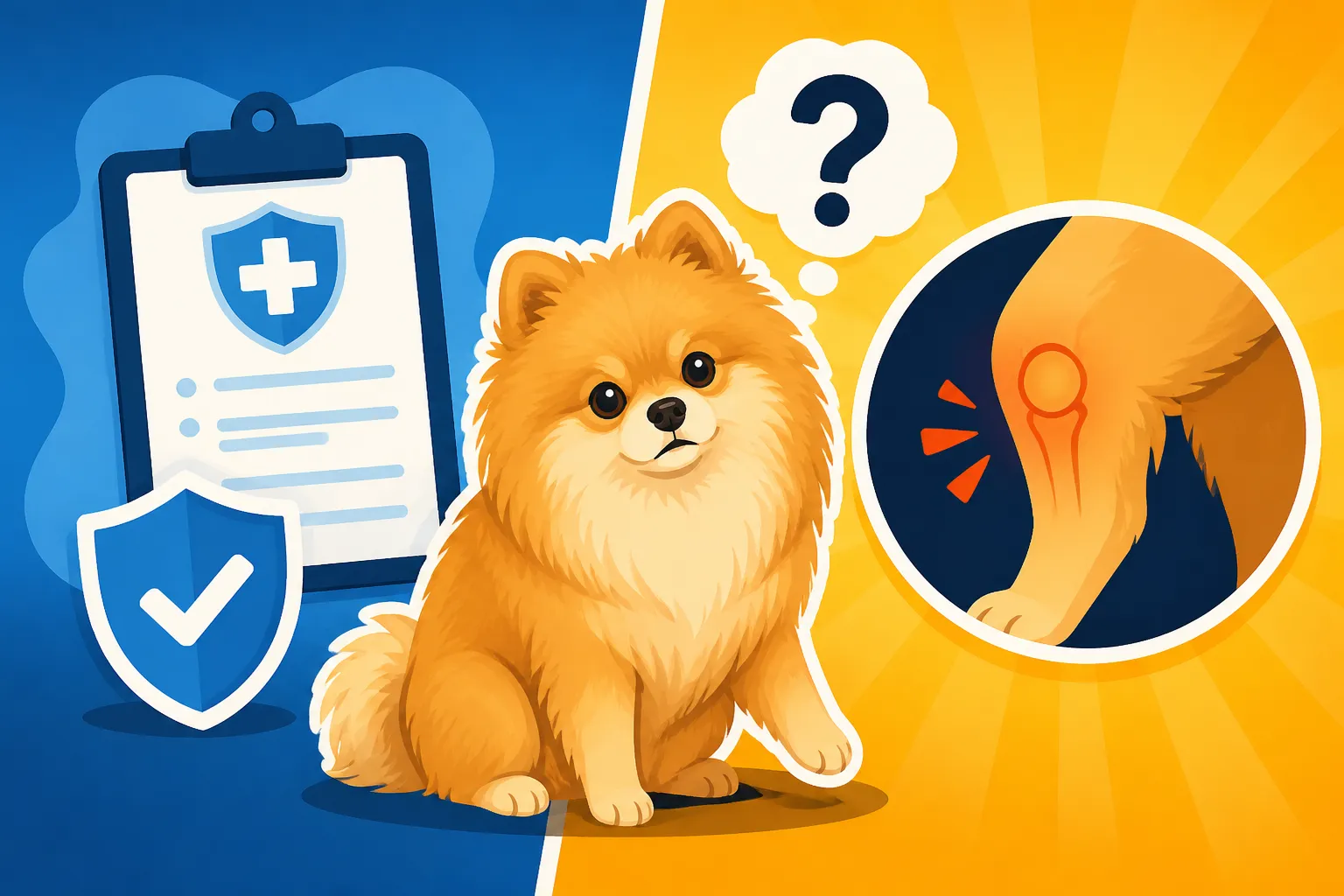
Imagine your Pomeranian's knee joint. It's a complex system involving the femur (thigh bone), tibia (shin bone), and the patella (kneecap). The patella is supposed to glide smoothly in a groove on the end of the femur. When a Pomeranian has patellar luxation, it means this kneecap slips out of that groove, either to the inside (medial luxation, which is most common in small breeds) or to the outside (lateral luxation). This slippage can happen intermittently or become a permanent displacement. It's often due to genetics, where the bones in the leg don't form perfectly straight, creating an alignment issue that pulls the kneecap out of place. This structural predisposition is why we often see it across generations of Pomeranians.
Common Signs and Symptoms in Your Pom
Recognizing the signs early can make a big difference in managing this condition. You might notice your Pomeranian suddenly lifting one of their back legs for a few steps, almost as if skipping, then putting it back down as if nothing happened. This is often described as a "skip in a Pomeranian's back leg". They might yelp if the kneecap pops out forcefully, or show general reluctance to jump, run, or climb stairs. As the condition progresses, you might see a more persistent limp, stiffness after resting, or even a visible deformity in the leg. Sometimes, especially in the early stages, it can be subtle, only appearing when they're playing rambunctiously or making a sharp turn.
Diagnosis and Grading the Severity
If you suspect your Pomeranian has a slipping kneecap, a vet visit is crucial. Your veterinarian will perform a physical examination, feeling the knee joint and gently manipulating the patella to see if it moves out of its groove. They'll also observe your dog's gait. To further confirm the diagnosis and assess the severity, X-rays might be taken to evaluate the alignment of the bones.
Patellar luxation is graded on a scale of 1 to 4:
- Grade 1: The kneecap can be manually luxated (pushed out of place) but immediately pops back into the groove on its own. Your dog might show a minor skip occasionally.
- Grade 2: The kneecap luxates easily and stays out of place for a short period, sometimes requiring your dog to stretch or shake their leg to get it back into position. This is where you might see more frequent skipping.
- Grade 3: The kneecap is out of place most of the time but can be manually repositioned into the groove. It will likely slip out again almost immediately. Lameness is more consistent.
- Grade 4: The kneecap is permanently luxated and cannot be manually repositioned. This is the most severe grade, often associated with significant lameness and pain, and can lead to conditions like arthritis in a Pomeranian at ten if not addressed.
Understanding this grading is important, not just for treatment but also for how pet insurance providers might view the condition.
Deciphering "Pre-Existing Condition" in Pet Insurance
This is where things often get tricky and cause a lot of stress for pet parents. The term "pre-existing condition" is a major hurdle for many seeking coverage for their pet's health issues.
The Industry Standard Definition
Generally, a "pre-existing condition" is any illness, injury, or symptom that showed up before your pet's insurance policy started or during a waiting period. It doesn't matter if your vet officially diagnosed it or if you even knew what it was. If your dog displayed symptoms, or if a vet noted something suspicious in their medical records prior to coverage, it could be considered pre-existing. This is often a blanket definition across most reputable pet insurance providers, including those found through platforms like Chewy, which partners with various insurance companies. The key takeaway is: symptoms, diagnosis, or even a vet expressing concern about a potential condition can trigger the pre-existing clause.
Curable vs. Incurable Conditions and Policy Impact
Here's a glimmer of hope, sometimes. Some pet insurance policies differentiate between "curable" and "incurable" pre-existing conditions.
- Curable Pre-Existing Conditions: These are issues that can be fully resolved and haven't recurred for a specific period (e.g., 6 months to a year), with no ongoing treatment required. Examples might include a single ear infection, a urinary tract infection, or a minor stomach upset. If a condition is deemed "curable" and your Pomeranian has been symptom-free and treatment-free for the policy's specified timeframe, some insurers might eventually cover it if it returns. However, patellar luxation is rarely considered "curable" in this sense, as it's a structural issue. Even with surgery, the underlying predisposition remains, and often, the other knee can be affected later.
- Incurable Pre-Existing Conditions: These are chronic, recurring, or lifelong conditions that require ongoing care or are unlikely to fully resolve. Patellar luxation, hip dysplasia, diabetes, and some allergies fall into this category. For these, if they manifest before or during a waiting period, they are almost universally excluded from coverage for the lifetime of the policy. This means if your Pomeranian had a Grade 2 luxation before you got insurance, any treatment related to that knee (medication, surgery, rehabilitation) would not be covered.
The Role of Veterinary Records
Your Pomeranian's complete veterinary history is the cornerstone of how an insurance company determines pre-existing conditions. When you submit a claim, the insurer will request your pet's medical records from all previous veterinarians, going back several years. They meticulously review these records for any mention of symptoms, diagnoses, or even suspicious observations related to the condition for which you are claiming.
For instance, if your vet noted "mild lameness, right hind leg" or "patella easily luxated but reduces spontaneously" in a puppy check-up prior to your policy's start date, even without a formal diagnosis of "patellar luxation," the insurance company could use that entry to deny coverage for future patella-related claims. This is why having thorough and continuous vet records is so important, and why understanding what your vet writes down is vital for future insurance claims.
The Critical Timing of Pet Insurance for Pomeranians
Timing truly is everything when it comes to insuring your Pomeranian, especially with conditions like luxating patellas.
Why Early Enrollment Matters Immensely
The best time to get pet insurance for your Pomeranian is when they are a puppy, ideally before their first vet visit (other than the initial puppy check-up from the breeder). Why? Because at this stage, they are least likely to have developed any signs or symptoms of common breed-specific conditions. The younger and healthier your Pomeranian is when you enroll, the higher the chance that conditions that might develop later, like patellar luxation, will be covered, assuming they appear after all waiting periods have passed.
Think of it like this: pet insurance is designed to cover the unexpected. If the "unexpected" has already started to show its face, it's no longer unexpected in the eyes of an insurer. Getting comprehensive coverage from a provider like Healthy Paws early on can save you significant financial heartache down the line, especially for conditions that frequently require surgery. This is part of the argument for why puppies need comprehensive coverage, encompassing a wide range of potential issues.
Navigating Initial and Orthopedic Waiting Periods
Every pet insurance policy has waiting periods – a specific amount of time that must pass after your policy's effective date before coverage for certain conditions begins.
- Accident Waiting Periods: These are usually the shortest, often just a few days, covering injuries like broken bones from a fall.
- Illness Waiting Periods: These are typically longer, ranging from 14 to 30 days, covering illnesses like infections or digestive issues.
- Orthopedic Waiting Periods: This is the big one for Pomeranian parents. Many insurers have extended waiting periods specifically for orthopedic conditions like patellar luxation, hip dysplasia, and cruciate ligament tears. These can range from 6 months to even a year. This extended period is precisely because these conditions are often genetic and can be subtle in their early stages, making it difficult for insurers to know if the condition was truly pre-existing or developed after coverage began.
It's crucial to read your policy's terms carefully to understand all waiting periods. If your Pomeranian starts showing signs of a slipping kneecap during an orthopedic waiting period, it will almost certainly be considered a pre-existing condition and excluded from coverage.
What Happens if Patellar Luxation Appears During a Waiting Period?
This is a scenario that breaks many pet parents' hearts. Let's say you've just signed up for a new policy, feeling proactive. Two months later, within the orthopedic waiting period, your Pomeranian shows a distinct skip in their gait, and the vet diagnoses a Grade 2 luxating patella. Unfortunately, because the symptoms appeared and the diagnosis was made within that waiting period, the condition would be considered pre-existing by the insurance company. This means any future treatment for that patellar luxation – be it medication, physical therapy, or the eventual surgery a Pomeranian's kneecap needs – would not be covered by that policy. This is why understanding the fine print, especially for breed-specific predispositions, is paramount before enrolling.
What to Do If Your Pomeranian Already Has Patellar Luxation
If your Pomeranian already has a diagnosed case of patellar luxation, or has shown symptoms before you considered pet insurance, it can feel like you're out of options. But don't despair entirely.
Limitations of Coverage for Existing Conditions
As we've discussed, if your Pomeranian's patellar luxation is truly a pre-existing condition, it will almost certainly be excluded from coverage under any new policy. This means you won't be able to get reimbursement for vet visits, medications, or surgery related to that specific issue. It's a tough pill to swallow, especially when you know the cost of the price of repairing one Pomeranian kneecap can be significant. However, a pet insurance policy will still cover new, unrelated accidents and illnesses that arise after your waiting periods are fulfilled. So, if your Pomeranian develops an ear infection, or breaks a leg in an unrelated accident, those would typically still be covered. It's not a complete loss, but it does mean budgeting for the knee care yourself.
Exploring Alternative Financial and Medical Support
If insurance isn't an option for your Pomeranian's pre-existing patellar luxation, there are still avenues to explore for managing costs and providing the best care:
- Veterinary Payment Plans: Many veterinary clinics understand the financial burden of complex care and offer payment plans. Don't hesitate to discuss this with your vet's office.
- CareCredit and Other Medical Credit Cards: These specialized credit lines are designed for health care expenses, often offering deferred interest periods if paid off within a certain timeframe.
- Breed-Specific Rescues and Foundations: Some Pomeranian rescues or national breed club foundations have funds available to help owners with significant medical costs. It's worth reaching out to see if they offer assistance programs or know of grants that help with Pomeranian care.
- Personal Savings: Building up an emergency fund specifically for your pet's health can be a wise move, especially for breeds prone to certain conditions. This is essentially self-insuring.
Preventative and Management Strategies to Slow Progression
Even if surgery is eventually needed, there's a lot you can do to manage the condition and support your Pomeranian's joint health, potentially delaying progression or reducing discomfort.
- Weight Management: Keeping your Pomeranian at a healthy weight, such as the three to seven pounds a Pomeranian should hold, is critical. Every extra pound puts undue stress on their fragile knee joints. Discuss proper portion sizes and appropriate food with your vet, and remember that even small adjustments can make a big difference. Products like Ollie, which focus on fresh, customized food plans, can help ensure your Pomeranian is getting optimal nutrition without excess calories, contributing to crucial weight management.
- Controlled Exercise: While strenuous activity can be detrimental, regular, low-impact exercise helps build muscle mass around the knee, offering more support. Short, leashed walks on even surfaces are ideal. Avoid high-impact activities like jumping off furniture (use ramps for a Pomeranian that jumps off the sofa instead!) or excessive stair climbing.
- Joint Supplements: Your vet might recommend supplements containing glucosamine, chondroitin, and MSM, which can help support cartilage health and reduce inflammation.
- Physical Therapy: Canine physical therapy can be incredibly beneficial, including exercises, massage, and hydrotherapy to strengthen muscles and improve range of motion.
These proactive measures, while not eliminating the condition, can certainly improve your Pomeranian's quality of life and potentially reduce the frequency or severity of luxation episodes.
Choosing the Right Policy for Your Pomeranian's Joint Health
Selecting the best pet insurance for your Pomeranian is a decision that requires careful consideration, especially with their predisposition to patellar luxation.
Comparing Policy Types and Coverage Levels
There are generally three main types of pet insurance policies:
- Accident-Only: These are the most basic and least expensive, covering only injuries from accidents (e.g., broken bones, poisonings). They do not cover illnesses like patellar luxation.
- Accident & Illness: This is the most popular and comprehensive type, covering accidents, illnesses, genetic conditions (if not pre-existing), and often emergencies, diagnostics, and prescriptions. This is the type you'll want to explore for conditions like patellar luxation.
- Wellness Plans/Riders: These are typically add-ons to Accident & Illness plans, or sometimes offered separately. They help cover routine care like annual check-ups, vaccinations, and sometimes dental cleanings. They don't cover unexpected illnesses or accidents.
When comparing policies, look closely at what is explicitly covered and what exclusions exist. Some policies might have limits on orthopedic claims, or specific stipulations about what defines a pre-existing condition. Also, check for specific orthopedic waiting periods, as these vary significantly between providers. For instance, while most policies cover the heart defect found in Pomeranian puppies if it's diagnosed after the waiting period, orthopedic conditions often have their own longer waiting period.
Understanding Reimbursement Models and Deductibles
Pet insurance isn't a "pay at the vet" system; you typically pay your vet bill first, then submit a claim for reimbursement.
- Deductible: This is the amount you pay out-of-pocket each year before your insurance coverage kicks in. Deductibles can range from zero to several hundreds of dollars. A higher deductible usually means a lower monthly premium.
- Reimbursement Percentage: After your deductible is met, the insurance company will reimburse a percentage of the covered veterinary costs. This percentage can range from 70% to 100%, with 80-90% being common.
- Annual Limit: Most policies have an annual maximum amount they will pay out. This can range from a few thousand dollars to unlimited. Given the potential cost of knee surgery and ongoing care, an unlimited or very high annual limit can be beneficial.
Here's a simplified comparison:
| Feature | Accident-Only Policy | Accident & Illness Policy | Wellness Plan/Rider |
|---|---|---|---|
| Covers Patellar Luxation (if not pre-existing) | No | Yes (after waiting period) | No |
| Typical Deductible | Variable, often lower | Variable, up to several hundred | N/A (often part of premium) |
| Reimbursement | 70-100% of covered accident costs | 70-100% of covered accident & illness costs | Fixed amount/percentage for routine care |
| Ideal For | Budget-conscious, risk-averse for accidents | Comprehensive coverage for most health issues | Routine care budgeting |
Asking the Right Questions Before You Buy
Don't be afraid to be thorough when talking to insurance providers or reviewing policy documents from platforms like Healthy Paws. Here are key questions to ask:
- "What are your specific waiting periods for orthopedic conditions, especially patellar luxation?"
- "How do you define a pre-existing condition, and is there a 'curable' clause for any conditions that might apply to orthopedic issues?" (Though for patellar luxation, it's unlikely.)
- "What is your policy on bilateral conditions? If one knee is covered, but the other develops luxation later, will it still be covered?" (Sometimes if one side is pre-existing, the other side will also be considered pre-existing if it’s the same condition).
- "Are there any exclusions specific to my Pomeranian's breed?"
- "What documentation do you require to process a claim for patellar luxation?"
Taking the time to understand these nuances before you need to use the insurance is the smartest move you can make for your Pomeranian's long-term health and your peace of mind. While the worry about Whether a Pomeranian's Kneecap Needs Surgery is real, being prepared for the financial side of things can make all the difference.
Disclaimer
This article is for general informational purposes only and does not constitute professional advice. Laws, prices and regulations vary by location and change over time. Consult a qualified professional for guidance on your specific situation.