Whether a Pomeranian Needs Boots in Winter
The crisp bite of winter air brings a unique set of worries for us Pomeranian owners. We gaze at those tiny, delicate paws, often adorned with charming tufts of fur, and wonder if they're truly equipped to handle the biting cold, hidden ice, harsh rock salt, and toxic de-icing chemicals that become an unavoidable part of our daily walks. It's a common dilemma: are winter boots a necessity for your precious Pom's safety and comfort, or simply a seasonal fashion statement? This comprehensive guide will meticulously explore whether your Pomeranian truly needs boots in winter, offering practical advice to help you make the best decision for their well-being.
Understanding Your Pomeranian's Natural Winter Readiness
It’s easy to look at a Pomeranian, with their luxurious double coat, and assume they're naturally insulated against all cold. While their body core is indeed well-protected, their paws tell a very different story. These tiny extremities are surprisingly vulnerable to winter's harsh realities.
The Pomeranian's Natural Coat Protection and Paw Vulnerability
Pomeranians boast a magnificent double coat, a legacy from their Spitz ancestors. This thick, insulating layer consists of a soft, dense undercoat and longer, coarser guard hairs. It's fantastic at trapping warm air close to their body, shielding them from cold temperatures and even repelling some moisture. This is why you often see them prancing happily in lighter snow, their bodies staying toasty. However, this impressive coat protection ends abruptly at their paws.
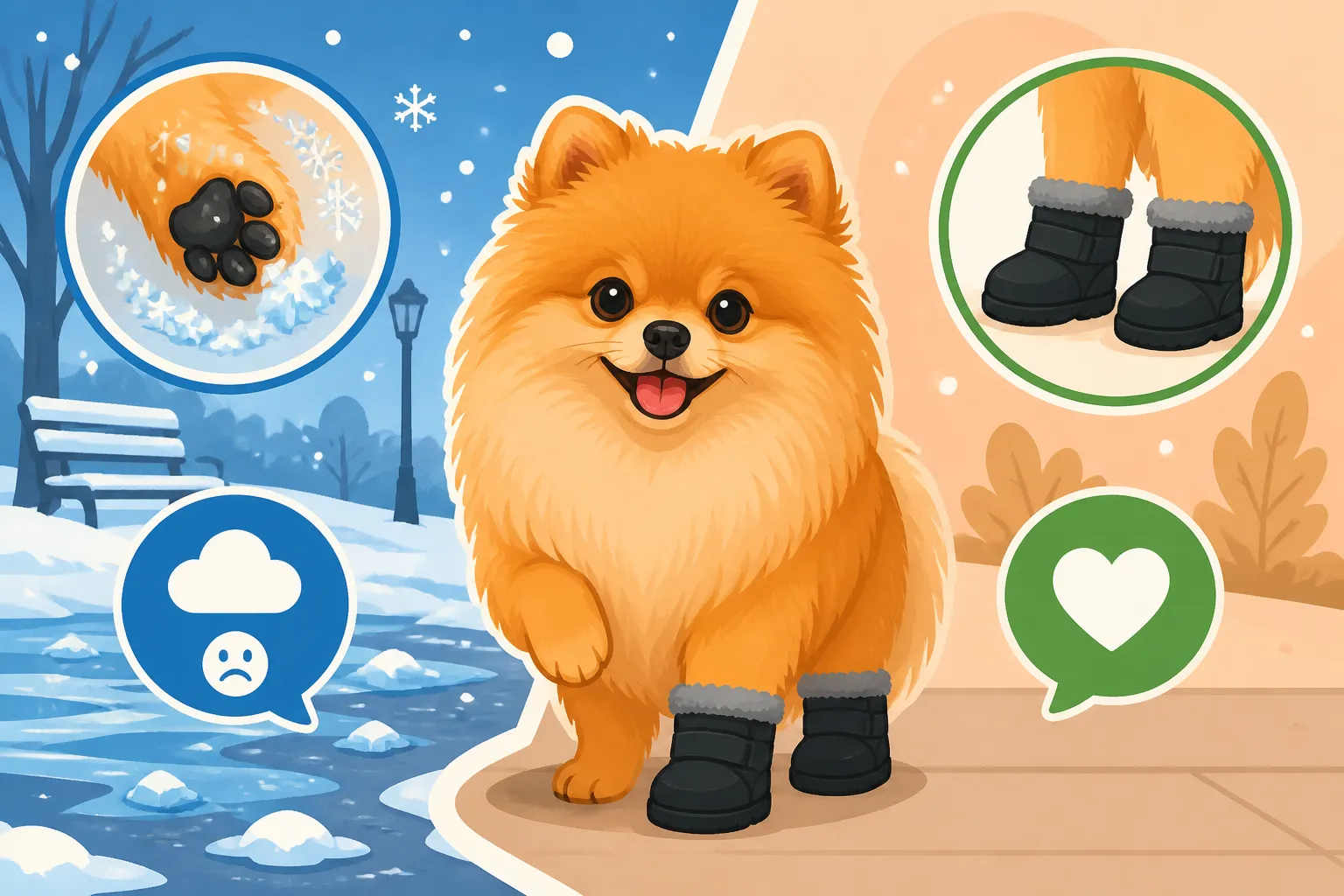
Their paw pads, while designed for durability, are exposed. They lack the thick fur and insulating properties of the rest of their body. Imagine walking barefoot on ice or a scorching summer pavement – that's often what our Poms experience. While their pads do have some natural tough keratin, it’s not impervious to freezing temperatures or abrasive substances. Think of it this way: their body might be ready for a blizzard, but their little feet are dressed for a spring picnic.
Factors Influencing the Need for Winter Boots
Deciding if your Pomeranian needs boots isn't a one-size-fits-all answer; it depends on several crucial factors that fluctuate with the weather and your lifestyle.
Firstly, temperature is paramount. Below freezing (32°F or 0°C), pavement can quickly become dangerously cold. Wind chill can make it feel even colder, penetrating those small paws. What about snow depth? A light dusting might be fine, but deeper snow means their entire paw is submerged, increasing the risk of cold and moisture exposure. Whether a Pomeranian's Coat Handles Snow can inform some of this, but remember paws are different.
Secondly, consider the duration of outdoor time. A quick potty break on a relatively clean patch of snow might not warrant boots, but a longer walk through a city park or down a treated sidewalk absolutely changes the equation. Urban environments often rely heavily on de-icing chemicals, which are a major concern.
Lastly, think about your specific environment. Do you live in an area where sidewalks are heavily salted or chemically treated? Is your yard clear of hazards, or does it have icy patches and sharp frozen clumps of dirt? Rural Poms might encounter more natural snow and ice, while urban Poms face more chemical threats. A good rule of thumb is if you wouldn't walk barefoot on it, your Pomeranian probably shouldn't either.
Individual Pomeranian Variations and Paw Sensitivity
Just like us, every Pomeranian is an individual with varying tolerances and needs. An older Pomeranian, perhaps with Arthritis in a Pomeranian at Ten, might be more sensitive to cold and dampness in their joints, making paw protection even more critical. Puppies also have more delicate paws that are still developing. A dog that has always lived in a warm climate and is new to snow will likely have less acclimated paw pads than one who has experienced many winters.
Some Pomeranians simply have naturally more sensitive paw pads. You might notice them lifting their paws more often, limping, or showing signs of discomfort even in milder cold. Observe your Pom closely during winter walks. Are they hesitant to put their paws down? Are they licking their paws excessively when they come inside? These are clear indicators that their paws are struggling, and boots could provide much-needed relief and protection. Similarly, a Pomeranian with a very active lifestyle might develop tougher pads over time, but even then, chemical irritants remain a threat.
The Hidden Dangers of Winter Pavements for Your Pom
Beyond just the cold, winter pavements harbor several serious threats to your Pomeranian's health and safety. These hazards are often invisible or overlooked by us humans in our thick winter boots, making them all the more insidious for our little companions.
Chemical Irritants and De-icers: A Silent Threat
One of the most significant dangers lurking on winter sidewalks isn't the cold itself, but the substances we use to combat it. Rock salt and chemical de-icers, while helpful for human safety, are highly corrosive and toxic to canine paw pads. These substances can cause severe irritation, burning, cracking, and even chemical burns on unprotected paws.
The problem doesn't stop there. Pomeranians, like most dogs, instinctively lick their paws, especially after walking on something uncomfortable. This means they can ingest these harmful chemicals, leading to gastrointestinal upset, vomiting, diarrhea, and in severe cases, more serious health issues. Even "pet-friendly" de-icers, while generally safer, can still cause irritation if not removed promptly. Imagine the burning sensation on your hands if you held a strong cleaning agent – that’s akin to what your Pom’s delicate pads can feel. Protecting their paws with boots prevents direct contact and subsequent ingestion, offering a vital layer of defense.
Ice, Snow, and Frostbite Risks
While a Pomeranian's body might be well-suited for winter, their paws are highly susceptible to the effects of prolonged exposure to ice and snow. One common issue is ice balling between their paw pads and long toe fur. As snow melts slightly from body heat and then refreezes, it forms hard, painful clumps of ice that can pull on their fur, making walking excruciatingly uncomfortable. This can also cause micro-abrasions that become entry points for bacteria. Ice Balling Up in a Pomeranian's Foot Feathering is a genuine concern that boots effectively prevent.
Beyond discomfort, direct contact with ice and snow for extended periods can lead to frostbite. While less common in quick outings, if your Pom is outside for a prolonged period in frigid temperatures, their paw pads, ear tips, and tail can be vulnerable. Frostbite damages tissue, sometimes permanently, and can be incredibly painful. Sharp shards of ice on the ground can also cut or puncture their sensitive pads, leading to open wounds that are difficult to heal and prone to infection. These injuries often require veterinary attention, which can be stressful for your little one and costly for your wallet.
Slipping and Injuries on Icy Surfaces
Pomeranians, being small and light, can be surprisingly agile, but icy surfaces present a significant challenge. Their small paw pads often lack the surface area and texture needed to grip effectively on slick ice, making them prone to slipping and falling. A fall on ice, even from their low height, can lead to painful sprains, strains, or even more serious injuries.
Consider conditions like Slipping Kneecaps in a Five Pound Pomeranian, a common issue in the breed. A bad slip on ice could exacerbate an existing patellar luxation or even cause a new one. Their delicate bone structure means that impacts can be more damaging than for larger, sturdier breeds. Beyond skeletal injuries, a sudden fall can also cause soft tissue damage, bruising, or muscle pulls. Boots designed with good traction can provide the necessary grip, giving your Pomeranian more confidence and stability on treacherous winter terrain, significantly reducing the risk of these types of accidents.
Choosing and Introducing Winter Boots for Your Pomeranian
So, you've decided boots are a good idea. Great! But finding the right pair and getting your tiny dynamo to wear them without a dramatic protest can feel like a mission. Don't worry, with a little patience and the right approach, it's absolutely achievable.
What to Look for in Pomeranian Boots
When selecting boots for your Pomeranian, fit is king. An ill-fitting boot can be uncomfortable, ineffective, and even cause rubbing or chafing.
- Size and Fit: Measure your Pom's paws carefully. Many brands provide sizing charts based on paw width and length. Look for boots that are snug enough not to slip off, but not so tight they restrict circulation. Their paws should still be able to spread naturally. A boot that's too loose will spin around, frustrating your dog and offering no protection. Many online retailers like Chewy offer a fantastic selection of boots with detailed sizing guides and customer reviews, which can be invaluable.
- Material: Opt for waterproof or water-resistant materials like neoprene, rubber, or durable synthetic fabrics. This keeps their paws dry from snow and slush. The sole should be flexible enough for natural paw movement but tough enough to withstand rough surfaces and sharp ice.
- Traction: A good non-slip sole is crucial for preventing slips on ice and slick surfaces. Look for boots with textured rubber soles or deep treads.
- Fastening Mechanism: Velcro straps are common and often the easiest to adjust for a secure fit. Make sure the straps are wide enough not to cut into their leg and positioned to keep the boot on without being overly tight. Some boots have multiple straps or elastic closures for extra security.
Remember, a good boot protects, insulates, and provides grip. It's an investment in your Pomeranian's winter safety.
Tips for Training Your Pom to Wear Boots
Introducing boots requires patience and positive reinforcement. Don't expect your Pomeranian to love them immediately – it's a strange sensation!
- Start Indoors: Begin by simply letting your Pom see and sniff the boots. Give them treats and praise.
- Introduce One Boot at a Time: Put just one boot on for a few seconds. Immediately give a high-value treat (perhaps some of those delicious fresh food morsels from Ollie) and lavish praise. Take the boot off. Repeat a few times.
- Gradually Increase Time: As they tolerate one boot, try two, then all four. Keep sessions short and positive. Don't force it. Many dogs do a funny "high-step" dance when they first wear boots; this is normal as they adjust to the sensation. Distraction with a favorite toy or a short play session can help them forget the boots are even there.
- Practice Short Walks: Once they're comfortable indoors, try a very short walk outside in a safe, familiar area. End on a positive note, with lots of treats and praise upon removal.
- Consistency is Key: Regular, short training sessions will build their tolerance. Never punish them for trying to shake off the boots; simply redirect and reward calm acceptance.
It might take a few days or even a week, but most Pomeranians adapt well with consistent, positive training.
Alternatives and Complementary Protections
While boots offer the best overall protection, there are other strategies and products you can use, either as an alternative in milder conditions or in conjunction with boots.
- Paw Balm: Products specifically designed for dog paws, often containing waxes and moisturizers, can create a protective barrier against mild cold and moisture. They also help prevent cracking and chapping of paw pads. Apply before walks and reapply as needed. However, paw balm won't protect against sharp ice or the corrosive nature of heavy de-icers as effectively as boots. Brands like Musher's Secret are popular for their protective qualities.
- Limiting Outdoor Time: In extremely harsh conditions, sometimes the best protection is simply to limit exposure. Quick potty breaks are one thing, but long walks can wait for milder days.
- Carrying Your Pom: For very short distances over hazardous ground, or if your Pom refuses boots, carrying them can be a temporary solution. Just be mindful of their desire to walk and explore.
- Wiping Paws Immediately: Regardless of whether your Pomeranian wears boots, always wipe their paws thoroughly with a damp cloth or towel as soon as you come inside. This removes any salt, chemicals, or ice residue that might have accumulated. Trimming the Fur Between a Pomeranian's Toes is also important to prevent ice balls and make cleaning easier.
Beyond the Boots: Comprehensive Winter Paw Care for Pomeranians
Even with the best boots, winter can be tough on paws. A holistic approach to paw care ensures your Pomeranian stays comfortable and healthy throughout the colder months. It’s about more than just protection during walks; it’s about year-round maintenance and knowing when to seek professional help.
Essential Post-Walk Routine
The moment you step back inside after a winter walk, your paw care routine should begin. This immediate attention can prevent a host of problems.
First, thoroughly wipe down their paws. Keep a dedicated towel by the door – an old hand towel or microfibre cloth works wonders. Use warm, damp water to gently clean between their pads and toes, ensuring you remove all traces of salt, chemicals, dirt, and any lingering ice or snow. This is absolutely critical to prevent chemical burns or irritation from de-icers, and to stop your Pom from licking harmful substances off their feet. After cleaning, make sure to dry their paws completely. Dampness, especially in cold weather, can lead to cracked skin, yeast infections, or discomfort.
As you wipe, visually inspect each paw. Look for any redness, swelling, cuts, cracks, or foreign objects (like tiny pieces of ice or sharp grit) lodged between their toes. Check the nails for any damage or excessive wear. Early detection of issues can prevent them from escalating into more serious problems that require a vet visit. This simple post-walk ritual takes just a minute or two but can make a world of difference in your Pomeranian's paw health.
Maintaining Paw Health Year-Round
Healthy paws don't just happen; they're the result of consistent, year-round care. Building a strong foundation will make them more resilient when winter hits.
One of the most important aspects is regular trimming of the fur between their paw pads. This excess fur can collect debris, trap moisture, and significantly contribute to ice balling in winter. Using small, blunt-nosed scissors or a paw-specific trimmer, carefully snip the fur so it's flush with the pads. If you’re not comfortable doing this yourself, your groomer can easily take care of it during regular appointments. This also helps improve traction and makes it easier to clean their paws.
Beyond trimming, focus on overall paw pad health. Routinely check their paw pads for dryness or cracking, which can be exacerbated by cold, dry winter air. Applying a small amount of a dog-safe paw balm (like the kind you'd find from Chewy or similar pet supply stores) can help moisturize and keep the pads supple. This isn't just a winter tip; healthy, moisturized pads are less prone to cracking in any season. Regular nail trims are also essential; long nails can splay their toes, affect their gait, and make walking uncomfortable, especially on uneven winter surfaces. Ensure you know how to Cutting the Quick on a Pomeranian's Nail or have your vet/groomer handle it.
When to Consult Your Veterinarian
Even with the best preventative care, sometimes issues arise that warrant professional medical attention. Knowing when to call your vet is crucial.
If you observe any of the following symptoms, it's time to make that appointment:
- Persistent Limping or Favoring a Paw: If your Pomeranian continues to limp, holds a paw up, or avoids putting weight on it for more than a day, it could indicate an injury, a deeply embedded foreign object, a sprain, or even a fracture.
- Excessive Licking or Chewing: While some licking after a walk is normal, constant, obsessive licking or chewing of their paws can signal pain, irritation, allergies, or an infection.
- Swelling, Redness, or Discharge: Any unusual swelling, intense redness, warmth to the touch, or pus/discharge from the paw pads or between the toes are signs of inflammation or infection.
- Blisters or Open Wounds: These require immediate veterinary attention to prevent infection and ensure proper healing.
- Changes in Paw Pad Texture: If the pads become unusually hard, cracked, or peel excessively, despite regular moisturizing, it could indicate an underlying issue.
Your veterinarian can properly diagnose the problem, prescribe appropriate medication (such as antibiotics for infections or anti-inflammatories for swelling), or recommend further treatment like bandaging or even surgery if needed. Don't try to self-diagnose or treat severe paw issues at home, as you could inadvertently worsen the problem. Should an injury or severe irritation occur despite your best efforts, having pet insurance like Healthy Paws can truly alleviate the financial stress of unexpected vet bills. Always remember that your Pom relies on those tiny paws for everything, so their health is paramount. What a Pomeranian's Annual Checkup Costs is a good reminder that preventative care and being prepared for emergencies are part of responsible ownership.
Disclaimer
This article is for general informational purposes only and does not constitute professional advice. Laws, prices and regulations vary by location and change over time. Consult a qualified professional for guidance on your specific situation.