The Italian Spitz Behind Victoria’s Pomeranians
It's quite a common misconception, isn't it? When we picture a Pomeranian today, we often imagine a tiny, fluffy ball of exuberance, perhaps weighing no more than five or six pounds. But the truth is, the Pomeranian we know and adore now is a far cry from its larger, hardier ancestors. This guide is going to take you on a journey through history, specifically focusing on the pivotal role played by the Italian Spitz in shaping the breed, all thanks to one very influential monarch: Queen Victoria.
A Look Back: The Pomeranian Before Victoria's Era
Before Queen Victoria came onto the scene and dramatically changed the breed's trajectory, Pomeranians were much larger dogs than their modern counterparts. If you had seen a Pomeranian in the 18th or even early 19th century, you might not have recognized it at all. These were dogs of substantial size, often weighing between 20 to 30 pounds, a far cry from the typical three-to-seven-pound Poms we see today.
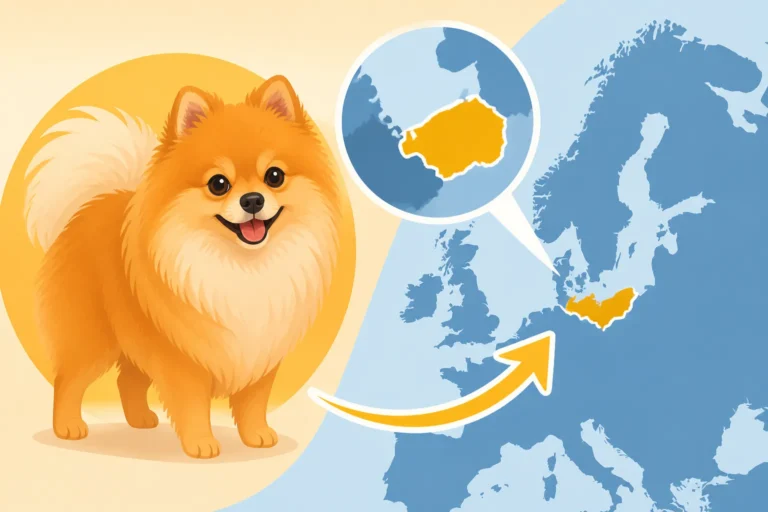
They were part of the larger German Spitz family, a group of robust, intelligent dogs known for their keen senses and alert nature. Their original purpose wasn't to be lapdogs or show companions, but rather working dogs, serving as guardians of homes, farms, and even livestock. They were excellent watchdogs, using their impressive bark to alert their owners to intruders or anything amiss. Imagine a fluffy, slightly smaller version of a modern Akita or Samoyed, and you start to get a better picture of these ancestral Poms. Their thick, double coats weren't just for show; they provided crucial insulation against the harsh weather of their northern European homeland, the Pomerania region (which gave the breed its name).
The Original German Spitz Lineage
The Pomeranian traces its roots directly back to the ancient Spitz breeds of northern Europe and Asia. These dogs were characterized by their wedge-shaped heads, upright ears, thick coats, and tails that curled over their backs. Within Germany, various sizes of Spitz existed, from the large Wolfspitz (Keeshond in other regions) down to the Mittelspitz and Kleinspitz. The dogs that eventually became known as Pomeranians were among these smaller-to-medium sized Spitzes, but still quite sizable by today's standards.
These were dogs built for endurance and utility, not delicacy. They had strong bone structure, sturdy legs, and the energy to patrol and protect. Their independent spirit, a hallmark of many Spitz breeds, meant they were capable of making their own decisions when guarding their territory, rather than constantly relying on human direction. This self-reliance made them excellent working companions, but it also hints at the strong will many modern Pomeranian owners encounter during training!
A Different Temperament and Lifestyle
Given their working background, the temperament of these early Pomeranians was likely more assertive and less overtly cuddly than what we often expect from a toy breed. They were loyal and devoted to their families, but probably not the type to spend all day on a lap. Their alertness and vocal nature, which we still see in the breed today as a tendency to bark at everything, were highly valued traits in their original roles. The German Spitz Family a Pomeranian Belongs To gives more insight into these connections.
Their days would have involved patrolling the farm, chasing away vermin, and acting as an alarm system for the household. Their diet would have been whatever was available from the farm, likely scraps and simpler fare, a far cry from the carefully measured, small-breed specific kibble you might pick up from Chewy for your modern Pom. Their exercise needs would have been met through their daily duties, without the need for structured walks or dedicated playtime in a yard.
The Italian Connection: Enter the Volpino Italiano
While the Pomeranian's direct lineage is from the German Spitz, there's a fascinating side branch of the family tree that enters the story with Queen Victoria: the Volpino Italiano. This ancient Italian breed, though not a German Spitz itself, played a crucial role in inspiring the direction of Pomeranian breeding.
The Volpino Italiano is a small Spitz-type dog, strikingly similar to a miniature American Eskimo Dog or, indeed, a smaller, less heavily coated Pomeranian. They are known for their lively personalities, abundant white coats (though other colors exist), and keen intelligence. Unlike the larger German Spitzes that primarily worked on farms, the Volpino was often a companion dog, cherished by noblewomen and even common folk for centuries in Italy.
The Appearance and Temperament of the Volpino
The Volpino Italiano typically weighs between 9 to 12 pounds, a significant reduction from the 20-30 pound Pomeranians of the era but still larger than the five-pound Poms Victoria eventually championed. They possess the characteristic Spitz features: prick ears, a foxy face, and a tail carried proudly over the back. Their coats are dense and stand off the body, much like a Pomeranian's, but perhaps a little less voluminous overall.
Temperamentally, Volpinos are known for being affectionate, playful, and incredibly loyal to their families. They are alert and make excellent watchdogs, often described as having a "big dog bark in a small dog body." Sound familiar? This blend of small size, elegant appearance, and feisty personality made them incredibly appealing, particularly to those who admired the Spitz look but preferred a more compact companion. It's easy to see why these charming Italian dogs would catch the eye of someone looking to refine a breed.
How the Volpino Influenced Queen Victoria
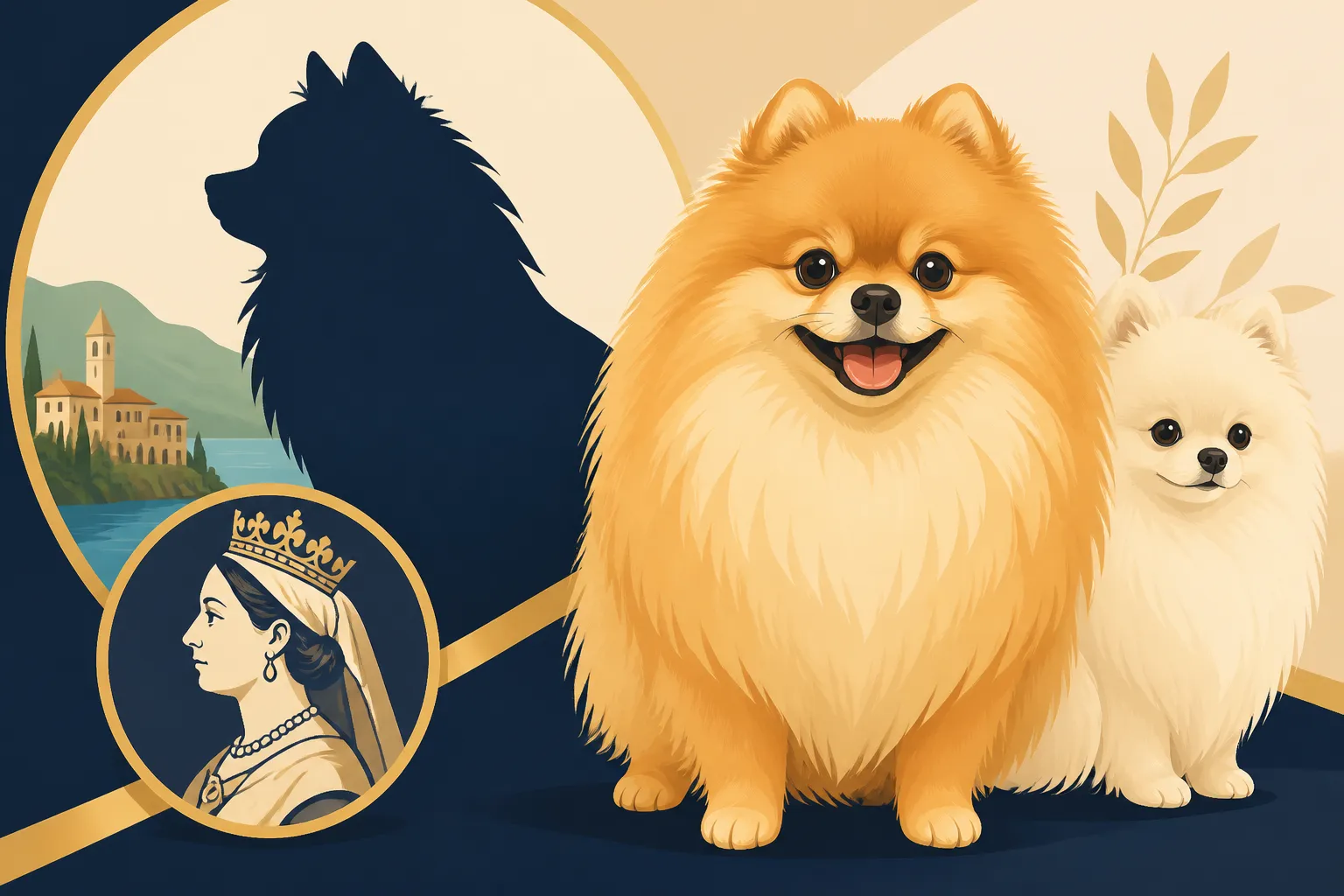
Queen Victoria was a renowned dog lover, and she was particularly fond of Spitz breeds. However, she had a distinct preference for smaller dogs. When she visited Florence, Italy, in 1888, she encountered the Volpino Italiano, and she was absolutely captivated. She brought back several of these charming Italian Spitzes, which at the time were sometimes referred to as 'Florentine Spitz' or even 'Italian Pomeranians' due to their similarity to the then-larger Pomeranian.
These smaller, more refined Spitz dogs from Italy provided a tangible model for the kind of Pomeranian Victoria envisioned. They showed that the distinctive Spitz features could be maintained in a much more diminutive package. This exposure likely solidified her determination to reduce the size of the Pomeranian, transforming it from a working dog into the quintessential lapdog and show companion. Her personal preference, fueled by her encounters with the Volpino, became a powerful driving force in the breed's development.
Queen Victoria's Passion: Shaping the Modern Pomeranian
Queen Victoria's influence on the Pomeranian breed cannot be overstated. She wasn't just an owner; she was an avid breeder and exhibitor, deeply invested in the development of her beloved dogs. Her personal taste for smaller, more delicate specimens set a new standard and essentially redirected the entire breed's future.
Her passion for the Pomeranian, particularly for those of smaller stature, brought immense popularity to the breed. What was once a relatively obscure working dog from a region in Germany became a celebrated companion for aristocracy and, eventually, the general public. This royal endorsement transformed the Pomeranian from a sturdy farm dog into a fashionable accessory and a serious contender in the show ring.
Marco and the 1888 Florence Trip
The turning point for the Pomeranian, and arguably where the Volpino's influence became most pronounced, was Queen Victoria's trip to Florence in 1888. It was there that she acquired Marco, a tiny, striking red sable Pomeranian, weighing a mere 12 pounds. Marco was quite small for a Pomeranian of that era, and it's highly speculated that he carried strong Volpino Italiano bloodlines, or was even a Volpino himself that was then categorized as a Pomeranian due to the prevailing classification system.
Marco quickly became her favorite. He was a constant companion, traveling with her and even appearing with her at dog shows. His presence undoubtedly showcased the appeal of a smaller Pomeranian to the wider public and the burgeoning dog fancy. Marco, Victoria's Pomeranian, and the Year 1888 details this pivotal moment. This wasn't just a casual acquisition; it was a clear statement of preference from the monarch, and breeders paid close attention.
Breeding for a Smaller Size
Inspired by dogs like Marco, and driven by her own desire for smaller companions, Queen Victoria actively engaged in selective breeding to reduce the Pomeranian's size. Her extensive kennels became a hub for this transformation. She imported smaller Pomeranians from across Europe and focused on breeding those individuals that were more diminutive, weighing less than 10 pounds.
This deliberate and sustained effort dramatically decreased the average size of the breed within a single generation. Breeders eager to meet royal preference and capitalize on the growing popularity of the smaller type followed suit. Within a few decades, the Pomeranian had largely shed its larger, working dog past and embraced its new identity as a small, elegant companion. This profound change is explored further in How the Pomeranian Halved in Size in One Lifetime.
Beyond Italy: Other Spitz Influences
While the Volpino Italiano played a significant role in inspiring the reduction in size, it's vital to remember that the Pomeranian's foundational genetics come from a broader lineage of German Spitz breeds. These larger ancestors contributed the core characteristics that define the Pomeranian even today: the abundant double coat, the foxy expression, the high-set tail, and that famously outgoing, sometimes feisty, personality.
The history of dog breeds is rarely a straight line; it's more like a complex tapestry woven from various threads. While Victoria's focus on smaller dogs might have drawn from the Volpino's example, the genetic material she was working with primarily came from the established German Spitz population that had already made its way to England and other parts of Europe.
German Spitz Varieties
The term "German Spitz" isn't a single breed, but rather a group of breeds with shared ancestry, categorized primarily by size. These include the Wolfspitz (Keeshond), Grossspitz (Giant Spitz), Mittelspitz (Medium Spitz), Kleinspitz (Miniature Spitz), and the Zwergspitz (Toy Spitz), which is essentially the Pomeranian. Before Victoria, the Pomeranian would have fit into the Mittelspitz or Kleinspitz categories in terms of size.
It's from this diverse pool that the original Pomeranians were drawn. Their resilience, intelligence, and beautiful coats were all attributes developed over centuries as working dogs in various capacities. The thick undercoat and longer, harsher guard hairs, essential for weather protection, are a direct inheritance from these larger, hardier ancestors. Even today, responsible breeders look back at these ancestral traits, striving to maintain the breed's overall health and vigor.
The Intermingling of Bloodlines
It's highly probable that throughout the 18th and 19th centuries, there was some intermingling of bloodlines between various Spitz types across Europe. As dogs traveled with their owners and breeding became more formalized, what was considered a "Pomeranian" might have simply been a Spitz-type dog from the Pomerania region, regardless of its exact size or whether it had a touch of Italian blood from a Volpino brought north.
This historical fluidity means that while the Volpino provided a powerful visual and genetic template for size reduction, the overall genetic richness of the Pomeranian comes from a broader foundation. The keen intelligence, the characteristic bark, and the distinctive "stand-off" coat that we associate with Pomeranians are all deeply embedded traits from their diverse Spitz heritage. The challenge for breeders then, and now, is to balance these ancestral traits with the modern breed standard.
The Legacy: From Royal Kennels to Your Living Room
The legacy of Queen Victoria's preference and the influence of dogs like the Volpino Italiano is evident in every Pomeranian we see today. The breed transitioned from a robust working dog to a beloved companion animal, perfectly suited for apartment living and cozy laps. This transformation, while making them incredibly popular, also introduced new considerations for their care and health.
The modern Pomeranian, typically weighing between three and seven pounds, is a direct result of that deliberate selection for smaller size. This makes them incredibly portable, fitting easily into carriers for travel or snuggling onto a sofa. However, their diminutive stature also means they require specific considerations when it comes to their diet, exercise, and overall safety.
Modern Pomeranian Characteristics
Today's Pomeranian exhibits many of the features Queen Victoria found so appealing in the Volpino Italiano: a small, compact body, a charming foxy expression, and that glorious, abundant double coat. Their lively and intelligent temperament, combined with their alert nature, makes them excellent watchdogs, just like their ancestors, though perhaps with a less intimidating bark! The Weight the Pomeranian Standard Requires delves into the specific measurements.
While they retain the independent spirit of their Spitz heritage, they are also incredibly devoted and loving companions, thriving on human interaction. Their small size makes them ideal for various living situations, but their energy and intelligence mean they still need regular mental and physical stimulation to prevent boredom and destructive behaviors. Even tiny dogs need purpose, and you can find lots of mentally engaging toys and chews on Chewy that are perfectly sized for them.
Implications of Size Reduction
The intense focus on reducing the Pomeranian's size, while achieving the desired aesthetic, has also brought about certain health considerations. Smaller dogs can be more prone to issues like patellar luxation (slipping kneecaps), tracheal collapse (a honking cough often associated with their delicate windpipes), and hypoglycemia in puppies. These are realities that modern Pomeranian owners must be aware of and proactively manage.
For example, a traditional collar can put dangerous pressure on a Pomeranian's fragile trachea, which is why harnesses are almost universally recommended. Special care must be taken to prevent falls or rough play that could injure their small frames. Their delicate mouths are also prone to dental issues, making daily brushing and regular veterinary dental cleanings crucial. Finding the right, small-sized dental chews and toothbrushes on Chewy can be a helpful step. Slipping Kneecaps in a Five Pound Pomeranian and The Honking Cough of a Pomeranian's Collapsing Windpipe are essential reads for understanding these common concerns.
| Feature | 18th Century Pomeranian (Ancestral) | Volpino Italiano (Victoria's Inspiration) | Modern Pomeranian (Post-Victoria) |
|---|---|---|---|
| Average Weight | 20-30 lbs | 9-12 lbs | 3-7 lbs |
| Primary Role | Working, Guardian | Companion, Watchdog | Companion, Show Dog |
| Build | Sturdy, robust | Compact, agile | Delicate, compact |
| Coat | Dense, weather-resistant | Abundant, stand-off | Luxuriant, dense double coat |
| Temperament | Independent, alert, resilient | Lively, affectionate, alert | Intelligent, outgoing, devoted |
| Common Health Concerns | General canine health | Some genetic predispositions | Patellar luxation, tracheal collapse, dental disease |
Ongoing Care and Appreciation
Caring for a modern Pomeranian means appreciating both their long history and their specific needs. Their magnificent double coat, a remnant of their cold-climate ancestors, still requires diligent grooming to prevent mats and maintain its health. Regular brushing is a must, several times a week, to keep that fur looking its best and prevent skin issues.
Their vibrant personalities make them wonderful companions, full of zest and charm. It's a testament to the power of selective breeding, and the enduring appeal of the Spitz type, that a breed could undergo such a dramatic transformation and still thrive. From the vast fields of Pomerania to the royal palaces of England, and ultimately to homes around the world, the Pomeranian's journey, heavily influenced by its Italian Spitz relatives and a determined Queen, is truly remarkable.
Disclaimer
This article is for general informational purposes only and does not constitute professional advice. Laws, prices and regulations vary by location and change over time. Consult a qualified professional for guidance on your specific situation.