The Working Spitz the Pomeranian Descends From
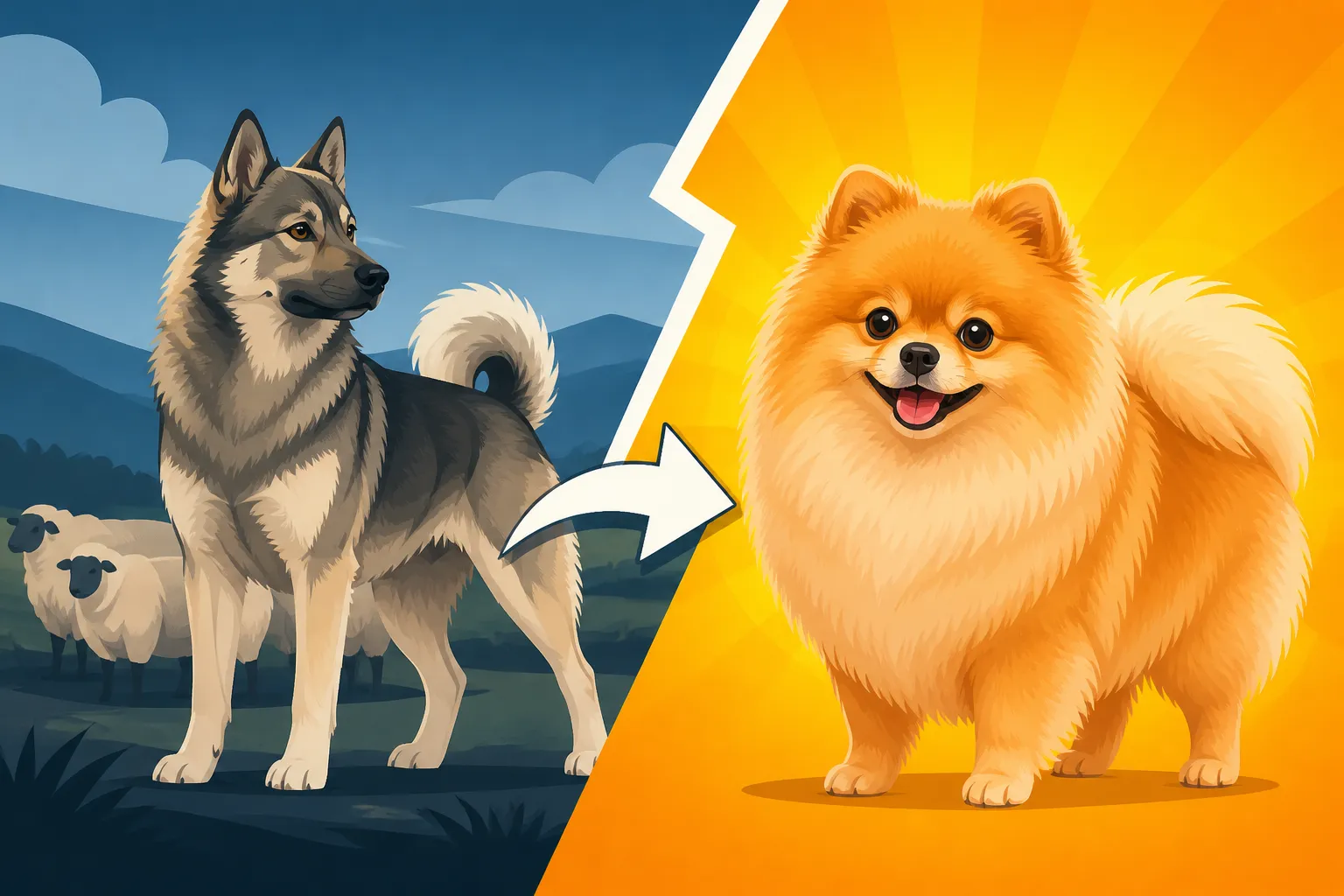
Many Pomeranian owners are surprised to learn that their tiny, fluffy companion, often seen prancing daintily around the house or nestled comfortably in a lap, descends from a lineage of sturdy, working dogs. It can be hard to reconcile the image of a hardy Arctic spitz pulling sleds or herding reindeer with the delicate creature that struggles to walk on wet grass. This guide aims to bridge that gap, exploring the fascinating history of the Pomeranian's working Spitz ancestors and how their enduring traits still echo in our beloved Poms today.
Tracing the Pomeranian's Northern Roots: The Spitz Connection
When you look at a Pomeranian, especially one with a full, thick coat and alert, foxy expression, you might notice something primal, something that whispers of wilder ancestors. That's because our Poms are direct descendants of the ancient Spitz family of dogs, a group renowned for their distinctive appearance and hardy nature. These aren't just pretty faces; they come from a long line of survivors and workers.
The Ancient Lineage of the Spitz Family
The Spitz family is one of the oldest and most widespread groups of domestic dogs, with roots tracing back thousands of years to the Arctic regions. Imagine vast, frozen landscapes, where survival depended on cooperation between humans and animals. These dogs weren't just pets; they were essential tools for life. Their lineage is intertwined with early human migrations, accompanying tribes across continents and adapting to harsh environments. Think of breeds like the Samoyed, Alaskan Malamute, and Siberian Husky – these are the Pomeranian's distant, powerful cousins, sharing a common ancestral blueprint.
This shared ancestry means that certain physical and behavioral characteristics have been passed down through generations. The dense double coat, the curled tail, the pricked ears, and that keen, intelligent gaze are all hallmarks of the Spitz family. It’s a testament to the effectiveness of these traits for survival and work in challenging conditions. Even today, a Pomeranian's coat, while luxurious, is functionally designed to keep it warm, much like its larger Arctic relatives.
General Characteristics of Spitz Breeds
Spitz breeds, in general, are easily recognizable. They typically have pointed, upright ears, a wedge-shaped head, and often a thick, double coat that stands off the body, giving them a rounder appearance. Their tails are usually carried up and curled over their backs. Beyond these physical traits, many Spitz breeds share a spirited, intelligent, and often independent temperament. They tend to be alert, vocal, and can possess a strong prey drive, reflecting their historical roles.
These characteristics made them invaluable. The double coat offered protection from extreme cold and dampness, while their physical agility allowed them to navigate varied terrains. Their intelligence meant they could learn complex tasks, and their vocal nature made them excellent watchdogs. Even in a small Pomeranian, you can often see the alertness, the quick intelligence, and sometimes, that surprisingly deep bark that harks back to dogs much larger than themselves. It's fascinating how these traits persist, even when the dog's primary role has shifted dramatically.
Geographic Origins and Early Roles
The original Spitz dogs emerged from regions spanning Northern Europe, Siberia, and North America. Their primary roles were diverse and crucial for human survival: hunting, herding, guarding, and pulling sleds. For example, dogs in the region that later became known as Pomerania, a historical area along the Baltic Sea, were robust, medium-to-large sized animals, quite different from the tiny Poms we know today. These dogs were likely used for herding sheep or cattle and possibly as general farm dogs, guarding property and alerting their owners to intruders.
It’s easy to picture these dogs in their element, working alongside farmers in chilly, often damp conditions. Their thick coats and hardy constitutions were perfectly suited for such demanding lives. The very name "Pomeranian" itself links back to this geographical origin, though the breed’s size and appearance have evolved drastically since then. Understanding this historical context helps us appreciate the resilience and adaptability ingrained in the breed's DNA, even as they enjoy a much softer existence now.
From Arctic Workhorse to Lapdog: The Evolutionary Journey
The transformation of the Pomeranian from a sturdy working dog to a beloved companion is one of the most remarkable stories in canine history. It wasn't a sudden change, but a gradual evolution driven by human preference, selective breeding, and changing societal roles for dogs.
The Larger Ancestors: Not So Toy-Sized
Imagine a Pomeranian that weighs 25 or even 30 pounds! That's roughly the size of the Pomeranian's ancestors, the larger German Spitz types, which were common in the region of Pomerania. These dogs were substantial, active canines, perfectly capable of performing demanding tasks. They weren't bred for delicate features or tiny stature; they were bred for utility and hardiness. They shared the same beautiful double coat and alert expression, but on a much grander scale.
These larger ancestors would have been indispensable to families in their original homeland. They were loyal, watchful, and robust, far from the dainty image many people associate with the modern Pomeranian. This historical fact really puts into perspective The Twenty Five Pound Pomeranian of the 1800s and reminds us just how much intentional breeding can alter a breed over time. Their size was an asset, allowing them to withstand the rigors of farm life, ward off small predators, and endure harsh weather conditions.
The Role of the Pomeranian's Forebears in Daily Life
The early ancestors of the Pomeranian were truly multi-purpose farm dogs. They were the alert sentinels, barking at anything out of place, protecting livestock, and keeping unwanted visitors at bay. Their vocal nature, which sometimes frustrates modern Pomeranian owners, was a highly valued trait then, serving as an effective alarm system for homesteads that might be quite isolated. They weren't just guarding; they were often herding, using their agility and barking to manage flocks.
Their intelligence and eagerness to please, combined with their sturdy build, made them excellent partners in daily chores. They would have been relied upon for many practical tasks, embodying the quintessential working dog spirit. This deep history explains why even today's small Pomeranians often possess a surprisingly strong personality and an unshakeable sense of self-importance – it's a legacy from their hardworking past.
Early Evidence and Historical Mentions
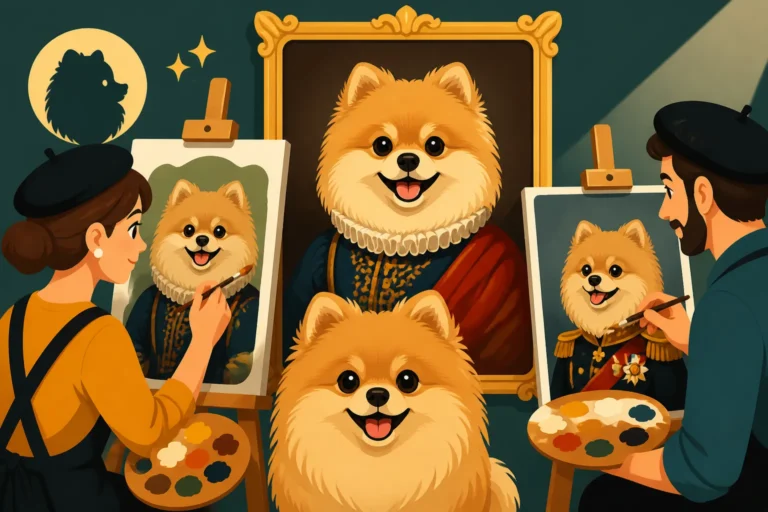
While precise records can be scarce for ancient breeds, historical art and literature offer glimpses into the presence of Spitz-type dogs. Paintings from the 17th and 18th centuries often depict dogs resembling the larger German Spitz, sometimes alongside nobility or in rural settings. These portrayals suggest that these dogs were admired not just for their working ability but also for their attractive appearance.
It wasn't until the 19th century that the breed began its transformation, largely thanks to royal patronage. Queen Victoria of England, in particular, fell in love with the breed during a trip to Italy. Her passion for Pomeranians, specifically the smaller examples, sparked a trend that dramatically influenced the breed's development. Her favorite Pomeranian, Marco, weighed a mere 12 pounds, much smaller than the breed's typical size at the time, but still significantly larger than today's average. This royal endorsement led to a concerted effort by breeders to reduce the breed's size, pushing it towards the toy dog category. This fascinating period truly marks the shift from pure utility to a blend of companionship and showmanship.
The German Spitz Connection: A Closer Look
To fully grasp the Pomeranian's ancestry, we need to understand its place within the broader German Spitz family. The Pomeranian isn't just a Spitz; it's a specific variety of German Spitz, carefully cultivated over centuries.
Defining the German Spitz Family
The German Spitz is a group of distinct, yet related, breeds originating from Germany. They are traditionally divided into several sizes, ranging from the very large Wolfspitz (Keeshond) down to the Zwergspitz (Pomeranian). All members of this family share the iconic Spitz characteristics: thick double coats, foxy faces, upright ears, and tails curled over their backs. They are known for their lively disposition, intelligence, and loyalty to their families.
Think of them as different sized expressions of the same genetic blueprint. Each size was developed for slightly different purposes, though all served as excellent alarm dogs and companions. The German Spitz varieties include:
| German Spitz Variety | Typical Size (approx.) | Original Role | Modern Role |
|---|---|---|---|
| Wolfspitz (Keeshond) | 40-60 lbs | Bargedog, Watchdog | Companion |
| Giant Spitz | 35-50 lbs | Farm Dog, Watchdog | Companion |
| Medium Spitz | 20-25 lbs | Farm Dog, Watchdog, Herder | Companion |
| Miniature Spitz | 10-12 lbs | Farm Dog, Watchdog, Companion | Companion |
| Pomeranian | 3-7 lbs | Farm Watchdog (ancestors), Companion (modern) | Primarily Companion, Show Dog |
This table clearly illustrates the wide range of sizes within the family and highlights how the Pomeranian, as the smallest member, still carries the traits of its larger cousins. The German Spitz Family a Pomeranian Belongs To article delves even deeper into these fascinating distinctions.
The Pomeranian's Place Within the German Spitz Group
Within the German Spitz family, the Pomeranian is officially known as the Zwergspitz, meaning "Dwarf Spitz" or "Toy Spitz." This designation clearly indicates its position as the smallest variety. While its size has been drastically reduced, it still retains the essential breed type and temperament of its larger relatives. It's a testament to selective breeding that the Pomeranian maintains the proud, alert stance and luxurious coat despite its diminutive stature.
The breeders who worked to miniaturize the Pomeranian were careful to preserve the core characteristics that defined the German Spitz. They didn't want to create a completely new type of dog, but rather a smaller version of an already beloved and functional breed. This is why, when you compare a Pomeranian to a larger German Spitz, you can see the undeniable family resemblance – just scaled down. This also means that many of the health considerations for Pomeranians, such as those related to their breathing or dental structure, are often magnified versions of issues seen in small dogs generally, which is important for owners to remember.
Distinctions Between the Pomeranian and Other German Spitz Varieties
While they are all part of the same family, there are clear distinctions between the Pomeranian and its larger German Spitz cousins. The most obvious, of course, is size. The Pomeranian's ideal weight range of 3-7 pounds makes it significantly smaller than even the Miniature Spitz, let alone the Giant Spitz or Keeshond. This extreme reduction in size has led to some subtle differences in conformation and overall appearance.
For instance, the Pomeranian tends to have a slightly more refined skull and a shorter muzzle compared to some of the larger Spitz breeds, which often have longer, more pronounced muzzles. The Pomeranian's eyes are also often described as being darker and more almond-shaped, contributing to its "foxy" expression. Despite these differences, the characteristic thick, stand-off double coat, curled tail, and upright ears are consistent across all varieties. The challenge for breeders has always been to maintain breed type while pushing for smaller and smaller sizes, which is a complex balance.
How Size Reduction Transformed the Pomeranian's Purpose
The conscious decision to breed down the size of the Pomeranian wasn't just about aesthetics; it profoundly changed the breed's role in human society, transforming it from a working dog to primarily a companion.
The Influence of Selective Breeding and Royal Preference
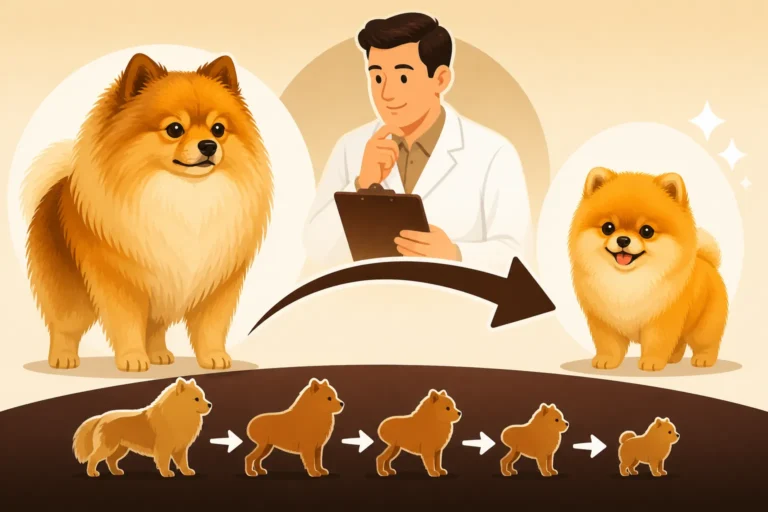
As mentioned, the 19th century saw a surge in interest for smaller dogs, particularly among European royalty and aristocracy. Queen Victoria's enchantment with a smaller Pomeranian she encountered in Florence was the catalyst for a breeding push that aimed for miniaturization. Before her influence, Pomeranians were closer in size to the German Mittelspitz, around 10-20 pounds. Post-Victoria, breeders actively selected the smallest puppies from litters to continue their lines, with the goal of creating the toy dog we know today.
This selective breeding wasn't without its challenges. Reducing a dog's size so dramatically in a relatively short period can sometimes concentrate certain genetic traits or predispositions. However, the breeders of the time were successful in establishing a consistent, small type, proving that human preference can be a powerful force in shaping canine evolution. This process also shows how important it is to support ethical breeders today who prioritize health and temperament over extreme aesthetics, especially when considering What Teacup Breeding Costs a Pomeranian.
Losing the Working Drive, Gaining the Companion Role
As the Pomeranian shrunk, its working utility diminished. A 5-pound dog isn't going to pull a sled or herd livestock effectively. Instead, its compact size and charming personality made it perfectly suited for a new role: that of a pampered companion. They became lapdogs, house dogs, and symbols of status, thriving in domestic environments where their main job was to provide affection and companionship.
This shift in purpose also meant a change in lifestyle. Instead of outdoor work, Pomeranians now enjoyed the comforts of indoor living. Their thick coats, once essential for cold weather, became a statement of luxury and required regular grooming. The natural alertness of their ancestors, while still present, was now primarily directed towards notifying their owners of visitors or unusual sounds, rather than guarding a farm. This transition highlights the incredible adaptability of dogs and their capacity to integrate into human lives in varied capacities.
The Traits That Remained: Spitz Temperament in a Small Package
Despite the dramatic reduction in size, many core Spitz traits persist in the modern Pomeranian. They are still intelligent, often quite willful, and possess a lively, confident spirit. Owners frequently describe them as having a "big dog" personality in a small body. This is a direct echo of their larger, working ancestors, who needed courage and independence to perform their duties. Whether Spitz Independence Makes a Pomeranian Difficult is a common question, and the answer often lies in understanding this deep-seated heritage.
Their famous double coat, while meticulously groomed for show, is still functionally a warm, protective layer. Their alertness and tendency to bark (sometimes excessively) are remnants of their watchdog roles. Even their agile, springy gait, observed in the show ring, speaks to the movement of a dog designed for active work. These enduring traits mean that a Pomeranian isn't just a fluffy ornament; it's a dog with a rich history and a personality that requires engagement and understanding.
Modern Pomeranians and Their Ancestral Echoes
Even in today's pampered Pomeranians, the echoes of their working Spitz ancestors are undeniable. Understanding these innate traits can help owners better connect with their dogs and provide the best possible care and environment.
Recognizing Spitz Traits in Today's Poms
Many characteristics we love or, at times, find challenging in our Pomeranians can be directly traced back to their Spitz heritage. That alert, watchful gaze, for example, isn't just cuteness; it's the vigilance of a natural sentinel. When your Pom barks furiously at the mail carrier or a leaf blowing past the window, it's channeling the instinct of its ancestors who guarded farms. Their independence, sometimes mistaken for stubbornness, stems from dogs that needed to make decisions in the field.
The dense double coat, requiring regular brushing, is a prime example of a physical trait carried through from their cold-weather working past. Even their physical structure, from the compact body to the pricked ears and curled tail, speaks to the enduring Spitz type. When you look closely, you can see the blueprint of a larger, more rugged dog, simply miniaturized. This connection offers a wonderful perspective on the breed's authenticity and rich history.
Instincts and Behaviors That Reflect Working Dog Heritage
Beyond physical traits, many Pomeranian behaviors are direct reflections of their working dog heritage.
- Vocalization: Poms are known for being vocal. This isn't just a nuisance; it's a deep-seated instinct to alert their pack (you!) to anything perceived as a threat or anomaly. Their ancestors were the alarm systems of their homesteads.
- Territoriality: Many Pomeranians show a strong sense of territoriality, whether it's their home, their bed, or even their owner's lap. This stems from their guarding instincts.
- Curiosity and Intelligence: Spitz dogs are intelligent and often quite curious. Pomeranians love to explore, figure things out, and can be surprisingly clever in getting what they want. This intelligence was crucial for dogs performing varied tasks.
- Stamina (for their size): While they don't need miles of running, Pomeranians often have bursts of energy and can maintain activity longer than some other toy breeds. They might not be pulling sleds, but they can still enjoy a brisk walk or a spirited game of fetch.
- Prey Drive: Some Pomeranians exhibit a surprisingly strong prey drive, chasing squirrels or small birds with gusto. This is a clear link to ancestors that would have hunted or helped manage small game.
Understanding these underlying instincts can help you manage your Pom's behavior more effectively, realizing that some actions aren't naughtiness, but rather deep-seated drives.
Providing an Outlet for Their Innate Drive
Given their rich working heritage, it's important for Pomeranian owners to provide appropriate outlets for their dog's mental and physical energy. Even though they are small, they are not simply ornamental lap warmers.
- Training and Mental Stimulation: Poms thrive on learning. Engage them with consistent positive reinforcement training. They can excel at obedience, trick training, and even canine sports like agility or rally. Products from Chewy, like interactive puzzle toys, can be fantastic for keeping their clever minds busy. Consider options like Puzzle Toys Small Enough for a Pomeranian to provide mental challenges that tap into their problem-solving instincts.
- Appropriate Exercise: While they don't need vast amounts of exercise, regular walks and play sessions are crucial. A couple of short, brisk walks each day, combined with indoor play, can satisfy their need for activity. Remember, their bodies are built for movement, even if on a smaller scale.
- Socialization: Proper socialization from a young age is key to channeling their watchdog instincts into appropriate behavior, helping them differentiate between true threats and everyday occurrences.
- Safe Environments: Since they retain a degree of independence and curiosity, ensuring a secure environment, whether at home or outside, is paramount. Their small size makes them vulnerable, and their confidence can sometimes lead them into tricky situations. This means secure fencing and always walking them on a harness rather than a collar, particularly because of their delicate windpipes.
By respecting their ancestral past and providing outlets for their natural drives, you can ensure your Pomeranian is not just a pet, but a happy, fulfilled companion who truly embodies the best of its remarkable Spitz heritage.
Disclaimer
This article is for general informational purposes only and does not constitute professional advice. Laws, prices and regulations vary by location and change over time. Consult a qualified professional for guidance on your specific situation.