Where Pomerania Sits and Why the Breed Is Named for It
It's easy to look at our fluffy, pint-sized Pomeranians today and wonder how on earth they got their name. This vibrant, sometimes bossy little dog seems so far removed from anything grand or geographic, yet its very name, "Pomeranian," points to a specific region in Northern Europe. If you've ever felt a little confused about how a dog so small could come from a place named Pomerania, you're certainly not alone. This guide will take you on a journey to uncover the true geographic origins of the Pomeranian and explain why this delightful breed carries such a historic name.
Unraveling the Geographic Roots of the Pomeranian
The Pomeranian's name isn't just a quirky label; it's a direct link to a significant historical region that played a crucial role in the development of its ancestors. Understanding this geographical context helps us appreciate the sturdy, resilient nature that still lies beneath all that fluff.
More Than Just a Name: Where is Pomerania Anyway?
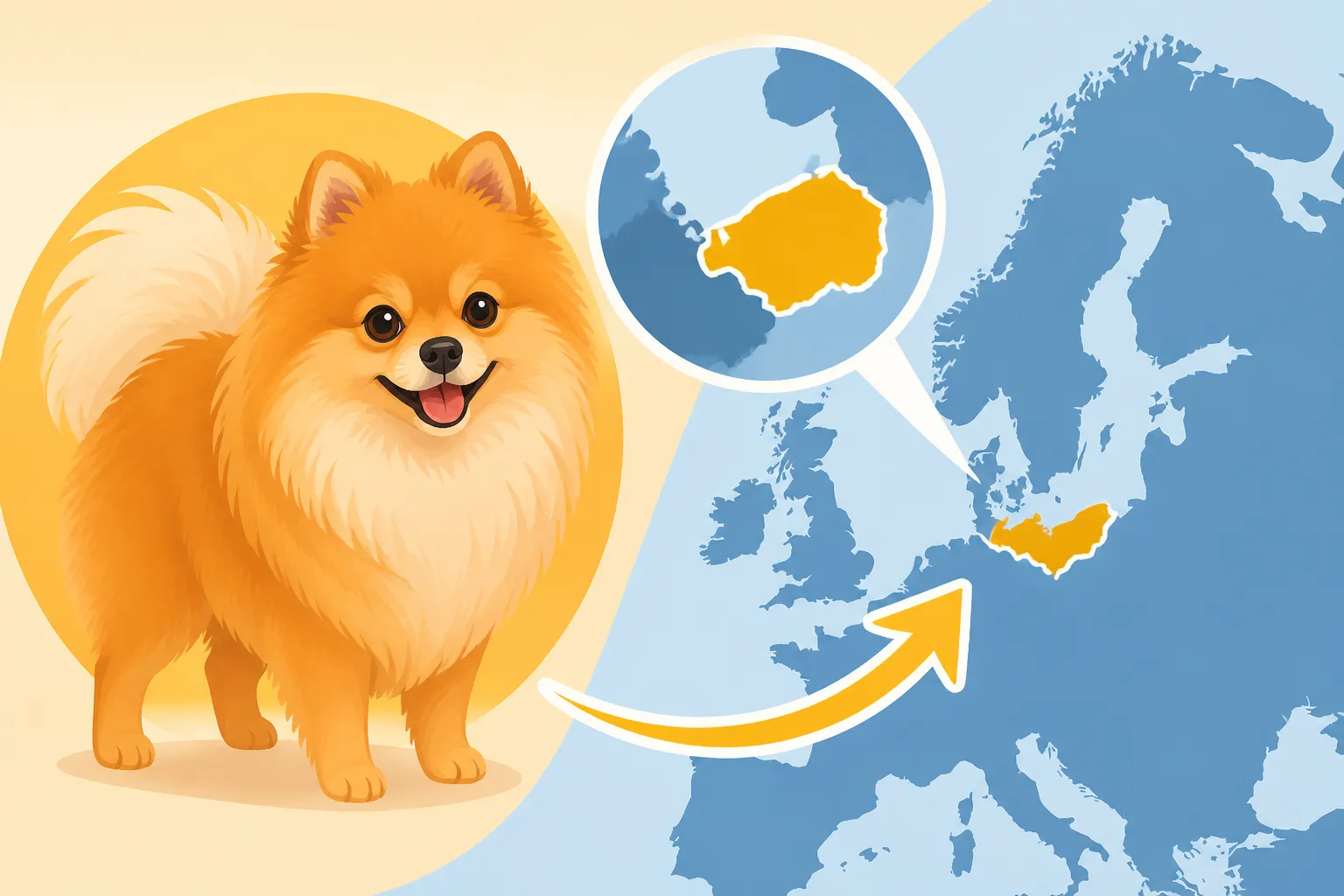
Pomerania is a historical region located on the southern coast of the Baltic Sea in Central Europe. It's a land that has seen its borders shift and its governance change hands many times throughout history, primarily between what are now modern-day Germany and Poland. Imagine a stretch of land that runs along the coast, characterized by sandy beaches, coastal dunes, broad lowlands, and a scattering of lakes and forests. It's not a small, isolated valley but a considerable area with a long, rich history.
The name "Pomerania" itself comes from Slavic po more, meaning "by the sea" or "on the sea." This makes perfect sense when you look at a map; the region hugs the Baltic coastline, defining much of its character and historical development. For centuries, this area was known for its agriculture, fishing, and strategic trade routes, which meant a need for dependable working dogs. These weren't dainty lapdogs; they were robust, intelligent canines well-suited to the demands of rural life in a sometimes harsh climate. Their presence was deeply intertwined with the daily lives of the people who settled "by the sea."
A Land of Contrasts: How the Region Shaped Early Dogs
The environment of historical Pomerania was anything but delicate. It experienced cold, often snowy winters, temperate summers, and significant coastal winds. For dogs living and working in such conditions, a thick, insulating coat wasn't a luxury; it was a necessity for survival. The ancestors of our modern Pomeranian, much larger than they are today, were perfectly adapted to this climate. They possessed dense double coats, capable of repelling water and providing excellent insulation against the biting cold.
These early dogs were integral to daily life. They served as herders, guardians of livestock and property, and sometimes even as sled or cart pullers in the colder months. Their alertness and vocal nature, traits we still see in our Poms today (though sometimes to our chagrin!), were highly valued. A dog that could alert its owners to intruders or stray animals was an indispensable asset. Their intelligence and hardiness were forged in this demanding landscape, creating a foundation of resilience that has carried through generations, even as their size has dramatically changed. It's a testament to their deep roots that even a tiny Pomeranian living in a warm apartment still carries the genetic blueprint for a formidable double coat and a keen watchfulness.
The Mighty Ancestors: From Working Dogs to Lap Companions
It’s often a shock to new Pomeranian owners when they learn about the breed's impressive lineage. Far from being bred solely for companionship, the Pomeranian descends from a line of much larger, more imposing working dogs.
The Working Spitz Behind the Pomeranian
To truly understand our small fluffballs, we need to look back at their robust ancestors: the Spitz-type dogs of Northern Europe. These dogs, often weighing 20 to 30 pounds, sometimes even more, were common across the Arctic and sub-Arctic regions. They were powerful, intelligent, and highly versatile, utilized for everything from herding reindeer to pulling sleds across snowy landscapes. Think of breeds like the German Spitz, the Norwegian Elkhound, or even the Samoyed; these give you a better idea of the general "Spitz type" from which the Pomeranian ultimately emerged.
These dogs were characterized by their thick double coats, wedge-shaped heads, upright ears, and tails that curled over their backs – all features still distinctly visible in our smaller Poms. In Pomerania, these dogs would have been invaluable for guarding farms and properties. They weren't just pets; they were essential workers. They had the stamina for long days, the protective instinct to deter threats, and the intelligence to perform various tasks. It’s hard to imagine a tiny Pomeranian herding sheep, but its ancestors certainly did. You can read more about The Working Spitz the Pomeranian Descends From for a deeper dive into their original roles.
A History of Size Reduction: The Royal Influence
The journey from these formidable working dogs to the toy-sized Pomeranian we know today is a fascinating tale of selective breeding, heavily influenced by royal preferences. For centuries, while larger Spitz dogs thrived in Pomerania, a desire for smaller, more delicate companions began to emerge in aristocratic circles across Europe.
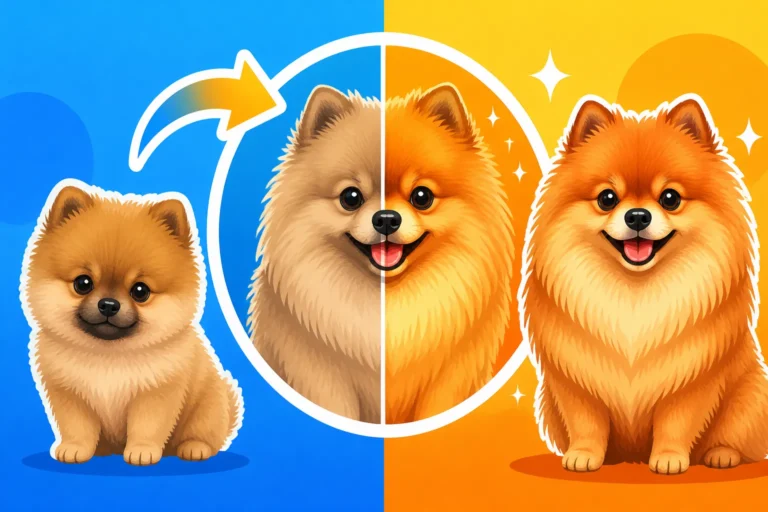
The real turning point for the Pomeranian's size came in the late 19th century, largely thanks to Queen Victoria of England. She fell in love with the breed during a visit to Italy in 1888 and brought a particularly small Pomeranian named Marco back to England. At the time, Pomeranians were still closer to 12-14 pounds, but Marco was significantly smaller, reportedly around 6.5 pounds. The Queen's preference for smaller dogs sparked a massive trend. Breeders, eager to cater to the royal taste and the burgeoning demand, began intensely focusing on breeding down the size of the Pomeranian. This selective process, concentrating on the smallest puppies from each litter, led to a dramatic reduction in size over a relatively short period. Queen Victoria, Marco and the Pomeranian tells the full story of her influence. Within a few generations, the Pomeranian was transformed from a medium-sized working dog into the tiny companion breed we adore today. It’s truly incredible How the Pomeranian Halved in Size in One Lifetime in just a few decades.
| Feature | Ancestral Pomeranian (18th-19th Century) | Modern Pomeranian (20th-21st Century) |
|---|---|---|
| Average Weight | 20-30 lbs (some up to 50 lbs) | 3-7 lbs |
| Primary Role | Herding, guarding, cart-pulling | Companion, show dog |
| Appearance | Sturdier, more robust build | Delicate, compact, more refined |
| Coat Density | Very thick, weather-resistant double coat | Extremely dense, stand-off double coat |
| Temperament | Independent, hardy, vigilant | Alert, intelligent, sometimes willful |
| Habitat | Farms, rural areas of Pomerania | Homes, apartments worldwide |
Why This Name? Connecting the Dog to the Land
It's natural to wonder why a breed that has evolved so much and become popular globally still carries the name of a specific European region. The answer lies in historical convention and the enduring recognition of the breed's origins.
The Naming Convention of Dog Breeds
Many dog breeds are named directly after their place of origin or the region where they were most extensively developed and popularized. This naming convention is a way to acknowledge a breed's heritage and geographical roots, even if subsequent development occurred elsewhere. Think of the German Shepherd Dog, the Siberian Husky, the Newfoundland, or the Labrador Retriever. These names instantly tell you something about where those dogs came from or were historically associated with.
For the Pomeranian, the name stuck because the breed's ancestors were undeniably linked to the historical region of Pomerania. While the meticulous breeding work to miniaturize the breed largely happened in England and other parts of Europe, the fundamental "type" of dog – the sturdy, double-coated Spitz – originated and was prevalent in Pomerania. It was from this geographical pool that the foundation stock for the modern Pomeranian was drawn. So, even though the modern Pomeranian doesn't literally "come" from Pomerania in the sense of being bred there today, its name is a permanent historical marker, a tribute to its deep, ancient roots in that Baltic coastal land. It's a badge of honor, acknowledging the sturdy working dogs that eventually gave rise to our charming companions.
Early Documentation and Breed Recognition
Early recognition of dog breeds often relied on their geographical association. As dog fancy began to formalize in the 18th and 19th centuries, distinct types of dogs were categorized and named. The Spitz dogs found in the region of Pomerania were known and documented for their specific characteristics long before they became the tiny toy breed we love. They were recognized as a particular "type" of Spitz dog associated with that area.
In the mid-18th century, the first records of these dogs appearing in England referred to them as "Pomeranians" or "Spitz dogs from Pomerania." This solidified the connection in the burgeoning world of dog breeding and showing. The name was adopted and carried forward as the breed developed. Even as breeders in England, primarily under Queen Victoria's influence, drastically reduced the size, the original geographical identifier remained. It became part of the official recognition by kennel clubs. The Pomeranian, therefore, belongs to The German Spitz Family a Pomeranian Belongs To, a broad category of dogs named for their regional ties within Germanic lands, but the specific "Pomeranian" moniker highlights its particular origin. This historical continuity, even through significant transformation, is why the name endures.
The Evolution of a Toy Breed: Far from its Roots
The journey from the rugged lands of Pomerania to the cozy homes of modern pet owners is a testament to the adaptability of dogs and the dedication of breeders. Our little Poms have come a long, long way.
The Journey from Working Farm to Noble Lap
It’s quite the leap, isn't it? From a dog that might have helped guard livestock or pull a small cart on a Pomeranian farm to one whose main job is to provide cuddles and companionship on a sofa. This transformation required not only physical changes but also a shift in temperament and purpose. The early, larger Pomeranians, while intelligent and alert, were bred for independence and resilience in a working capacity. They needed to make decisions on their own and withstand the elements.
As they transitioned into companion animals, especially through the Victorian era, the emphasis shifted. Breeders started selecting for traits more suited to indoor living: smaller size, a more delicate appearance, and a temperament that was affectionate and amenable to being a house pet. While they still retained some of their ancestral alertness and vocal tendencies – often surprising for such a small dog – their primary role became one of devoted companionship. This new role meant they needed less space and less strenuous activity, making them ideal for urban dwellers or those seeking a cherished indoor pet. The modern Pomeranian is a wonderful example of The Pomeranian Against the Other Toy Spitz Breeds, perfectly suited to its toy dog classification.
Modern Pomeranians and Their Distant Heritage
Today, the vast majority of Pomeranians live lives utterly disconnected from the Baltic Sea coasts of their ancestors. They are cherished family members, often found in city apartments or suburban homes, and their daily routine is more likely to involve a walk around the block than guarding a flock of sheep. The name "Pomeranian" now serves more as a historical footnote, a charming detail about their lineage, rather than a description of where they are currently bred or even commonly found.
Despite this huge leap across centuries and continents, there are still echoes of their working past. That thick, insulating double coat, which we often painstakingly groom, is a direct inheritance from their cold-weather ancestors. Their keen intelligence, surprising agility for their size, and often assertive personalities are all whispers of the larger, more self-sufficient dogs that once roamed Pomerania. Companies like Chewy understand these needs, offering specialized brushes, shampoos, and even cooling mats designed to keep that magnificent double coat healthy and comfortable. Even their tendency to be excellent watchdogs, barking at every perceived intruder, harks back to their days as vigilant guardians. Understanding this heritage can help us appreciate their unique quirks and provide them with care that respects their ancient past, even in our modern world.
The Enduring Legacy: More Than Just a Cute Face
While today's Pomeranians are undeniably adorable, their deep history imbues them with traits that go beyond mere cuteness. These characteristics are a testament to their resilient ancestors from Pomerania.
Traits that Echo the Past
When you look at a Pomeranian, many of its most defining physical characteristics are direct echoes of its larger Spitz ancestors. That magnificent, thick double coat, for instance, isn't just for show. It's a highly effective insulation system, designed to protect against harsh Northern European climates. The coarse guard hairs shed water and dirt, while the dense, fluffy undercoat traps warm air, keeping the dog cozy even in freezing temperatures. This impressive coat is a direct link to their working past and explains why The Double Coat That Makes a Pomeranian and Why It Stays On is so fundamental to the breed.
Similarly, their keen, foxy expression, erect ears, and tail curled high over their back are all classic Spitz traits. These features are not merely aesthetic; they were functional for a working dog. Erect ears allowed for excellent hearing, crucial for detecting distant sounds, whether of approaching predators or straying livestock. Their compact, sturdy build, even in miniature, speaks to a heritage of endurance and agility. Even in a 5-pound package, a Pomeranian is built to be resilient, not fragile, a characteristic directly inherited from its hardworking forebears in Pomerania.
Understanding Your Pomeranian's Inherited Instincts
Beyond physical traits, many of a Pomeranian's behavioral quirks can be better understood when viewed through the lens of its ancestral past. That often-insistent alert barking, for example, which can sometimes drive owners crazy, is a direct inheritance from dogs whose job it was to loudly announce any perceived threat. While a modern Pomeranian might bark at the mail carrier or a passing squirrel, it's channeling the same instinct its ancestors used to warn off wolves or human intruders. This explains Why a Pomeranian Barks at Everything That Moves, a trait deeply ingrained in their genetic makeup.
Their intelligence and quick wit, sometimes mistaken for stubbornness, also stem from a need for problem-solving and independent thought in their working roles. These weren't dogs that waited for constant instruction; they had to think on their feet. Even their confidence, bordering on audaciousness when confronting much larger dogs, can be seen as a remnant of a dog that needed to hold its own. As owners, recognizing these inherited instincts allows us to respond with empathy and appropriate training, rather than frustration. Providing mental stimulation through puzzle toys, finding enriching walks, and using high-quality treats from brands like Chewy can help channel these ancestral drives into positive behaviors, ensuring our little Poms are happy, well-adjusted companions.
Disclaimer
This article is for general informational purposes only and does not constitute professional advice. Laws, prices and regulations vary by location and change over time. Consult a qualified professional for guidance on your specific situation.