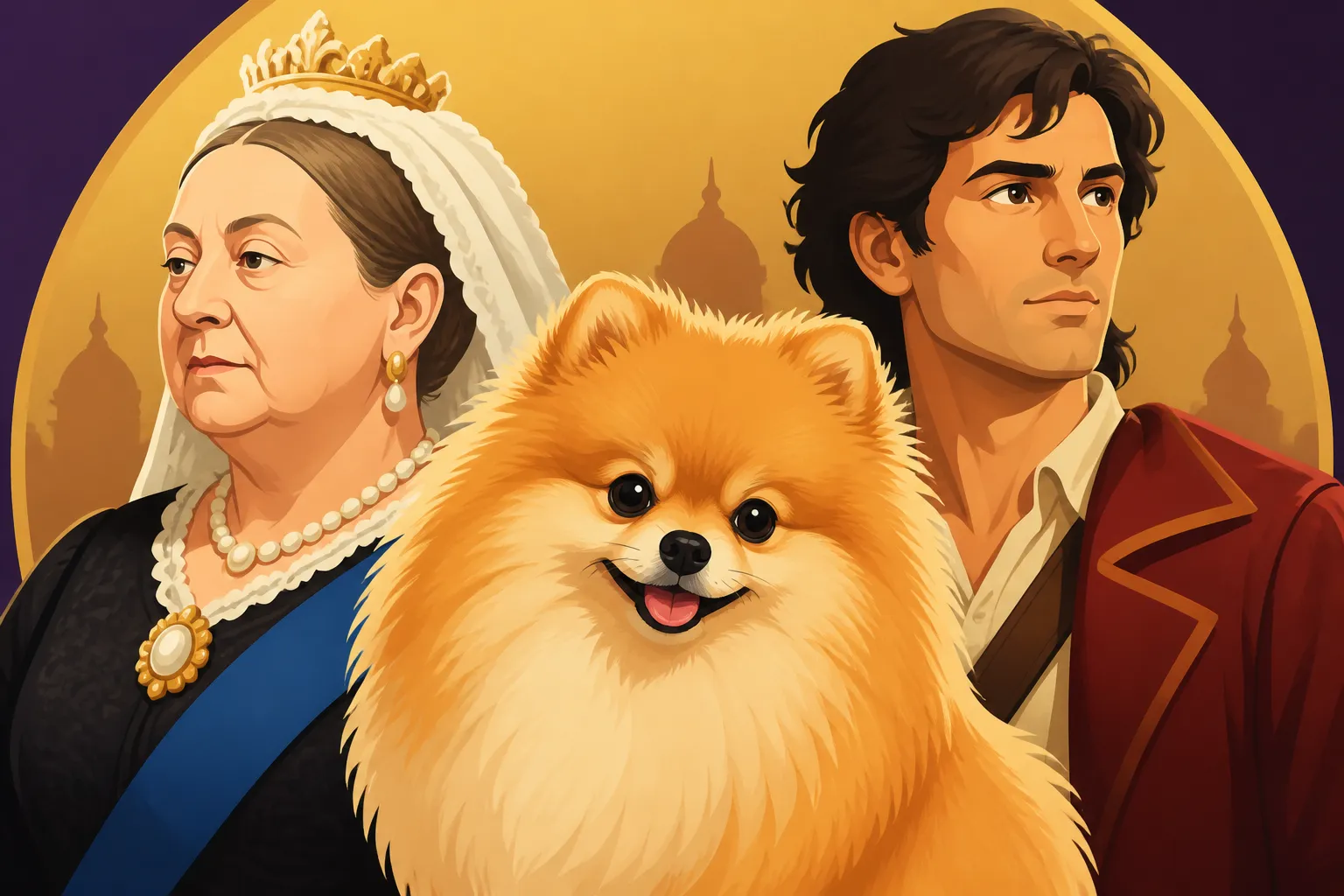
Queen Victoria, Marco and the Pomeranian
Have you ever looked at your tiny, fluffy Pomeranian, perhaps snuggled comfortably on your lap, and wondered how this little bundle of joy came to be? It’s hard to imagine, but the Pomeranian we know and love today wasn’t always quite so small or quite so pampered. This guide will take you on a journey through history, exploring the pivotal role Queen Victoria played in transforming the Pomeranian from a larger, working Spitz dog into the miniature, regal companion that captured the hearts of royalty and, eventually, the world.
Before Queen Victoria: The Pomeranian's Humble Beginnings
Before the Victorian era, the dogs we now recognize as Pomeranians were quite different creatures. They were still beautiful, still intelligent, but their purpose and physical characteristics were much more aligned with their larger Spitz cousins. Imagine a dog that weighed significantly more, perhaps with a slightly coarser coat, a dog built for more demanding tasks than warming a royal lap.
From Spitz to Pomeranian: A Northern Legacy
To truly understand the Pomeranian, we have to look back to its roots in the larger German Spitz family. These dogs originated in Central Europe, specifically in a region known as Pomerania, which is now part of modern-day Germany and Poland. They were hardy, robust dogs, companions to fishermen and farmers, known for their alert nature and keen guarding instincts. They weren't just pretty faces; they were workers. They’d stand watch, bark at intruders, and generally make themselves useful around the homestead. You might be interested in learning more about The German Spitz Family a Pomeranian Belongs To. This lineage is crucial because it highlights the fundamental shift that occurred in the breed's development. These were dogs of substance, capable of enduring harsh conditions and performing duties that required stamina and resilience. Their double coats, so admired today, served a practical purpose: insulating them from the cold northern European winters.
The Larger Ancestors: Working Dogs of Old Pomerania
The Pomeranian of the 18th and early 19th centuries was a far cry from the tiny dog curled on your sofa. Historical accounts and early illustrations suggest they could weigh anywhere from 20 to 30 pounds, sometimes even more. Imagine a fluffy, fox-like dog, maybe the size of a modern Shetland Sheepdog, but with that distinctive Spitz appearance and lively temperament. These larger dogs were versatile. They guarded homes and livestock, pulled small carts, and were generally considered sturdy, all-around farm dogs. They were not bred for their diminutive size or delicate features, but for their utility and hardiness. They were beloved by the common folk for their loyalty and watchdog abilities, rather than for their elegance or portability. It’s quite a contrast to consider The Twenty Five Pound Pomeranian of the 1800s against the typical modern Pom!
A Royal Encounter: Queen Victoria Discovers the Pomeranian
The world of dog breeding, like many things, often changes dramatically when a influential figure takes an interest. For the Pomeranian, that figure was none other than Queen Victoria, whose immense popularity and passion for dogs completely reshaped the breed's trajectory. Her patronage wasn't just a fleeting fancy; it was a dedicated effort that spanned decades and ultimately set the stage for the Pomeranian we recognize today.
The Florentine Connection: An Italian Holiday
The story often begins in Florence, Italy, during a royal holiday in 1888. Queen Victoria, known for her love of animals and her discerning eye, encountered several Pomeranians during her travels. These dogs, descendants of the larger German Spitz, had already undergone some reduction in size through selective breeding in Italy. They were smaller than their traditional German counterparts but still larger than what would become the ideal Victorian "toy" Pomeranian. It was here, amongst the Italian sunshine and exquisite art, that Victoria first laid eyes on Marco, a little red sable Pomeranian. He was described as weighing around 12 pounds, a significant reduction from the 20-30 pound dogs of earlier centuries, but still twice the weight of many modern show Poms. The Queen was instantly smitten by his vivacious personality, his luxurious coat, and his charming disposition. This encounter wasn't just a personal moment for Victoria; it was the spark that would ignite a global passion for the breed. When Pomeranians First Reached England is a tale closely intertwined with royal interest.
Marco's Moment: A Small Dog with Big Impact
Marco wasn't just a dog; he was the dog that changed everything. Queen Victoria brought Marco back to England, and her devotion to him quickly became public knowledge. His presence at her side, often photographed and widely reported, brought the Pomeranian breed into the spotlight. Imagine the fascination: if the Queen of England herself adored this particular type of dog, then surely everyone else would want one too! Marco wasn't alone, of course; Victoria had other Pomeranians in her kennel, including Gena, a small white Pom, and Fluffy, another favorite. But Marco was often credited as her chief companion, the one who truly captured her heart and drew widespread attention to the breed. His visibility made the Pomeranian instantly fashionable among the aristocracy and, by extension, the burgeoning middle class.
The Queen's influence on the breed was profound. She wasn't just an owner; she was an active breeder and exhibitor. She meticulously maintained her kennels, focusing on breeding smaller, finer-boned Pomeranians, believing these attributes added to their charm and elegance. She championed the breed in shows, and her entries often performed exceptionally well, further solidifying the Pomeranian's place as a desirable companion dog.
The Queen's Influence: Shaping the Breed's Destiny
Queen Victoria didn't just popularize the Pomeranian; she actively shaped its physical characteristics. Her personal preferences and dedication to breeding significantly altered the direction of the breed, emphasizing traits that would become synonymous with the modern Pomeranian. This shift was a deliberate, concentrated effort that had ripple effects throughout the dog fancy.
The Push for Petite: Smaller Poms Become Fashionable
Victoria's preference for smaller dogs was arguably the most impactful aspect of her patronage. Prior to her involvement, the Pomeranian was a sturdier, mid-sized dog. However, the Queen admired the more delicate, miniature specimens she encountered, and she actively sought to breed for these traits. This wasn't a casual endeavor; she would bring dogs back from her European travels specifically to introduce new bloodlines and reinforce the desired smaller size within her kennels. As the monarch, her tastes dictated trends. What the Queen favored, the nobility and gentry soon followed. Suddenly, breeders across England began to focus on reducing the size of their Pomeranians, striving to produce dogs that mirrored Victoria's beloved companions. This relentless pursuit of smaller size over generations led to How the Pomeranian Halved in Size in One Lifetime. It wasn't always an easy path, as breeding for extreme miniaturization can sometimes introduce health challenges, but the aesthetic appeal was undeniable.
The Kennel Club and Breed Standards: Formalizing the Shift
Queen Victoria’s influence extended beyond simply making smaller dogs popular; she also played a key role in the formalization of the breed. The Kennel Club in England, a crucial organization for establishing breed standards and ensuring pedigree integrity, officially recognized the Pomeranian in 1870. However, it was truly after Victoria's involvement, particularly following Marco's public debut, that the breed standard began to reflect the push for miniaturization.
The 1891 show at Crufts, where Queen Victoria exhibited six of her Pomeranians, including Marco, was a landmark event. The 1891 Show That Changed the Pomeranian demonstrated the breed's rising prominence and the direction its development was taking. Her dogs, notably smaller than many of the other Pomeranians being shown at the time, were a sensation. This visibility and royal endorsement were instrumental in embedding the smaller size preference into the official breed standard. The standard began to specify a weight range that was considerably lower than the breed's ancestors, solidifying the Pomeranian's classification as a toy breed. This standardization provided a clear goal for breeders: to produce charming, petite dogs with abundant coats and lively dispositions.
The Pomeranian's Transformation: From Working Dog to Lap Companion
The shift from a robust farm dog to a delicate lap companion wasn't accidental. It was the result of deliberate choices made by breeders, heavily influenced by societal trends and, of course, the royal stamp of approval from Queen Victoria. This transformation involved intense selection for specific traits, moving away from utility towards aesthetics and companionship.
Selective Breeding for Size and Type
Once the direction was set – smaller, more refined dogs – breeders dedicated themselves to achieving this ideal. This involved careful selection of breeding pairs, prioritizing those individuals who exhibited smaller stature, finer bone structure, and the dense, profuse double coat that Poms are famous for. It's a testament to these early breeders that they managed to reduce the size so significantly while still retaining the breed's distinctive Spitz characteristics. This often meant culling larger puppies from litters or focusing on breeding from the smallest, healthiest individuals. The process of How Breeders Selected Pomeranians Down in Size was a long and sometimes challenging one, requiring patience and a deep understanding of genetics, even in its nascent stages.
This wasn't just about weight; it was also about overall proportion and head type. The desired "fox-like" expression, the small, erect ears, and the intelligent, bright eyes became hallmarks of the emerging breed. These characteristics were refined over successive generations, gradually creating the distinctive look that defines the Pomeranian today. We can see how the modern breed standard emphasizes these physical traits, focusing on a compact body and a magnificent coat, a direct result of these historical breeding choices. The Weight the Pomeranian Standard Requires today is a direct reflection of this historical drive.
The Changing Face of the Pomeranian
With the emphasis on miniaturization and refinement, the "face" of the Pomeranian literally began to change. The broader, more robust heads of their larger ancestors gave way to the more delicate, foxy expression that Queen Victoria so admired. The ears became proportionally smaller and more neatly set, contributing to that alert, intelligent look. The long, dense double coat, which had once served as protection against the elements, was now cultivated for its sheer beauty and luxurious texture, framing the face with a distinctive ruff.
This evolution meant that the Pomeranian became less about raw functionality and more about being a cherished companion. Their size made them ideal for indoor living, perfectly suited for aristocratic homes and later, for families seeking a charming, portable pet. The modern Pomeranian's ability to live comfortably in smaller spaces, including apartments, is a direct consequence of this historical shift in breeding focus. The delicate nature and size meant that their care also started to evolve, with more focus on grooming and protection rather than rugged outdoor work.
Beyond Victoria: The Lasting Legacy
Queen Victoria's reign ended in 1901, but her profound love for Pomeranians left an indelible mark on the breed that continues to this day. Her influence wasn't just a fleeting trend; it shaped the Pomeranian into one of the most beloved and recognizable toy breeds globally. The legacy is seen in everything from their enduring popularity to the very characteristics we cherish in them.
Popularity Soars: The Pomeranian as a Global Sensation
After Victoria's endorsement, the Pomeranian's popularity exploded, first in England and then across the globe. By the early 20th century, Poms were being exported to the United States and other countries, quickly gaining favor among dog enthusiasts. Their charming personalities, portability, and beautiful coats made them ideal companions for urban dwellers and families alike. Famous figures, from royalty to celebrities, continued to embrace the breed, further solidifying its status. This widespread appeal has ensured the Pomeranian's consistent presence in top breed rankings worldwide. It's fascinating to consider The Countries Where Pomeranians Are Most Registered and see how far their appeal has stretched.
Even today, the image of a small, fluffy dog with an intelligent expression and a plumed tail immediately brings the Pomeranian to mind. This iconic image is directly traceable to the breeding efforts initiated and popularized by Queen Victoria. Many breeders still strive to produce dogs that embody the elegance and charm she admired, albeit within modern health and ethical considerations. Without her, it's highly likely the Pomeranian would still exist, but perhaps as a larger, less specialized breed, closer to its original Spitz form.
Challenges and Responsibilities of Modern Breeding
While Victoria's influence was largely positive in establishing the breed, the intensive focus on miniaturization also brought its own set of challenges. Modern breeders now face the responsibility of continuing to produce small, beautiful Pomeranians while prioritizing health and genetic diversity. The push for extreme smallness can, if not managed carefully, lead to an increased incidence of certain health issues that are more common in very small dogs, such as patellar luxation or hypoglycemia in puppies.
Responsible breeders today carefully balance aesthetics with health. They conduct genetic testing, adhere to breed standards that emphasize sound structure, and work to maintain the vibrant temperament that makes Poms so special. The conversation around What Teacup Breeding Costs a Pomeranian highlights the importance of ethical breeding practices, ensuring the well-being of these beloved dogs. Finding a reputable breeder who prioritizes health is paramount for anyone looking to bring a Pomeranian into their home. This ensures that the beautiful legacy of the Pomeranian continues responsibly for generations to come.
Understanding the Historical Pomeranian vs. Today's Pom
It’s easy to look at a picture of Queen Victoria with one of her dogs and assume they were identical to the Pomeranians we see bouncing around dog parks today. While the core characteristics — the double coat, the Spitz features, the vivacious personality — remained, there are some distinct differences in appearance, size, and even the general approach to ownership that are worth exploring.
What Victoria's Pomeranians Looked Like
Queen Victoria’s Pomeranians, especially Marco, were indeed smaller than the original working dogs of Pomerania. Marco, for example, weighed around 12 pounds. This is still notably larger than the typical 3-7 pound Pomeranian that dominates show rings and pet homes today. Imagine a dog with a full, luxurious coat, an alert expression, but with a bit more bone and substance than many modern Poms. Their heads might have been slightly rounder or less "foxy" than current breed standards prefer, and their ears possibly a little larger in proportion to their heads.
The variety of colors was also perhaps broader and less standardized. While orange and sable Poms were admired, Victoria herself owned a white Pomeranian named Gena, which was considered quite fashionable. While the overall look was definitely recognizable as a Pomeranian, it was a breed still very much in transition, moving towards the extreme miniaturization that would take hold in the following decades. When we talk about Whether Victoria's Dogs Would Be Pomeranians Today, the answer is yes, they would be recognized, but perhaps as larger, older-style Poms that might be outside the preferred show ring size.
| Characteristic | Pomeranian (Victorian Era) | Pomeranian (Modern Day) |
|---|---|---|
| Average Weight | 10-15 lbs (e.g., Marco at 12 lbs) | 3-7 lbs |
| Head Shape | Slightly broader, less refined fox-like | More refined, distinctly fox-like |
| Ear Size/Set | Potentially slightly larger | Small, erect, high-set |
| Coat Density | Dense double coat, perhaps less "stand-off" | Extremely dense, "stand-off" double coat |
| Primary Role | Royal companion, emerging toy breed | Lap companion, show dog, family pet |
How the Modern Pomeranian Differs
The modern Pomeranian, while undeniably descended from Victoria's beloved dogs, represents the culmination of over a century of further selective breeding. The most obvious difference is size; the current breed standard typically calls for dogs between 3 and 7 pounds. This ultra-compact size makes them incredibly portable and perfect for apartment living. The coats have also become even more profuse and stand-off, creating that iconic fluffy silhouette. Breeders have honed the "fox-like" expression, emphasizing small, alert ears and dark, intelligent eyes.
The variety of colors and patterns has also expanded, with many distinct and recognized variations beyond the sables and oranges that were common in Victoria's time. While grooming was certainly a concern for Victorian owners, the demands of maintaining a modern show Pom's coat are far more rigorous, often requiring specialized tools and techniques readily available from retailers like Chewy.
Moreover, our understanding of dog health, nutrition, and training has evolved immensely. Modern Pomeranian owners benefit from advancements in veterinary care and a wealth of knowledge on how to care for these tiny companions, including specialized small-breed foods and enrichment toys. The emphasis today is not just on beauty, but on health, temperament, and ensuring these little dogs live full, happy lives. Understanding this history gives us a deeper appreciation for the journey the Pomeranian has taken to become the beloved breed it is today. The Home a Pomeranian Belongs In has changed dramatically over the centuries!
Disclaimer
This article is for general informational purposes only and does not constitute professional advice. Laws, prices and regulations vary by location and change over time. Consult a qualified professional for guidance on your specific situation.