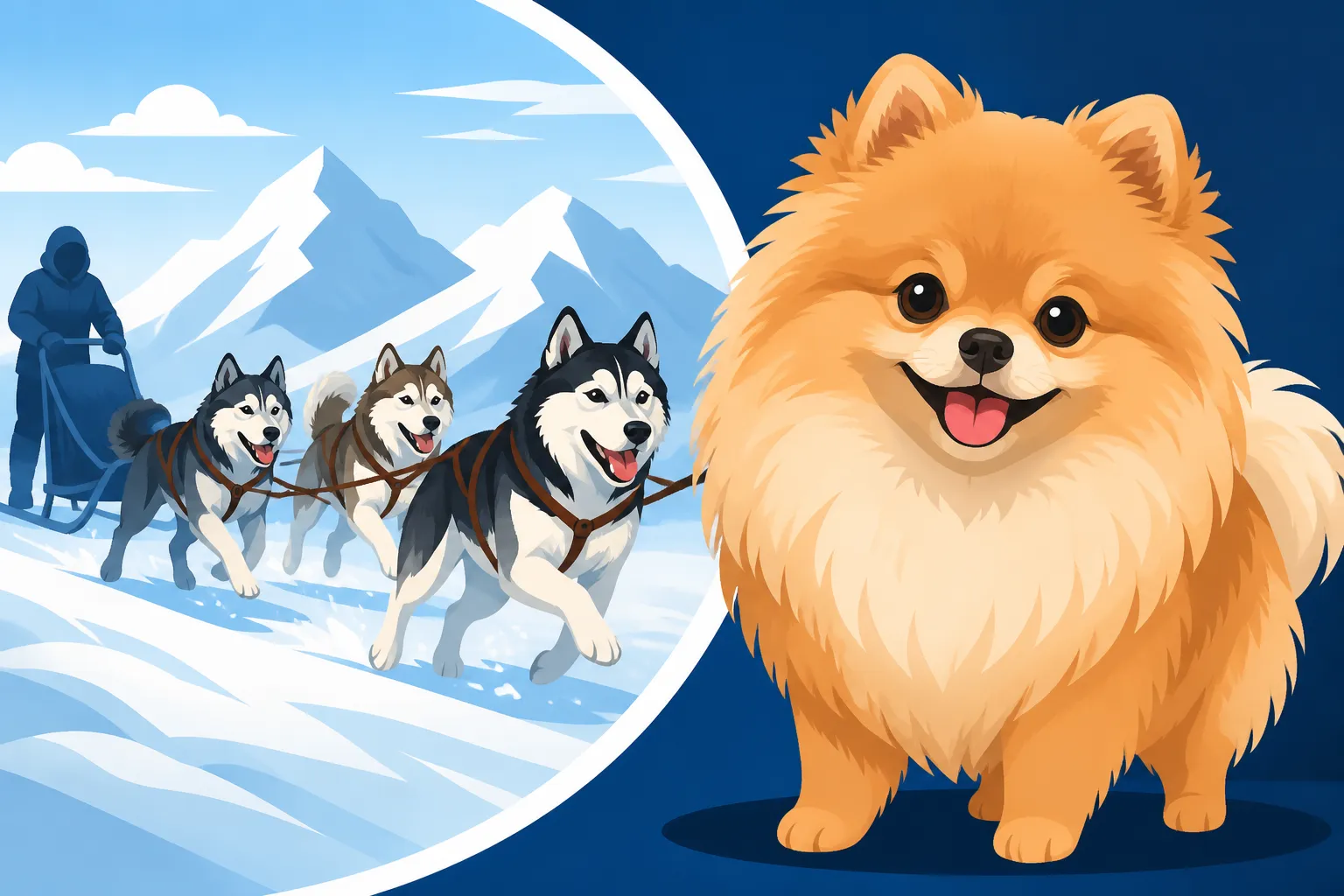
Pomerania and the Sled Dogs Behind the Pomeranian
Have you ever looked at your fluffy, spirited Pomeranian, perhaps snuggled on your lap or fiercely guarding the front window, and wondered about their origins? It's easy to see these pint-sized companions and imagine they’ve always been dainty lapdogs, bred purely for cuteness. But trust me, that couldn't be further from the truth. The history of the Pomeranian is far more rugged and surprising than most owners realize, stretching back to a windswept European region and a lineage of hardy sled dogs. This guide will take you on a journey to uncover the fascinating, robust past of our beloved Poms, revealing the working dog heart beneath all that glorious fluff.
The Land of Pomerania: More Than Just a Name
When we say "Pomeranian," it's not just a fancy name; it’s a direct nod to the geographical region where these dogs first gained recognition and began their transformation into the breed we know today. Yet, so many of us, myself included until I delved deep into their history, don't really know where Pomerania is or what kind of place it was. It’s a bit like saying "Chihuahua" without knowing anything about the Mexican state it’s named after.
Where is Pomerania Anyway?
Pomerania, historically, is a coastal region nestled along the Baltic Sea in Central Europe. If you look at a modern map, you'll find its former lands stretching across what is now northeastern Germany and northwestern Poland. It’s a place of broad plains, ancient forests, and, significantly, a rather chilly climate, especially in winter. This wasn't a land of tropical ease, but one where hardiness and resilience were essential for survival, both for people and their animals.
Imagine the weather: long, cold winters with biting winds coming off the sea, and humid summers. Life here centuries ago was largely agricultural, with communities relying heavily on their wits and their working animals. Dogs in this environment weren't just pets; they were integral members of the household, expected to earn their keep. This harsh landscape and the needs of its people were formative in shaping the early Pomeranian's ancestors, demanding a robust constitution and a thick, insulating coat.
The Working Dogs of the Region
The "Pomeranians" that roamed this region centuries ago would be almost unrecognizable to us today. Forget the tiny fluff-balls. These were considerably larger dogs, often weighing 20 to 30 pounds, sometimes even more. They were sturdy, strong, and built for purpose, not just for sitting pretty. Their ancestors were true working dogs, indispensable partners to the people of Pomerania.
Their roles were varied but always practical. They often served as vigilant guard dogs for farms and homes, their keen senses and alert barks warning against intruders or predators. They were used to herd sheep and cattle, guiding livestock with their intelligence and quick movements. Some were even tasked with pulling small carts, perhaps laden with produce to market or firewood for the hearth. These were dogs bred for endurance, loyalty, and a strong work ethic, characteristics that, even in their miniaturized form, still peek through in our modern Poms. Their thick, double coats, a defining feature of the breed today, were absolutely crucial for enduring the cold, damp climate of their homeland.
Tracing the Spitz Ancestry: A Northern Heritage
To truly understand the Pomeranian, we have to look further back than the fields of Pomerania itself, into the vast, snowy expanses of the Arctic and Northern Europe. Our little Poms are part of a much larger, ancient family: the Spitz breeds. This lineage is incredibly important because it explains so much of their physical appearance, their unique coat, and even their spirited personality.
The Broad Family Tree of the Spitz Breeds
The Spitz family is a fascinating group of dogs, instantly recognizable by a set of common traits that speak to their northern origins. Think of the quintessential Spitz look: a thick, dense double coat (designed for insulation), pointed, erect ears, a tail that curls proudly over the back, and a distinctive "fox-like" face. These are not just superficial details; they are adaptations for survival in cold, often challenging environments.
The family is vast and diverse, including well-known breeds like the majestic Samoyed with its smiling face, the powerful Siberian Husky, the stoic Akita, the watchful Norwegian Elkhound, and the charming Keeshond. Our Pomeranian shares this genetic blueprint, albeit scaled down dramatically. When you see a Pom's fluffy ruff or their ever-alert ears, you're seeing echoes of these ancient, capable dogs. They carry the same intelligence, the same independence, and often the same stubborn streak that allowed their ancestors to thrive in harsh conditions and make their own decisions. It’s a heritage of resilience that is still very much alive in even the smallest Pomeranian.
From Arctic Workhorses to European Companions
The journey of these Spitz-type dogs from the Arctic circles down into more temperate European regions like Pomerania is a tale of adaptation and changing human needs. Originally, in the far north, these dogs were pure workhorses: pulling sleds, hunting, and guarding nomadic camps. They were essential for survival in environments where conditions were extreme and resources scarce.
As human populations moved and settled into more agricultural communities further south, the roles of their canine companions began to shift. While still valued for their guarding instincts and companionship, the need for heavy-duty sledding or large-scale hunting diminished. Instead, there was a growing desire for smaller, more manageable dogs who could still offer protection and companionship without demanding the same physical output or sheer volume of food. This gradual migration and change in lifestyle naturally led to a selective process where smaller, more adaptable dogs were favored. It wasn't an intentional breeding program for miniaturization at first, but rather an organic process driven by the evolving relationship between humans and their dogs in a new environment.
The Pomeranian's Sled Dog Roots: A Surprising Lineage
It’s often a shock to new Pomeranian owners, who might only picture their tiny companions as sofa ornaments, to learn that these dogs are descended from powerful, working ancestors. While they may not have pulled monumental sleds across vast icy plains like their Husky cousins, the idea that they come from a "sled dog" background is surprisingly accurate in spirit. Their forebears were strong, capable dogs, far removed from the pampered pups of today.
The "Old" Pomeranian: A Much Larger Dog
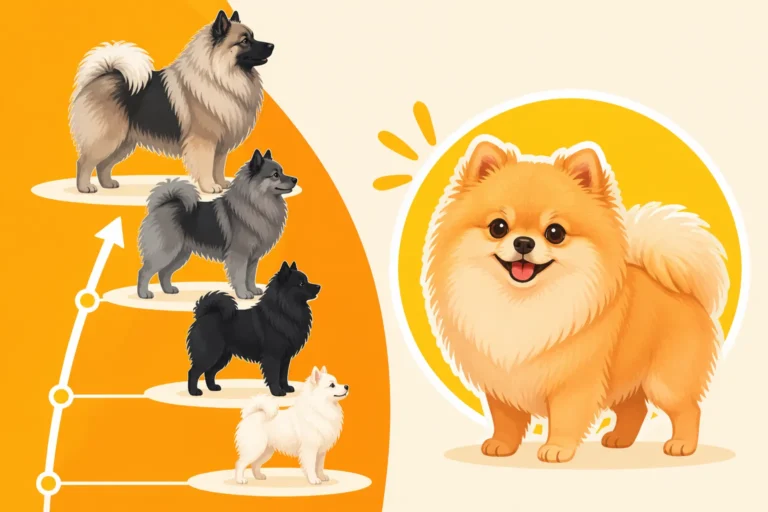
Before the 19th century, if you encountered a "Pomeranian," you wouldn't be looking at a dog weighing 3-7 pounds. You'd be seeing a much more substantial animal, typically in the 20-30 pound range, sometimes even larger. These were sturdy, medium-sized dogs, robust in build, with strong bones and a solid frame. They possessed the same thick, luxurious double coat we see today, but on a much bigger canvas. They were built for endurance and the rigors of a working life, not for being carried in a purse.
Imagine a dog that could comfortably walk miles, patrol a farm, or stand its ground against a threat. That was the "Old Pomeranian." The transformation to their current size is one of the most remarkable instances of selective breeding in canine history, and it’s a story worth appreciating. It truly highlights how much our perception of the breed has changed over time, from a hardy working dog to the delicate toy breed we now cherish. It's truly amazing when you consider How the Pomeranian Halved in Size in One Lifetime.
Tasks Performed by Their Ancestors
While we might not think of a Pomeranian pulling a sled today, their ancestors certainly engaged in activities that required strength, stamina, and a willingness to work. Their primary roles revolved around being invaluable members of rural households in Pomerania. They were exceptional watchdogs, known for their alertness and vocal nature, a trait that clearly persists in the modern breed. Their barks weren't just annoying yaps; they were serious warnings to protect their homes and families.
Beyond guarding, some of these larger Spitz-type dogs were indeed used for light draft work. They might have pulled small carts laden with milk, vegetables, or other farm produce to local markets. Think of them as the compact utility vehicles of their day! They also assisted in herding duties, helping to manage small flocks of sheep or other livestock. Their intelligence, agility, and protective instincts made them versatile helpers. This historical context reminds us that the spark and energy many Poms possess aren't just boundless enthusiasm; they're remnants of a working heritage where engagement and purpose were key. These were dogs with jobs, and that deeply ingrained need for engagement still runs in their veins. So, the next time your Pomeranian demands attention or stands sentinel at the window, remember What the Original Pomeranian Was Kept For.
Queen Victoria's Influence: The Great Downsizing
The trajectory of the Pomeranian breed changed forever, quite literally, with the intervention of a single, highly influential individual: Queen Victoria. Her personal preference for smaller dogs sparked a breeding revolution that rapidly transformed the breed from a sturdy working dog into the diminutive companion we adore today.
Marco and the Royal Fascination
The pivotal moment arrived in 1888, when Queen Victoria visited Florence, Italy. It was there that she encountered a small Pomeranian named Marco. This dog, reportedly weighing around 12-14 pounds, was significantly smaller than the average Pomeranian of the era. The Queen was absolutely smitten. She brought Marco back to England, and his presence in the royal household immediately ignited a craze for smaller Pomeranians. It's fascinating to consider Marco, Victoria's Pomeranian, and the Year 1888 as the true turning point for the breed's size.
Victoria wasn’t just a dog owner; she was a serious dog fancier and breeder. She exhibited Marco and other smaller Pomeranians at dog shows, and her endorsement carried immense weight. Suddenly, breeders realized that smaller Poms were highly desirable, and the demand for these miniature versions skyrocketed. Her personal fascination effectively set a new standard for the breed, shifting the focus from working utility to refined companionship and aesthetic appeal.
Breeding for Miniaturization: The Shift in Focus
Following Queen Victoria's lead, the breeding world underwent a dramatic shift. Instead of selecting for robust size and working capabilities, breeders began to actively prioritize smaller and smaller dogs. The goal was no longer the 20-30 pound farm dog, but a truly miniature companion, fitting for the laps and drawing-rooms of the aristocracy and burgeoning middle class. This intense focus on miniaturization was incredibly effective, leading to a rapid reduction in the breed's average size over just a few generations.
This period marked a significant departure from the Pomeranian's original purpose. Where once their size and strength were assets, now their tininess became their most celebrated attribute. It’s a powerful example of how human preference can dramatically alter a breed’s characteristics in a relatively short time. While this gave us the charming, fluffy Poms we love, it also introduced new considerations regarding health and structure that breeders continue to navigate. The shift was profound, transforming the Pomeranian from its humble, working-class roots into a canine darling of society.
The German Spitz Connection: A Shared Heritage
To grasp the full picture of the Pomeranian's ancestry, it's essential to understand its place within the broader German Spitz family. This connection clarifies why Poms have their distinctive look and even some of their personality quirks. In many ways, our Pomeranians are simply the smallest, most refined branch of a very ancient and proud family tree.
The German Spitz Family Tree
The German Spitz is not a single breed but rather a classification of closely related breeds, distinguished primarily by size. They all share the classic Spitz characteristics: the dense double coat, the foxy head, prick ears, and a tail curled over the back. From largest to smallest, the main varieties include:
- Wolfspitz (Keeshond): A medium-large Spitz, often recognized for its "spectacles" markings around the eyes.
- Giant Spitz (Großspitz): A larger, robust Spitz, less common outside of Germany.
- Medium Spitz (Mittelspitz): A mid-sized Spitz, a very balanced and athletic dog.
- Miniature Spitz (Kleinspitz): A smaller version, similar in type to the Pomeranian but slightly larger.
- Toy Spitz (Zwergspitz): This is the official German designation for what we in North America and Britain call the Pomeranian.
So, when we talk about a Pomeranian, we are truly talking about the Zwergspitz, the "dwarf Spitz" or "toy Spitz," the smallest member of this ancient and esteemed German family. This is why you'll often hear discussions about The German Spitz Family a Pomeranian Belongs To, as it provides crucial context for understanding the breed's standard and underlying traits. In some parts of the world, if you ask for a Pomeranian, you might literally be shown a Kleinspitz or even a Mittelspitz, highlighting the differences in classification across countries.
Distinguishing the Pomeranian from its Spitz Cousins
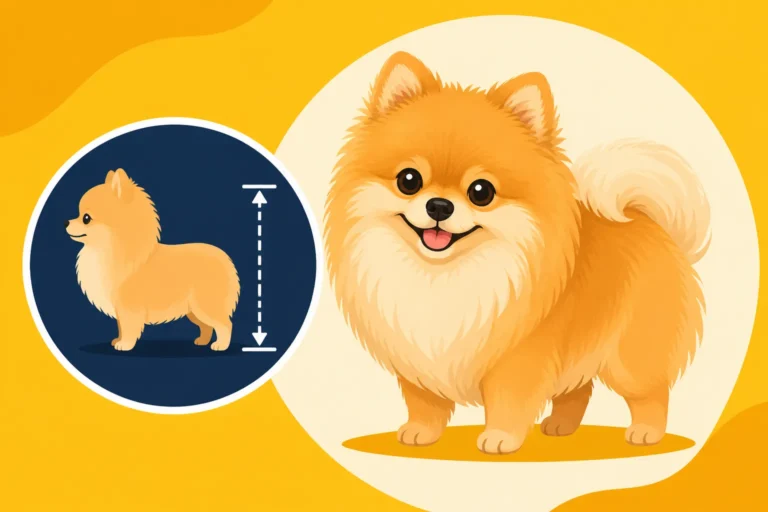
While all German Spitz breeds share a common look, specific breed standards have evolved to differentiate the Pomeranian (Zwergspitz) from its larger cousins. The primary distinction is, of course, size. The modern Pomeranian standard typically calls for a weight between three and seven pounds, and a height of usually six to seven inches at the shoulder. This is significantly smaller than even the Kleinspitz, which can range up to 20 pounds.
Beyond size, there are subtle conformational differences that refined breeding has emphasized in the Pomeranian. The Pomeranian often has a slightly shorter muzzle, giving it that distinct "fox-like" or "baby-doll" expression that is so prized. Their ears are typically smaller and set higher, contributing to their alert and intelligent appearance. Most notably, the Pomeranian's coat is often bred to be even more profuse and "stand-off" than its larger Spitz relatives, creating that iconic ball of fluff appearance. This dense, flowing coat gives the impression of even more substance than their tiny bodies actually possess. These distinctions, while subtle to the untrained eye, are crucial for breeders and judges aiming to maintain the unique characteristics of our beloved Pomeranians within the wider Spitz family.
The Modern Pomeranian: Echoes of the Past
Despite their dramatic reduction in size over the centuries, our modern Pomeranians are far from mere ornamental creatures. They carry the indelible marks of their robust, working-dog ancestry, manifesting in both their physical attributes and their spirited personalities. Understanding these echoes of the past helps us appreciate their unique qualities and provides valuable insight into how best to care for them.
Retaining Spitz Traits in a Tiny Package
Take a moment to truly observe your Pomeranian, and you'll likely see a living testament to their Spitz heritage. That characteristic intelligence, for instance, isn't just for learning cute tricks; it's a direct link to ancestors who needed to think independently and problem-solve in their working roles. This intelligence, coupled with a surprising stubbornness, is why you might sometimes feel like your Pom has a mind of its own – a clear sign that Whether Spitz Independence Makes a Pomeranian Difficult is a common concern for many owners.
Their notorious bark, often loud and persistent, is a perfect example of a watchdog trait miniaturized. They are excellent, if sometimes overly enthusiastic, alarm systems, alerting you to every passing leaf or distant siren. This is a direct inheritance from those early Pomeranian ancestors who guarded farms and homes. Their thick, double coats, while undeniably beautiful, are not just for show; they are the legacy of dogs needing protection from harsh northern climates. Even their general robust constitution, despite their small size, speaks to a lineage of dogs built for durability, not fragility.
Caring for a Miniature Workhorse
Recognizing their historical roots is key to providing the best care for your modern Pomeranian. That magnificent double coat, a legacy of colder climes, requires significant grooming to keep it healthy and free of mats. Regular brushing, at least a few times a week, is non-negotiable to prevent painful tangles and maintain skin health. Investing in high-quality grooming tools is a must, and many owners find excellent options for brushes, combs, and detangling sprays on Chewy. This dedication to grooming is a direct homage to their ancestors who relied on their coats for survival. The Double Coat That Makes a Pomeranian and Why It Stays On is an area of care that cannot be overlooked.
Their innate intelligence and energy mean they thrive on mental stimulation and regular exercise, even if it's just a brisk walk around the block or engaging playtime indoors. Don't be fooled by their small stature; a bored Pomeranian can be a destructive or overly vocal one. A well-fitted harness, ideally one that distributes pressure across their chest rather than their delicate windpipe, is essential for walks, and Chewy offers a wide selection perfect for small breeds. Proper nutrition is also crucial to fuel their active little bodies, and again, resources like Chewy provide a vast array of small-breed specific foods and treats tailored to their unique needs. By understanding their history, we can ensure our Poms receive care that honors their hardy lineage.
Dispelling Myths: What a Pomeranian Is Not
It’s so easy to fall into certain traps when thinking about Pomeranians, especially given their dainty appearance and common association with being pampered lapdogs. However, understanding their true origins helps us challenge these misconceptions and appreciate the breed for the complex, intelligent, and sturdy little dogs they truly are.
Not a Fragile Lap Dog
One of the biggest myths surrounding Pomeranians is that they are inherently fragile. While their small size undeniably makes them vulnerable to accidental injuries – a dropped item, a misstep by a larger person, or a jump from a high sofa can have serious consequences – this does not mean they are intrinsically weak or delicate. A well-bred Pomeranian from responsible lines is typically a sturdy and robust little dog, full of energy and zest for life. They are built compactly, with strong bones for their size, a testament to their working ancestors.
The issue often lies not in their inherent fragility, but in how we treat them. If we constantly carry them, discourage them from walking, or fail to supervise them around larger pets or small children, we contribute to the perception of fragility. In reality, a healthy Pomeranian loves to explore, play, and interact with the world, much like any other dog. Responsible breeding aims to ensure their structural soundness, making them resilient despite their small stature. Concerns about true fragility often arise with "teacup" breeding, where extreme miniaturization can lead to significant health issues. It's why many experienced owners and breeders emphasize that What Teacup Breeding Costs a Pomeranian is a serious consideration.
Not Just a "Fluff Ball"
Another pervasive myth is that Pomeranians are simply "fluff balls" – adorable, but perhaps not the brightest or most capable of dogs. This couldn't be further from the truth. Beneath all that glorious coat lies a sharp, intelligent mind and a personality that is anything but passive. These dogs descended from working Spitz breeds, and that intelligence, coupled with an often independent spirit, is still very much a part of their genetic makeup.
Pomeranians are highly trainable and eager to please (when they feel like it!). They can excel in various dog sports, including obedience, agility, and rally. Their keen observational skills and alert nature make them quick learners, though their occasional stubbornness can make training a fun challenge. They thrive on mental stimulation, puzzle toys, and consistent training that taps into their intelligence. Dismissing them as merely decorative misses out on the incredible depth of their character and capabilities. They are spirited, sometimes sassy, and always full of personality, reminding us that their heritage is one of purpose and intelligence, not just fluff.
| Feature | Early Pomeranian Ancestors | Modern Pomeranian |
|---|---|---|
| Typical Weight | 20-30+ pounds | 3-7 pounds |
| Primary Role | Guarding, herding, light carting | Companion, alert dog |
| Key Physical Traits | Sturdy build, strong bones, dense double coat, pricked ears, curled tail | Compact build, refined features, profuse stand-off double coat, pricked ears, curled tail |
| Temperament | Hardy, vigilant, independent, loyal, resilient | Intelligent, spirited, alert, affectionate, sometimes stubborn |
| Environment | Rural farms, harsh climates | Family homes, diverse climates |
| Breeding Focus | Working ability, health, size | Conformation, size reduction, coat quality |
Disclaimer
This article is for general informational purposes only and does not constitute professional advice. Laws, prices and regulations vary by location and change over time. Consult a qualified professional for guidance on your specific situation.