The Age a Pomeranian Puppy Becomes Reliable Indoors
Oh, the house training journey with a tiny Pomeranian puppy! It's one of those rites of passage for every Pom parent, often filled with moments of utter frustration, a few puddles, and a whole lot of head-scratching. You adore their fluffy faces and boundless energy, but you're probably wondering when, oh when, will your little fluffball finally "get it" and become reliably house-trained indoors. It feels like an endless cycle of potty breaks, quick clean-ups, and constantly watching for that tell-tale sniff.
Rest assured, you're not alone in this. Many of us have been there, gazing at our sweet, innocent-looking pups, wondering if they'll ever truly understand the concept of "outside." This guide is here to walk you through the developmental stages, the crucial training elements, and the practical tips that will help your Pomeranian puppy become a reliable indoor companion, saving your floors and your sanity.
Understanding Pomeranian Puppy Bladder Development
When we bring home a Pomeranian puppy, often at around 8 to 12 weeks old, it’s vital to understand that their tiny bodies are still developing. Their bladders are incredibly small, and their ability to control those bladders is practically non-existent. It’s not defiance or stubbornness; it’s pure physiology.
The Tiny Bladder Reality
Imagine trying to hold a gallon of water in a thimble – that's essentially what we're asking a young Pomeranian puppy to do. Their bladder capacity is directly proportional to their size, and Poms are, after all, a toy breed. At just a few pounds, their internal organs are equally miniature. This means that a young puppy simply doesn't have the physical capacity to "hold it" for long periods. Expecting them to is setting both you and your puppy up for failure and frustration.
In the early weeks, a Pomeranian puppy might need to urinate every 15-30 minutes when awake and active, especially after eating, drinking, or playing. Their digestive systems are also fast-moving, so bowel movements can also be frequent. This is why vigilance is your best friend during this stage; you have to preemptively take them out, not wait for them to signal. Ignoring this biological fact is one of the biggest reasons house training can feel like an uphill battle. It’s not a behavioral issue as much as it is a physical limitation that time and development will gradually overcome.
How Age Impacts Control
As your Pomeranian puppy grows, so does their bladder and their neurological control over it. This is a gradual process, not an overnight switch. Generally, a puppy can hold its bladder for approximately one hour per month of age, plus one. So, a 3-month-old puppy might theoretically hold it for 3-4 hours, while a 5-month-old might manage 5-6 hours. This is a rough guideline, though, and it assumes the puppy isn't overly excited, stressed, or full of water.
By the time your Pomeranian reaches 4 to 6 months of age, you'll usually start to see a significant improvement in their ability to control their bladder and bowels. Their muscles are stronger, their nervous system is more developed, and they are more capable of associating the urge to eliminate with the act of going outside. This is a critical window where consistent training really begins to pay off. However, even at this age, perfect reliability isn't guaranteed, and regressions can happen, especially if routines slip. Patience and understanding that this is a developmental timeline are key to avoiding unnecessary stress for both you and your little one.
Recognising Readiness for Longer Intervals
You'll notice signs that your Pomeranian puppy is gaining more control and can handle longer intervals between potty breaks. They might start waking up less frequently overnight or be able to play for longer stretches without needing an immediate trip outside. A major indicator is when they begin to consistently "ask" to go out – this might be through subtle cues like standing by the door, whining softly, or pacing. Some Poms might even come and nose your hand or bring you their leash.
It’s crucial to observe these individual cues and celebrate every small victory. When you see these signs, it means your puppy is not only physically capable but also mentally connecting the dots between the feeling of needing to go and the designated outdoor potty spot. This is the stage where you can slowly start to extend the time between breaks, always erring on the side of caution. If they have an accident, it means you've pushed them too far or missed their signal, not that they've forgotten their training. Keep up the positive reinforcement when they go outside, making it the most rewarding experience possible. For more insights on this, you might find our article The Age a Pomeranian Puppy Becomes Reliable Indoors helpful.
Factors Beyond Age Influencing House Training Success
While age and bladder development are fundamental, they are by no means the only ingredients in the house training recipe. Your actions, your environment, and your consistency play an enormous role in how quickly your Pomeranian puppy becomes reliable indoors.
Consistency in Schedule and Routine
This cannot be stressed enough: consistency is the absolute cornerstone of successful house training. Puppies thrive on routine, and a Pomeranian is no exception. They learn best when they know what to expect and when to expect it. This means:
- Fixed Potty Schedule: Take your puppy out first thing in the morning, immediately after waking from naps, after every meal or drink, after play sessions, and right before bedtime. Don't wait for them to ask; just take them.
- Regular Feeding Times: Feed your Pomeranian puppy at consistent times each day. This helps regulate their digestive system, making their potty times more predictable. If food is available all day, elimination will be too. For little pups, it's often recommended to feed them three to four times a day. You might want to read How Often a Pomeranian Puppy Needs to Eat for more details on feeding schedules.
- Designated Potty Spot: Always take your puppy to the same outdoor spot. The scent cues will encourage them to eliminate there, reinforcing that this is the place to go.
- Supervision: When your puppy is indoors and not confined, they need your undivided attention. This isn't just about preventing accidents; it's about catching those crucial pre-potty signals (sniffing, circling, squatting) and rushing them outside.
Any deviation from this consistent schedule can confuse your puppy and lead to setbacks. If one family member is diligent and another is lax, your puppy will struggle to learn. Everyone in the household needs to be on the same page, committing to the same routine.
The Role of Positive Reinforcement
Positive reinforcement is the most effective and humane way to house train any dog, especially a sensitive breed like a Pomeranian. Harsh corrections or punishment for accidents are not only ineffective but can also be detrimental. They teach your puppy to fear you, to hide their accidents, or to associate going to the bathroom with something negative, making them less likely to eliminate in front of you (even outside).
Instead, make going potty outside the most rewarding experience ever:
- Immediate Praise and Treats: The second your Pomeranian finishes doing their business in the designated outdoor spot, lavish them with enthusiastic praise ("Good potty!"), a high-value treat, and perhaps a quick play session. The timing is crucial – the reward must happen within a few seconds of the act for your puppy to connect it to going potty outside.
- Enthusiasm: Your excitement needs to be genuine. Imagine you've just won the lottery every time your puppy does what you want! That level of joy will convey to them that they've done something truly wonderful.
- Avoid Scolding: If you find an accident indoors, simply clean it up without scolding. Your puppy won't understand why you're angry after the fact. The "crime" happened minutes or hours ago; they live in the present. Just clean it thoroughly with an enzymatic cleaner (you can find effective ones on Amazon) to eliminate odors that might attract them back to the same spot.
By making outdoor potty breaks a positive, rewarding experience, your Pomeranian puppy will eagerly choose that option over having an accident inside. Many puppy training programs, like those offered by BAXTER & Bella, put a strong emphasis on positive reinforcement, providing structured guidance that can be incredibly helpful for new puppy parents.
Avoiding Common House Training Pitfalls
It’s easy to fall into certain traps that can hinder your Pomeranian's house training progress. Being aware of these can help you sidestep common frustrations:
- Over-reliance on Puppy Pads: While puppy pads can be useful in specific situations (like apartment living or extreme weather), relying on them too heavily can confuse your Pomeranian. They might learn that it's okay to potty indoors on a pad, which makes the transition to only going outside much harder. It essentially teaches them to potty indoors. If you must use them, try to phase them out as quickly as possible, moving them closer and closer to the door, and eventually outside. For a deeper dive, check out Whether a Pomeranian Puppy Should Use Pads and Grass Both.
- Lack of Supervision: As mentioned, if your puppy is roaming free without direct supervision, accidents are inevitable. This is where crate training or using a tether comes in handy. If you can't watch them, they should be in a safe, confined space.
- Inadequate Cleaning: If accidents aren't cleaned properly, the residual odor can act like a beacon, encouraging your puppy to revisit the "scene of the crime." Regular household cleaners might mask the smell to humans, but a dog's keen nose will still detect it. Invest in an enzymatic cleaner specifically designed to break down pet urine proteins.
- Punishing Accidents: This is perhaps the biggest pitfall. Scolding, rubbing their nose in it, or physical punishment teaches fear, not proper potty habits. It can lead to a puppy who hides to potty, or who develops anxiety around elimination, making house training take even longer.
- Inconsistent Schedule: Any deviation from the established potty and feeding schedule can set back progress. Weekends, holidays, or simply being busy can disrupt the routine, leading to accidents and confusion for your puppy. Remember, every time your puppy has an accident indoors, it reinforces the wrong behavior.
- Giving Too Much Freedom Too Soon: A common mistake is granting a puppy full run of the house before they are truly reliable. This drastically increases the chances of accidents and makes supervision impossible. Earn freedom gradually, one room at a time, based on consistent success.
Strategies for Expediting Indoor Reliability
Knowing the challenges is one thing; having a solid plan to overcome them is another. Here are some actionable strategies to help your Pomeranian puppy achieve indoor reliability more quickly and smoothly.
Crate Training as a Key Tool
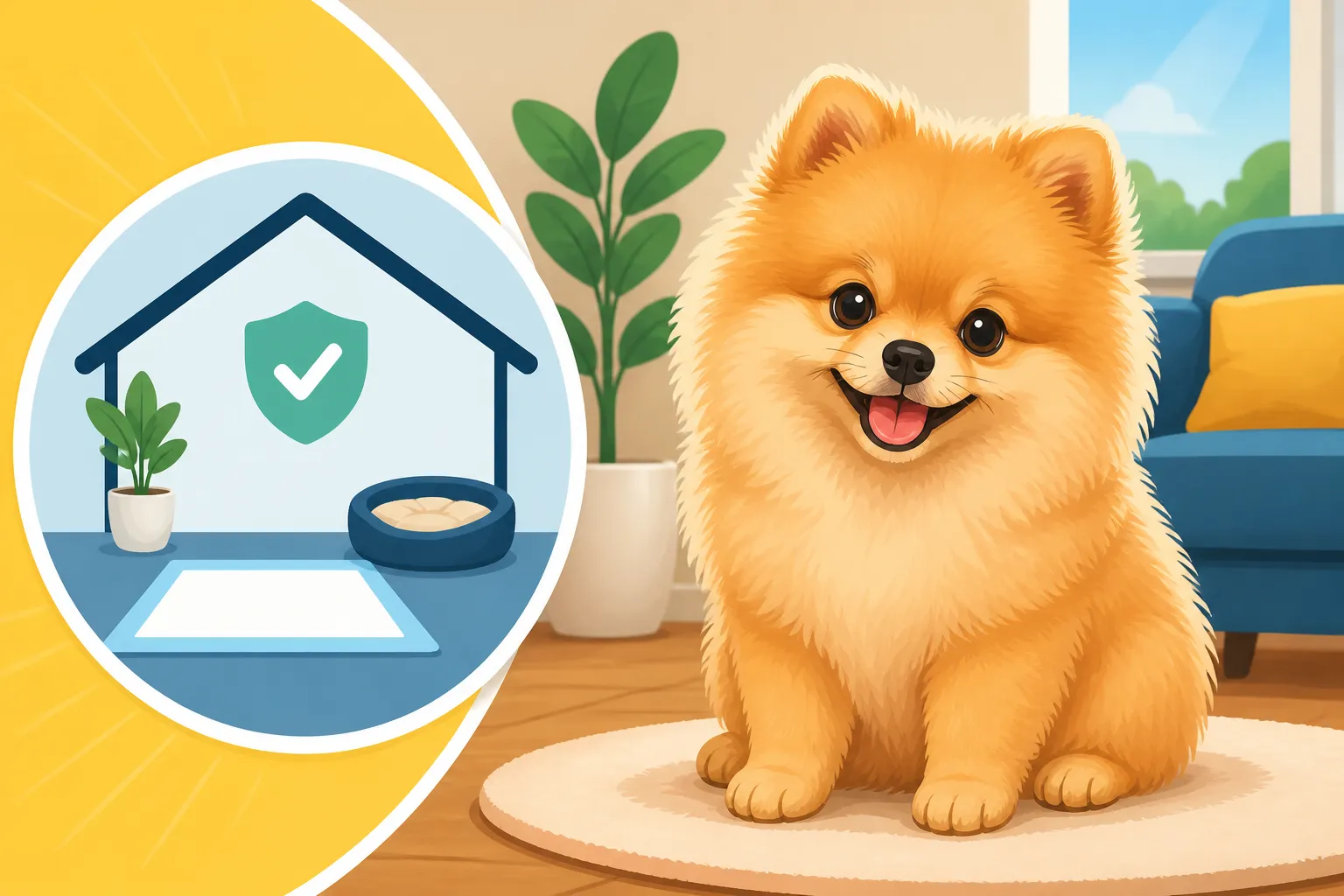
Crate training is one of the most effective tools for house training a Pomeranian puppy. It leverages a dog's natural instinct not to soil its sleeping area. A crate should be seen as a safe, cozy den, not a punishment.
- Proper Crate Size: The crate must be just large enough for your Pomeranian to stand up, turn around, and lie down comfortably. If it’s too big, they might use one end as a bed and the other as a bathroom. Many crates come with dividers, allowing you to adjust the size as your puppy grows. You can find appropriately sized crates for Pomeranians on Amazon.
- Positive Association: Introduce the crate slowly and positively. Feed meals inside, toss treats in, and offer praise when they enter. Never use the crate for punishment.
- Scheduled Crate Time: Use the crate for naps, overnight sleeping, and when you can't actively supervise your puppy. The duration should align with their bladder capacity (e.g., 2-3 hours for a young pup, extending gradually).
- Immediate Potty Break: The moment your Pomeranian comes out of the crate, take them directly outside to their designated potty spot. This is a critical time for them to eliminate, as they've likely been holding it.
- Overnight: For Crate Work With a Pomeranian Puppy That Cries, remember that a young puppy simply cannot hold it all night. Expect to take them out once or twice during the night, especially in the early weeks. Set an alarm to prevent accidents. As they mature, they'll gradually be able to hold it longer.
A well-implemented crate training routine dramatically reduces indoor accidents and teaches your puppy to hold their bladder, preparing them for longer stretches of indoor reliability.
Effective Potty Breaks and Location Consistency
Successful potty breaks aren't just about taking your puppy outside; they're about how you conduct those trips.
- Frequent Trips: As discussed, young Pomeranian puppies need to go out a lot. Aim for every 1-2 hours when awake, immediately after waking, eating, drinking, and playing.
- Designated Spot: Always take them to the same outdoor spot. The familiar scent helps trigger elimination. Keep them on a leash, even in a fenced yard, to guide them to this spot.
- "Potty Word": Use a consistent "potty word" or phrase (e.g., "Go potty," "Do your business") every single time you take them out. Say it as they are squatting or urinating/defecating. Over time, this word will become a cue that tells them what you expect.
- Wait It Out: Don't rush them. Stand patiently in the potty spot. Give them a few minutes to sniff around and find the right place. Distractions (other people, dogs, toys) should be minimized during these dedicated potty trips.
- Reward Immediately: The moment they finish, offer enthusiastic praise and a high-value treat. Again, timing is key!
- After Potty Play: Once they've successfully gone potty and been rewarded, you can then engage in a short play session or a brief walk. This teaches them that potty first, then fun.
Maintaining The Routine a Pomeranian Needs Every Day is paramount. Any deviation can lead to confusion and setbacks.
Dealing with Accidents and Setbacks
Accidents will happen. They are an inevitable part of puppyhood and house training. How you react to them is crucial for your Pomeranian's learning and your bond.
- Catching in the Act: If you catch your Pomeranian squatting indoors, immediately interrupt them with a sharp but not scary sound (like a clap or "Ah-ah!"). Scoop them up (without scolding) and rush them outside to their designated potty spot. If they finish outside, praise and reward lavishly. This teaches them that indoor elimination is interrupted, while outdoor elimination is rewarded.
- Finding an Accident Later: If you discover an accident after the fact, simply clean it up without any reaction. Scolding a puppy for an accident that happened minutes or hours ago is pointless; they won't connect your anger to their past action. They only understand what's happening right now.
- Thorough Cleaning: Use an enzymatic cleaner to completely neutralize the odor. Products available on Amazon are excellent for this. If the smell remains, your puppy is more likely to use that spot again.
- Identify the Cause: After an accident, mentally review what might have gone wrong. Did you wait too long for a potty break? Was the supervision lapse? Was the routine disrupted? Learning from these incidents helps you adjust your strategy.
- Don't Get Discouraged: House training a small breed like a Pomeranian can sometimes feel like it takes forever. Their bladders are small, and some can be a bit more sensitive to weather or getting their paws wet. Persistence and positive reinforcement will eventually pay off. There isn't a single age where all Pomeranians become reliably house-trained, but with diligent effort, most can achieve this by 6-8 months, with occasional regressions possible up to a year old. For some pups, How Many Weeks House Training a Pomeranian Takes can feel like an eternity, but every dog is an individual.
| Age of Pomeranian Puppy | Max Time Between Potty Breaks (Approx.) | Frequency During Active Hours | Nighttime Potty Breaks Expected | Key Training Focus |
|---|---|---|---|---|
| 8-10 Weeks | 1-2 hours | Every 15-30 minutes | 2-3 times | Immediate outdoors after everything, crate work, strict supervision |
| 10-12 Weeks | 2-3 hours | Every 30-45 minutes | 1-2 times | Consistent routine, positive reinforcement, recognizing cues |
| 3-4 Months | 3-4 hours | Every 1-1.5 hours | 1 time (or none if consistent) | Building duration, increasing reliability, formal cue training |
| 4-6 Months | 4-6 hours | Every 2-3 hours | 0-1 time | Solidifying habits, extending outdoor intervals, less supervision needed |
| 6+ Months | 6-8 hours (adult capacity) | Every 3-4 hours | Generally none | Maintenance, trusting freedom, managing new environments |
This table provides general guidelines. Every Pomeranian is an individual, and their pace of learning will vary. Factors like diet, activity level, and individual bladder control will influence these times. Always err on the side of caution and take your puppy out more often than you think they need.
The journey to a reliably house-trained Pomeranian puppy is a marathon, not a sprint. It requires patience, consistency, and a deep understanding of your tiny companion's physical and developmental needs. While there's no magic age when they suddenly "get it," most Pomeranians can become quite reliable indoors by 6-8 months with consistent and positive training. By focusing on a strict schedule, making outdoor potty breaks incredibly rewarding, utilizing crate training, and reacting appropriately to accidents, you'll set your little fluffball up for lasting success. Keep celebrating those outdoor triumphs, and before you know it, those frustrating puddles will be a distant memory.
Disclaimer
This article is for general informational purposes only and does not constitute professional advice. Laws, prices and regulations vary by location and change over time. Consult a qualified professional for guidance on your specific situation.