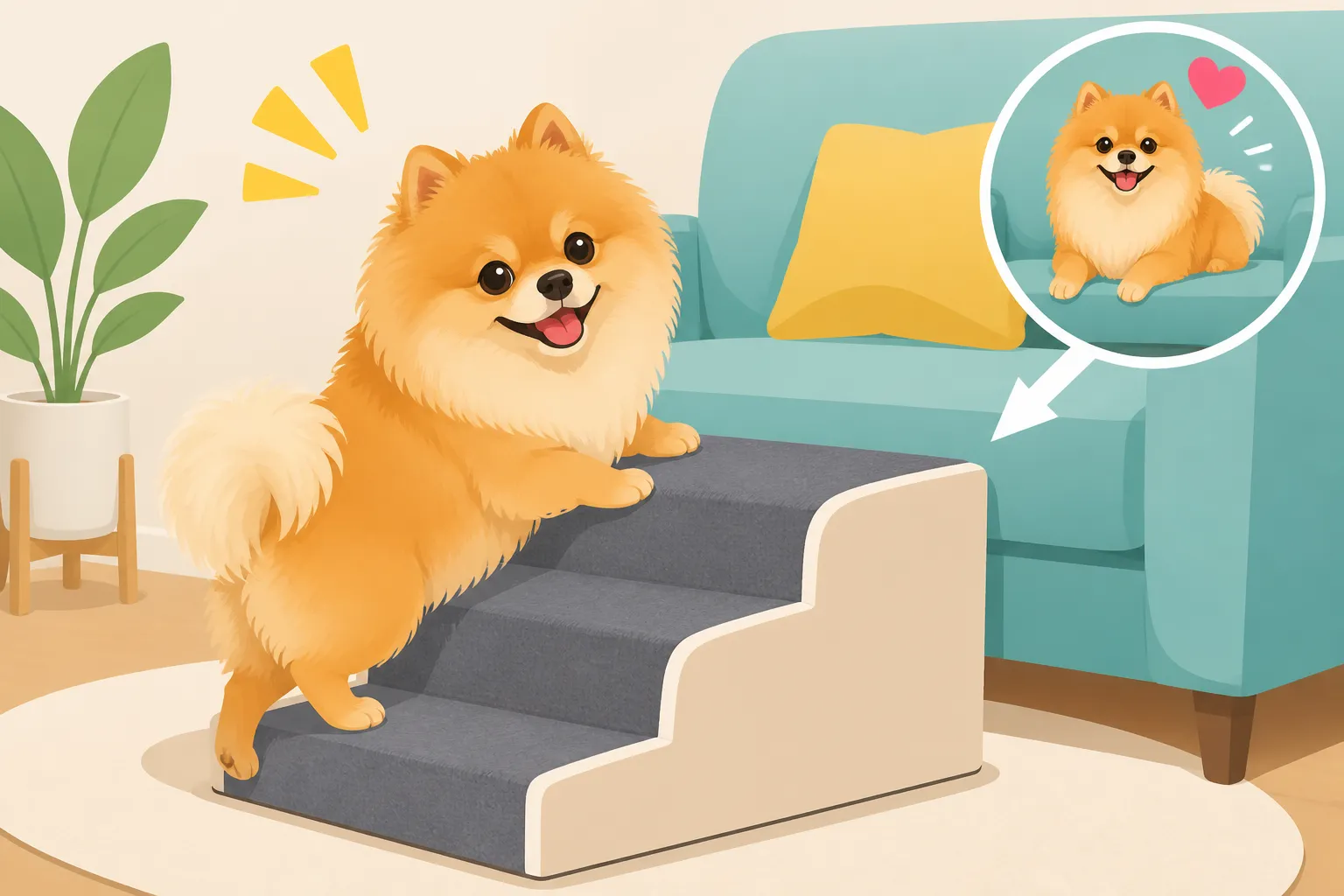
Sofa Steps a Pomeranian Will Actually Use
It's a common sight in many Pomeranian homes: your tiny fluffball, with boundless energy and questionable judgment, eyeing the towering sofa or bed like it's Mount Everest. They want to be with you, close to the action, but every leap up and crash landing down puts their delicate little bodies at risk. As much as we love their enthusiasm, those repeated jumps can lead to serious health issues for your beloved Pom. This guide will help you understand why sofa steps are so important for your Pomeranian's long-term health and how to choose and introduce the right set that they'll actually use.
Why Your Pomeranian Needs Sofa Steps More Than You Think
It might seem like a small thing, a quick hop on and off the couch, but for a Pomeranian, it's akin to a human jumping off a small building multiple times a day. Their miniature stature means gravity hits them harder, and their delicate bone structure and joints aren't built for constant high-impact activity. We want them to feel like part of the family, sharing our space, but we also have a responsibility to keep them safe from themselves.
The Hidden Dangers of Jumping
Let's be realistic: a Pomeranian's body is not designed for repeated impact from heights. One of the most common issues we see in the breed is patellar luxation, or "slipping kneecaps." Each time they land awkwardly from a jump, there's a chance that tiny kneecap can slip out of place. Over time, these small movements wear down the joint, leading to pain, lameness, and potentially costly surgery. You might notice your Pom doing a little "skip" in their step, or holding up a back leg for a moment – those are often early warning signs. You can read more about this in Slipping Kneecaps in a Five Pound Pomeranian.
Beyond their knees, their fragile windpipes are also at risk. Pomeranians are notoriously prone to tracheal collapse, a condition where the rings of cartilage in their windpipe weaken and flatten. A sudden jolt or impact, like landing hard from a jump, can exacerbate this condition or even trigger an acute coughing fit. Imagine the force of landing on all fours sending a shockwave through their tiny bodies, directly impacting that vulnerable throat. This is a terrifying experience for both you and your dog, often heralded by a distinctive "honking" cough that leaves you feeling helpless. The Honking Cough of a Pomeranian's Collapsing Windpipe dives deeper into this specific concern.
Protecting Their Tiny Joints and Spines
It's all about cumulative wear and tear. Even if your Pomeranian doesn't suffer an immediate, dramatic injury, the continuous stress on their joints, ligaments, and spine from jumping can lead to chronic pain and arthritis later in life. Think about how your own knees or back feel after years of certain movements; now imagine that on a dog weighing less than a large bag of flour. Every single jump contributes to that eventual breakdown.
Preventative measures are key here. Investing in good steps now can save you a fortune in vet bills and spare your precious Pom a lot of discomfort down the road. These aren't just for senior dogs; puppies and young adults need this protection too, especially since many joint issues can begin developing quite early. Catching issues early or preventing them entirely is always the best approach. It's much easier to teach a dog to use steps than to manage a painful, chronic condition or face the difficult decision of surgery.
What Makes a Good Set of Pomeranian Sofa Steps?
Choosing the right set of steps isn't just about aesthetics; it's about functionality and safety for your specific dog. There are so many options out there, it can feel overwhelming, but focusing on a few key factors will help you narrow down the choices and find something your Pom will actually find useful and comfortable.
Size and Height Considerations
This is perhaps the most critical factor. Pomeranians are small dogs, and steps designed for a Labrador simply won't work for them. You need steps with shallow risers – the vertical height of each individual step – and appropriate depth for their short legs. Ideally, each step should be low enough that your Pomeranian doesn't have to strain to lift their legs, making it a smooth, gradual ascent or descent. Too high, and they'll likely revert to jumping.
Measure the height of your sofa or bed. Then look for steps where the top step aligns closely with the cushion height. You don't want a huge gap that requires a final leap. Also, consider the number of steps. More, shallower steps are generally better than fewer, taller ones for a Pom, as it reduces the individual impact on their joints. For example, a three-step set might be perfect for a standard sofa, while a five-step set might be needed for a taller bed. You can find many options from retailers like Chewy that cater specifically to small breeds, offering various heights and step counts.
Stability and Non-Slip Features
Imagine trying to climb a rickety ladder that wobbles every time you put weight on it. Your Pomeranian feels the same way about unstable steps. They need to feel confident and secure, or they'll avoid the steps altogether. Look for steps with a wide, stable base that won't tip or slide when your dog uses them. Rubber feet or anti-slip pads on the bottom are essential for preventing movement on hard floors.
The step surface itself also needs to provide good traction. Smooth, slippery plastic or wood can be intimidating and dangerous. Opt for steps with carpeting, a textured surface, or even a soft, non-slip fabric cover. This gives their little paws something to grip onto, preventing slips and falls that could lead to injury. A Pom needs to feel like their footing is secure every single time.
Material and Durability
Sofa steps come in a variety of materials, each with its own pros and cons:
- Foam steps: These are lightweight, soft, and usually covered in a washable fabric. They're great for very small or very old Poms as there's no hard surface to hit if they stumble. They're also easy to move around. However, some foam steps can be less stable if the foam is too soft or if they're not wide enough. Durability can also vary, especially with enthusiastic users.
- Plastic steps: Often more rigid and durable than foam, plastic steps are easy to clean. Look for models with good non-slip treads or carpet inserts. They can sometimes be lighter weight than wood, making them easier to reposition. The main drawback can be aesthetics and the potential for noisiness if not well-constructed.
- Wooden steps: These offer a more furniture-like appearance and are generally very sturdy and durable. They tend to be heavier, making them less prone to sliding. Many wooden steps feature carpeted treads for traction. They might be a bit pricier, but they can blend in well with your existing decor and last a lifetime.
Consider your home's aesthetic, your budget, and how often you might need to move the steps when making your choice. Also, think about cleaning – removable, washable covers are a huge bonus for any pet owner!
Getting Your Pomeranian to Actually Use the Steps
It's one thing to buy the steps; it's another to convince your clever, sometimes stubborn, Pomeranian to use them consistently. Poms are intelligent, but they also have their own ideas about how things should be done. Patience, positive reinforcement, and a bit of creativity are your best friends here.
Gentle Introduction and Positive Reinforcement
Start by placing the steps in front of their favorite spot on the sofa. Don't force them onto the steps. Instead, make it a positive, rewarding experience. Use their absolute favorite high-value treats (small pieces of cooked chicken, cheese, or even a specific dog treat they adore, like those found on Ollie's subscription meal plans).
Begin by simply scattering treats on the first step. Let them approach and take the treat on their own terms. Once they're comfortable with that, place treats on the second step, then the third, and so on. Guide them with a treat in your hand, luring them up one step at a time. Praise them enthusiastically for every step they take, even if it's just one paw. Keep the sessions short, fun, and always end on a positive note. Never scold them for jumping; just gently redirect them to the steps. Repetition is key, but make sure it feels like a game, not a chore.
Consistency and Patience
Pomeranians learn through repetition and routine. If you want them to use the steps, you must be consistent. Every time they want to get on or off the furniture, gently guide them to the steps. If they try to jump, block their path to the jumping spot and point to the steps. Don't give in if they whine or try to bypass the steps, because that will teach them that persistence pays off – for them, not for you!
Some Poms will take to steps immediately, while others might need days or even weeks of consistent training. Don't get discouraged! Celebrate every small victory. If they're struggling, go back a step in your training – literally. Revisit putting treats just on the first step, or even just next to the steps, until they regain their confidence. Remember, the goal is to make using the steps a habit, something they do automatically without thinking. Teaching a Pomeranian to Use Steps is a helpful resource if you're looking for more detailed training tips.
Location, Location, Location
The placement of the steps matters more than you might think. Your Pomeranian is likely jumping on and off the furniture from their preferred access point. That's where the steps need to be. If you place them on the opposite side of the sofa from where they usually launch themselves, they'll likely ignore them.
Observe your dog's habits. Where do they usually get up? Where do they usually jump down? That's the prime real estate for their new steps. If you have multiple access points or multiple pieces of furniture they frequent, you might even consider getting more than one set of steps. Having easy, convenient access means they're far more likely to use the steps consistently, protecting their little bodies from unnecessary strain.
Different Types of Steps and Ramps for Your Pom's Needs
Just as every Pomeranian has its unique personality, there are various solutions for helping them access elevated surfaces. What works for one might not work for another, so understanding the options is crucial.
Traditional Steps vs. Ramps
This is often the first decision you'll face when looking for an aid for your Pom.
- Traditional Steps: These are what we've been discussing—individual, defined risers. They mimic miniature stairs.
- Pros: Many dogs take to them easily as they resemble familiar stair climbing. They often have a smaller footprint than ramps.
- Cons: For very small, very young, or older Poms with significant arthritis or joint issues, even shallow steps can still require a small degree of impact and effort. If a Pom has a severe case of Arthritis in a Pomeranian at Ten or a high grade of luxating patella, the repetitive up-and-down motion on steps can still be uncomfortable.
- Ramps: A continuous, inclined surface from the floor to the top of the furniture.
- Pros: Ramps offer a smooth, gradual ascent, eliminating any impact. This makes them ideal for dogs with severe joint problems, back issues, or those who are just particularly frail. Many Poms find them less intimidating than steps, especially if they've had a bad experience with stairs. You can find more details in Ramps for a Pomeranian That Jumps Off the Sofa.
- Cons: Ramps generally take up more floor space than steps due to their longer incline. They also need to have a non-slip surface to prevent your Pom from sliding down.
Consider your dog's current health and mobility. If they're perfectly healthy but you're looking for prevention, steps are often a great choice. If they're already showing signs of joint pain or have a diagnosed condition, a ramp might be the more compassionate and beneficial option.
Foldable and Portable Options
Life with a Pomeranian often means they go where you go! If your Pom loves to snuggle on the guest bed, accompany you on road trips, or just needs assistance accessing different pieces of furniture throughout the day, foldable or portable steps are a game-changer.
These options are usually made from lightweight foam or plastic, designed to collapse flat or fold up easily for storage or transport. They're perfect for:
- Travel: Taking them to a hotel, a relative's house, or a vacation rental.
- Multi-room Use: Easily moving them between the living room and bedroom, or even outside if your Pom likes to lounge on a patio chair.
- Storage: If you prefer not to have steps out all the time, these can be tucked away when not needed.
When choosing a portable option, still prioritize stability and non-slip features. You don't want steps that are too flimsy just because they're lightweight. Look for models that are quick and easy to set up and take down, and consider where you'll store them when not in use.
Integrated Furniture with Steps
For those who want a seamless look and perhaps a more permanent solution, there are furniture pieces that come with integrated steps. These can range from pet-friendly ottomans with pull-out steps to actual end tables or even dog beds with built-in ramps or stairs.
- Pros: They blend beautifully into your home decor, often looking like regular furniture rather than a pet accessory. They are typically very sturdy and durable.
- Cons: These options tend to be significantly more expensive than standalone steps or ramps. They are also less flexible; once you commit to a piece, it's not easily moved or changed.
While a bigger investment, integrated furniture can be a wonderful, discreet solution for owners who want to provide long-term joint support without compromising their home's aesthetic. Just ensure the step dimensions are appropriate for your Pomeranian before committing.
Ultimately, whether you choose steps or a ramp, permanent or portable, the goal is the same: to provide a safe, easy way for your beloved Pomeranian to join you on the couch or bed without risking their health. Considering the potential costs of orthopedic surgery or long-term medication, as highlighted in The Eighteen Thousand Dollar Lifetime of a Pomeranian, investing in a few good sets of steps now can save you heartache and significant expense down the line. Preventative care, including making your home safe, is truly priceless when it comes to the well-being of our little Poms.
Disclaimer
This article is for general informational purposes only and does not constitute professional advice. Laws, prices and regulations vary by location and change over time. Consult a qualified professional for guidance on your specific situation.