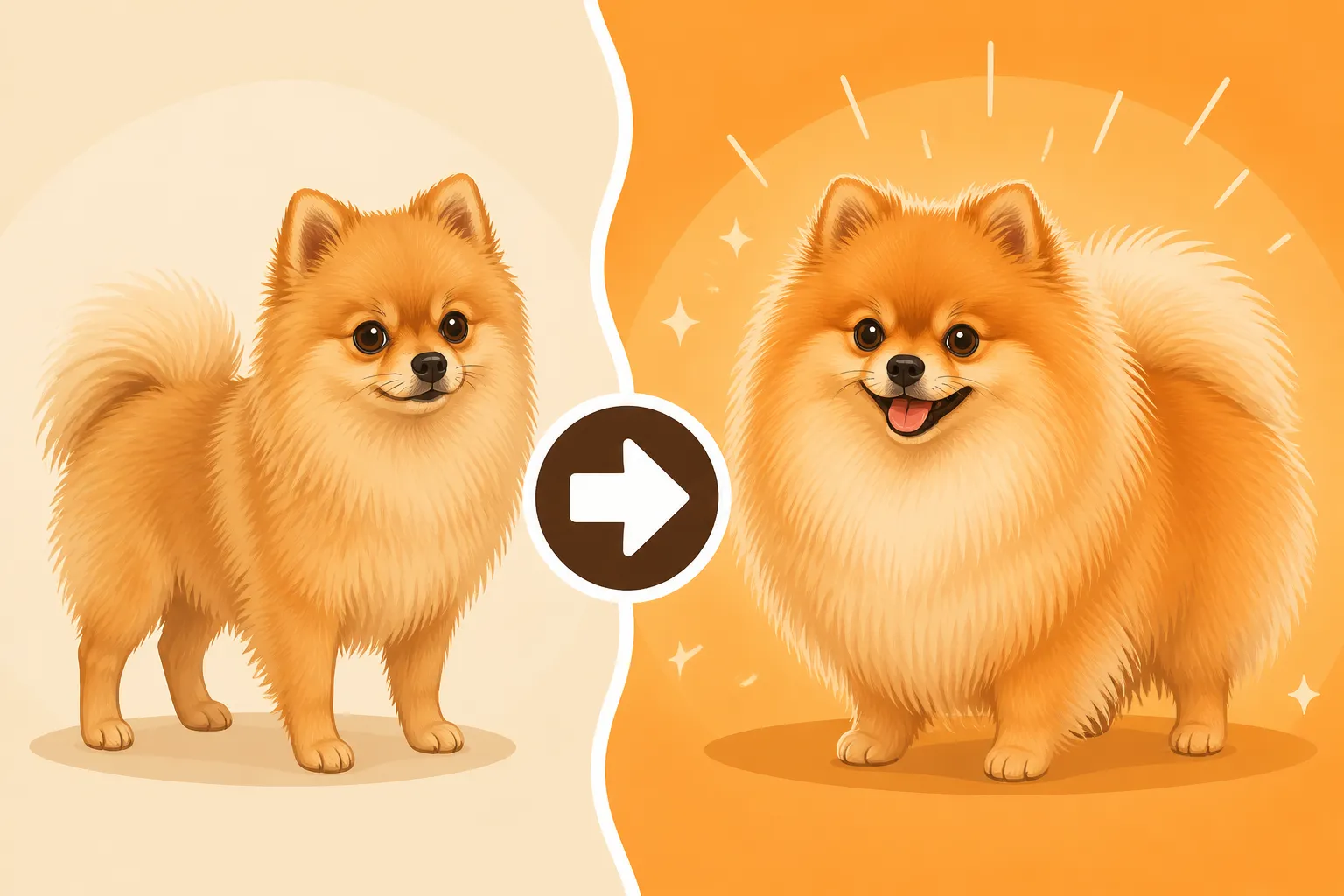
Whether the Pomeranian Coat Has Grown Denser Over Time
The Pomeranian’s dramatic ruff and puff of undercoat can make today’s dogs look fluffier than the Pomeranians in old photographs. But that doesn’t prove the breed’s coat has steadily grown denser over time. The apparent change is better explained by selective breeding, grooming, and how dogs are photographed and presented.
Has the Pomeranian coat actually grown denser?
There is no simple, well-documented timeline showing that the Pomeranian coat has become progressively denser from one generation to the next. The breed’s coat is a defining feature, and breeders have long selected for the familiar double-coated outline. But “denser” can mean several different things: more undercoat, longer hair, greater volume, or simply a rounder, fuller-looking silhouette.
Historical pictures are not a reliable way to measure those differences. Portraits may be idealized, photographs vary in quality and angle, and grooming can make the same coat look dramatically different. A dog shown with its coat brushed outward and shaped around the body may appear much fuller than one photographed after a bath or during a seasonal shed.
What “dense coat” means in a Pomeranian
A Pomeranian has a double coat: a shorter, soft undercoat beneath a longer outer coat made up of guard hairs. The undercoat helps create lift and volume, while the outer coat contributes to the breed’s stand-off appearance. The coat is not one uniform layer, so its density and texture can vary across the body.
When owners say a Pom has a “thick coat,” they may be describing a plush undercoat, long guard hairs, or a combination of both. Those qualities aren’t interchangeable. A dog can have plenty of long outer hair but less undercoat, or a substantial undercoat that gives the body a rounded, puffy appearance.
This distinction matters when comparing dogs across time. A photograph can show overall shape, but it cannot reliably reveal how much undercoat sits beneath the visible hair. For a closer look at the coat’s structure, see The Guard Hair and Undercoat of a Pomeranian.
Why old photographs can be misleading
A historical Pomeranian might look less fluffy simply because the image captures a different moment in the grooming cycle. Dogs shed, grow new coat, and change appearance with age. An image taken during a coat blow can make even a well-coated dog look sparse, while careful brushing and shaping can make a dog look more voluminous.
Photography also changes what we notice. Older images may have limited detail or contrast, and the dog might be standing at an angle that hides its ruff or hindquarters. Modern photos are often taken in bright light, at close range, and after grooming. Comparing a formal show portrait with a casual historical snapshot is not an even comparison.
The breed’s history adds context but not proof of a coat-density trend. Pomeranians were bred down in size from larger Spitz-type dogs, and breeders shaped the modern breed over generations. That history is important, but it does not establish that each generation developed a denser coat. Read more about this shift in How Breeders Selected Pomeranians Down in Size and The Stand Off Coat a Pomeranian Must Have.
Why modern Pomeranians may look fluffier
Even if the coat has not steadily grown denser across the breed, modern Pomeranians can look exceptionally full. A combination of breeding choices, coat condition, grooming, and presentation can make a dog’s outline seem rounder or more abundant than that of a dog shown in a different era.
Breeding for a familiar outline
Breeders select for many traits, including size, structure, coat texture, color, and expression. When a particular look is popular, breeders may favor dogs that display it strongly. In Pomeranians, a plush ruff and a coat that stands away from the body contribute to the classic silhouette, so those qualities can receive attention in breeding and show presentation.
That does not mean every modern Pomeranian has a denser coat than every Pomeranian from the past. Coat traits vary among individual dogs and family lines. Even littermates can differ in undercoat, texture, coat growth, and how their coats develop with age.
It also helps to separate a breed ideal from a guarantee. A description of the desired coat explains what breeders may aim for; it doesn’t mean every pet Pomeranian will have the same volume. The breed’s broader historical background is explored in The German Spitz Family a Pomeranian Belongs To.
Grooming and show preparation
A well-groomed double coat can look remarkably full. Brushing in sections helps lift the hair from the skin, and drying the coat thoroughly after bathing can restore its volume. Trimming may tidy feet or shape the outline without removing the undercoat. These methods affect appearance, even though they do not change the dog’s underlying genetics.
Conversely, a coat can look flatter after being brushed roughly, allowed to mat, or left damp. Excessive clipping can also alter the coat’s appearance, and a shaved double coat may not grow back as expected. If you’re comparing images of Pomeranians, it’s worth asking whether one dog has been groomed for a show while the other is simply shown as it looks day to day. For more on safe coat shaping, see Trims a Pomeranian Can Safely Have and Why a Shaved Pomeranian May Not Regrow.
A grooming routine is part of coat care, not a way to permanently make a dog’s coat denser. Owners looking for brushes, combs, or dog shampoo may find those supplies through retailers such as Chewy, but the right routine depends on the dog’s coat and comfort. A tool that pulls at the hair or irritates the skin is not a shortcut to a fuller coat.
Age, season, and health
Pomeranian coats change as dogs grow. Puppies go through a coat transition often called the puppy uglies, when the soft puppy coat sheds and the adult coat comes in unevenly. An adolescent Pom may look patchy or less plush for a while, then develop a fuller adult outline later. Learn more about this stage in The Coat Blow and the Pomeranian Puppy Uglies.
Coat fullness can also shift with seasonal shedding, hormonal changes, pregnancy, illness, stress, nutrition, or skin problems. A sudden change in coat density should not automatically be treated as a normal breed variation. If your dog develops bald areas, irritated skin, persistent itching, or hair loss that continues to spread, a veterinarian can help investigate the cause.
A healthy diet supports overall skin and coat condition, but no food or supplement can guarantee a particular genetic coat type. Chewy may be one place an owner shops for routine food or coat-care products, but it’s sensible to discuss persistent shedding or coat changes with a veterinarian rather than trying products one after another.
What can and cannot be compared across generations
Historical claims about coat density are strongest when they distinguish visible appearance from measurable coat traits. A photograph can suggest that one dog looked fluffier. It cannot, on its own, tell you how dense the undercoat was, whether the dog had just been groomed, or whether the image represents typical Pomeranians of that period.
| What you’re comparing | What it may tell you | What it cannot prove |
|---|---|---|
| Old and modern photographs | Differences in visible silhouette or presentation | A genetic increase in undercoat density |
| Show dogs from different eras | How the breed’s desired outline was presented | That all pet Pomeranians changed in the same way |
| Coat descriptions in breed materials | Which coat qualities are valued | How common those qualities were in every generation |
| A dog’s coat before and after grooming | How brushing and drying affect volume | A permanent change in coat density |
| Coat changes as a dog ages | How puppy, adult, and senior coats can differ | A breed-wide trend over time |
The limits of paintings, portraits, and breed descriptions
Paintings and early photographs are valuable for understanding how people represented Pomeranians, but they are not precise coat records. Artists may emphasize a dog’s outline, and different materials or photographic techniques can soften details. Even a realistic portrait does not reveal the coat beneath the guard hairs.
Written descriptions have limits too. Words such as “full,” “abundant,” or “profuse” can describe the desired appearance without providing a consistent measurement. Unless records define how coat density was measured and compare a broad group of dogs, they cannot establish a clear increase across generations.
That’s why a careful answer is more useful than a confident claim based on a few striking images: modern Pomeranians can look very full, but appearance alone does not establish that their coats have become denser over time.
How to compare dogs more fairly
If you’re curious about a particular historical comparison, look for images that show dogs in similar conditions. A side-by-side comparison is more meaningful when the dogs are at similar ages, photographed from similar angles, and groomed in comparable ways. Even then, you’re comparing visible appearance—not measuring the coat itself.
Also consider whether the dogs come from show lines, pet lines, or different family backgrounds. Individual variation can be substantial, and one unusually plush dog from the past does not represent the entire breed any more than one sleek-coated modern Pom does.
For owners trying to understand their own dog’s coat, routine observation is more practical than comparing it with a century-old portrait. Note how the coat changes through the seasons, whether shedding is symmetrical, and whether the skin looks comfortable. If you shop for a slicker brush, comb, or coat product at Chewy or another retailer, choose for the dog’s needs rather than a promise of extra volume.
How to care for a full Pomeranian coat
Whether or not the breed’s coat has changed over time, a Pomeranian’s double coat needs thoughtful care. The goal is to keep it clean, comfortable, and free of mats—not to make every dog match a show-ring silhouette. Good coat care also helps you notice problems early.
Brush gently and reach the skin
A quick pass over the visible outer coat can leave tangles hidden underneath. Work in small sections, parting the hair so you can check the undercoat and skin. Pay extra attention to areas where friction and moisture can encourage mats, such as behind the ears, under the harness, around the legs, and near the tail.
Use a light hand. If a knot is tight or close to the skin, pulling hard can hurt your dog and make grooming stressful. A dog that repeatedly resists brushing may be uncomfortable, frightened, or already matted. Taking a break and working gradually is kinder than trying to finish the whole coat in one sitting.
If you’re unsure which tools suit your dog, a groomer can demonstrate a safe technique. Chewy and other pet retailers offer grooming supplies, but a product’s popularity does not guarantee it is appropriate for every coat type or every dog.
Avoid shaving for a quick fix
A full coat can feel like a lot of work, especially during shedding season, but shaving is not a reliable solution to mats or summer heat. Removing the outer coat may affect its regrowth, and the coat can return unevenly or with a changed texture. If matting is severe, ask a qualified groomer or veterinarian about the safest way to handle it.
For routine tidying, a groomer can discuss options that preserve the coat’s basic structure. Make your preferences clear before the appointment, especially if you want to avoid clipping the body short. Bring a reference photo if you have a particular outline in mind, but remember that a dog’s natural coat may not match the image exactly.
Treat unexpected coat loss as a health question
A Pomeranian’s coat may look thinner during a shed or a growth transition, but pronounced bald patches or ongoing hair loss deserve attention. Coat changes can have several possible causes, and appearance alone cannot identify which one applies. A veterinarian can review the dog’s history, examine the skin, and determine whether testing is appropriate.
Keep notes about when the change began, where it appeared first, and whether there are other signs such as itching, odor, redness, or changes in energy. Clear observations can make a veterinary visit more useful and help distinguish a normal coat cycle from a health concern.
The practical takeaway is that Pomeranians have long been valued for a full double coat, while the impression of greater density in modern dogs may reflect breeding preferences, grooming, photography, and individual variation. There is not enough in a fluffy silhouette alone to show that the breed’s coat has steadily grown denser over time.
Disclaimer
This article is for general informational purposes only and does not constitute professional advice. Laws, prices and regulations vary by location and change over time. Consult a qualified professional for guidance on your specific situation.