Getting on a Pomeranian Breeder’s Waiting List
Finding an ethical Pomeranian breeder can feel like an overwhelming task, especially when your inquiries go unanswered or you encounter multi-year waiting lists. Many prospective owners feel confused by the application process and uncertain about how to differentiate a dedicated preservation breeder from an online scammer. This guide walks you through navigating breeder waiting lists, submitting a standout application, vetting health clearances, and preparing your home for your new arrival.
Understanding Ethical Pomeranian Breeding and Why Waitlists Exist
The journey to bringing a well-bred toy dog into your life almost always begins with a waitlist. Unlike backyard operations or commercial puppy mills that keep a constant supply of animals ready for immediate purchase, ethical preservation breeders operate on a completely different timetable. Understanding why these delays occur is the first step in appreciating the value of a carefully planned litter.
The Reality of Small Pomeranian Litter Sizes
When you begin researching breeders, one of the first physical limitations you will encounter is the sheer biological constraint of the breed. Pomeranians are a toy breed, and dam capacity is naturally restricted. If you are examining How Few Puppies a Pomeranian Carries, you quickly realize that a typical litter consists of only two to four puppies. In some cases, a female may only give birth to a single healthy puppy.
TYPICAL POMERANIAN LITTER EXPECTATIONS
| Average Litter Size | 2 to 4 puppies |
|---|---|
| Litters Per Dam Per Year | 1 litter (often skip-year breeding) |
| Average Waiting List Duration | 6 to 18 months |
| Health Screening Clearance Time | 12 to 24 months per parent dog |
Because litter sizes are so small, a breeder who receives dozens of inquiries each month can only fulfill a handful of placements per year. A single litter might yield two pet-quality puppies and one show-prospect puppy, meaning that even a short waiting list of six families can take over a year to clear. This limited availability is not a marketing tactic designed to create artificial scarcity; it is a simple reality of responsible toy breed stewardship.
Furthermore, ethical breeders do not breed their females on every heat cycle. They space litters out to allow the dam full physical recovery, proper conditioning, and a restful life as a cherished companion. When you factor in the possibility of a missed pregnancy or a litter yielding fewer puppies than expected, the timeline naturally expands.
Why Reputable Breeders Do Not Keep Puppies in Stock
If a seller always has multiple litters available, offers instant checkout on a website, or promises full-breed puppies in any color on demand, you are almost certainly dealing with a high-volume broker or backyard breeder. Dedicated preservation breeders plan every single breeding months or even years in advance, with the explicit goal of improving the health, temperament, and structural integrity of their lines.
Before a dam and sire are paired, the breeder spends hours analyzing pedigrees, evaluating structural traits, and checking health databases. They are often breeding primarily to keep a puppy for their own show or performance program, with pet-quality siblings made available to carefully screened homes. Because the goal is quality over quantity, puppies are never treated as inventory waiting on a shelf.
Waiting for a puppy ensures that you are stepping into a pipeline of intentional, thoughtful care. A breeder who carefully paces their litters spends endless hours socializing each individual puppy, managing early neurological stimulation, and providing round-the-clock supervision during those fragile early weeks.
Health Screening Standards Before Breeding Commences
A primary reason reputable breeders maintain strict waitlists is the time required to properly clear parent dogs for inherited health conditions. Ethical breeders do not simply take two cute Pomeranians and pair them together. They wait until the dogs reach full physical maturity—typically around two years of age—to complete comprehensive health evaluations.
These evaluations go far beyond a basic wellness exam at a local clinic. They involve specialized screenings for conditions common to the breed, such as patellar luxation, cardiac abnormalities, eye diseases, and thyroid dysfunction. Results are logged in public databases like the Orthopedic Foundation for Animals (OFA). Understanding Why a Health Tested Pomeranian Starts at Fifteen Hundred helps contextualize why this rigorous testing phase requires significant time, care, and financial investment long before a litter is even conceived.
When you join a waitlist for a health-tested litter, you are paying for the peace of mind that comes from knowing the parents were evaluated for genetic risks. This diligence drastically reduces the likelihood of severe, life-altering structural or systemic health problems appearing down the road, protecting both the puppy and your future emotional and financial well-being.
Finding and Vetting Ethical Pomeranian Breeders
Navigating the landscape of dog breeders requires a discerning eye. The internet is flooded with slick websites, charming social media profiles, and persuasive sales pitches, making it difficult to separate true preservationists from unethical operations. Knowing what to look for will save you time, money, and heartache.
Identifying Red Flags vs Signs of Excellence
When evaluating potential breeders, pay close attention to how they communicate and how they house their dogs. An ethical breeder will welcome your questions, exhibit deep knowledge of the breed’s history and health quirks, and insist on interviewing you as thoroughly as you interview them. They prioritize matching the right temperament to the right household rather than letting buyers pick purely based on coat color or cosmetic preferences.
Conversely, major red flags include sellers who refuse to show you where the puppies are raised, those who do not allow you to meet the mother, or those offering to meet in a neutral parking lot for delivery. Another serious red flag is a seller who advertises “teacup,” “micro,” or “rare” colors like merle at astronomical price markups without providing health testing records or official registry documentation.
EVALUATING BREEDER CHARACTERISTICS
| Feature | Ethical Preservation Breeder | Unethical / Backyard Breeder |
|---|---|---|
| Health Testing | OFA/CAER public registry results | “Vet checked” or basic shots only |
| Parent Dog Environment | Raised indoors as family pets | Kept in kennels, sheds, or hidden |
| Application Process | Detailed questionnaire & interview | Immediate sale with payment |
| Buyer Contract | Return clause & spay/neuter term | No return policy or guarantees |
| Puppy Placement Age | 10 to 12 weeks minimum | 6 to 8 weeks (often too early) |
An ethical breeder will also keep their puppies until they are at least ten to twelve weeks old. Toy breed puppies are exceptionally fragile and prone to sudden drops in blood sugar; keeping them with their mother and littermates for those extra weeks ensures emotional stability, social learning, and physical resilience before they undergo the stress of moving to a new home.
Essential Questions to Ask a Breeder Before Applying
Before you formally request a spot on a waiting list, prepare a concise list of thoughtful questions. Your goal is to assess the breeder’s standards, transparency, and ongoing support structure. Inquire about the health testing done on the prospective parents, asking specifically for OFA numbers or direct links to health registry records.
Ask about the living environment of the dogs and how puppies are socialized during their first two months of life. Inquire whether the breeder uses structured enrichment programs like Puppy Culture or Early Neurological Stimulation (ENS) to help build confident temperaments. It is also wise to discuss logistics, such as Meeting the Dam Before Buying a Pomeranian Puppy, to confirm that you will have the opportunity to evaluate the mother’s temperament and physical condition, either in person or via live video call.
Finally, ask about their policy regarding contract enforcement and life-long support. A high-quality breeder considers themselves a mentor for the entirety of your dog’s life. They will want to know if you run into behavioral hurdles, health issues, or lifestyle changes, and they will explicitly require in their contract that the dog return to them if you are ever unable to keep it.
Navigating Breeder Directories and Breed Clubs
The safest starting point for your breeder search is the official parent club for the breed in your country, such as the American Pomeranian Club or equivalent regional breed organizations. These clubs maintain member directories where breeders must agree to abide by a strict code of ethics regarding breeding practices, health testing, and truthful advertising.
When reviewing club directories, keep in mind that being listed is a baseline qualification, not a complete guarantee. You must still perform your own due diligence. Cross-reference breeder names with national registry databases to verify The Papers a Pomeranian Breeder Should Provide, ensuring that registration documents represent legitimate, recognized registries rather than superficial or fictional registration entities.
Avoid relying on general online classified sites or commercial pet store portals. These venues rarely enforce health screening requirements or ethical breeding standards. Taking the extra time to search through official breed club listings, attend local dog shows, or seek recommendations from toy breed performance groups will connect you with stewards who genuinely care about the future of the Pomeranian.
Crafting a Standout Pomeranian Waitlist Application
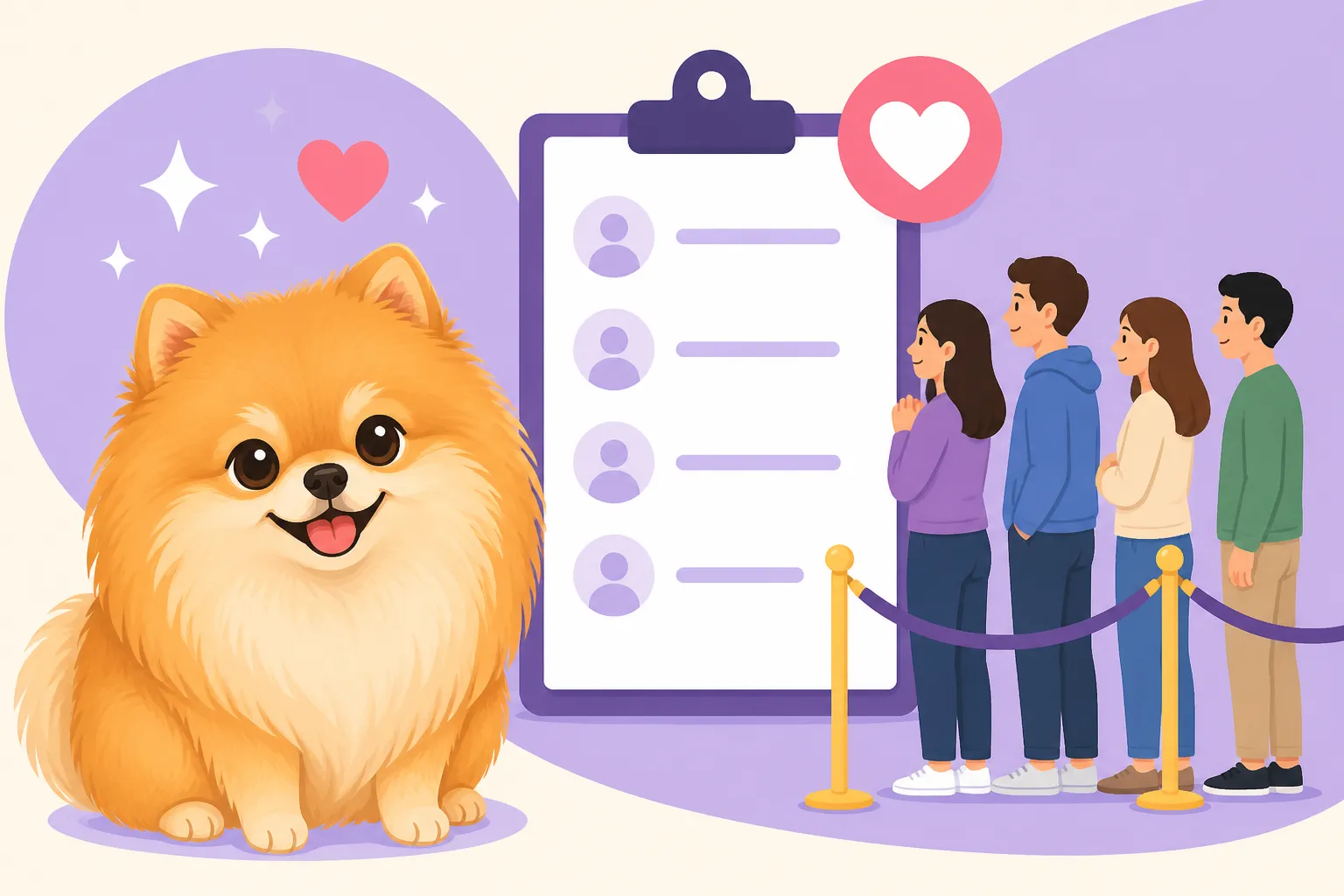
Once you have identified a few reputable breeders whose philosophy aligns with your values, the next step is reaching out. Because ethical breeders receive far more inquiries than they have puppies, your initial application or email is your chance to make a positive, lasting impression.
What Breeders Look for in a Prospective Owner
Breeders are not looking for buyers; they are looking for lifelong guardians for dogs they helped bring into the world. When reviewing applications, their primary concern is safety, commitment, and suitability. They want to know that you understand the unique traits and vulnerabilities of the Pomeranian breed.
A standout application demonstrates that you have researched the breed thoroughly and have realistic expectations about grooming, barking, house training, and fragile skeletal structures. Breeders look favorably on applicants who express interest in the overall health and temperament of the dog rather than making demands regarding exact shades of coat or specific adult weight targets.
COMPONENTS OF A STRONG BREEDER APPLICATION
| Application Section | Key Information to Include |
|---|---|
| Household Profile | Adults, children ages, other pets |
| Living Environment | Housing type, yard access, fencing |
| Daily Schedule | Work hours, exercise, supervision |
| Breed Knowledge | Experience with toy breeds, grooming |
| Veterinary Plan | Preferred clinic, emergency care |
Show that you respect their time. Write in clear, complete sentences, and avoid sending brief, impersonal messages like “How much for a female puppy?” An inquiry framed around price alone often goes straight to the trash folder because it suggests that cost is your only priority rather than quality, health, and ethical care.
Detailing Your Lifestyle, Home, and Care Plan
Your application should paint a vivid picture of what a puppy’s daily life will look like in your home. Describe your living arrangement, whether you live in a single-family home or an apartment, and how you plan to manage potty breaks and physical exercise. If you rent, proactively mention that your landlord permits dogs and that you have verified weight restrictions.
Detail your work schedule and how many hours the dog will spend alone each day. If you work long hours outside the home, explain your management plan—such as mid-day visits from a trusted dog walker or working from home on certain days. Breeders appreciate realistic solutions to care challenges rather than ideal scenarios that are impossible to maintain long term.
Outline your financial readiness for ongoing care. Explain that you have budgeted for high-quality nutrition, regular professional grooming or home maintenance tools, annual veterinary checkups, and emergency medical funds. Mentioning your plan to stock up on necessary management gear from reliable sources like Chewy—such as exercise pens, light lead wires, and ceramic food dishes—shows that you are actively planning for the practical day-to-day realities of small dog ownership.
Addressing Toy Dog Fragility and Daily Time Commitments
Pomeranians are small, active dogs with delicate bones and open skull structures in early puppyhood. A dedicated breeder will want absolute reassurance that your home environment is physically safe for a animal weighing only a few pounds.
If you have young children in your household, address this head-on in your application. Explain how you plan to supervise interactions, teach children how to sit on the floor while handling the puppy, and prevent accidental drops or rough play. If you live in a multi-pet household with larger dogs, detail how you will use baby gates or playpens to keep the Pomeranian separated and safe when unmonitored.
Highlight your commitment to daily exercise, mental stimulation, and coat upkeep. Pomeranians require routine grooming to prevent severe matting, as well as consistent training to manage alert barking. Demonstrating that you are eager to invest time in positive reinforcement training and daily brush-outs proves to the breeder that you are fully prepared for the lifelong effort required to keep a Pomeranian thriving.
Deposits, Contracts, and Waiting List Mechanics
Understanding the mechanics of waitlists, financial deposits, and legal contracts helps prevent misunderstandings and protects both you and the breeder throughout the waiting period.
How Deposits Work and What Makes Them Fair
Many breeders require a deposit to secure your position on their waiting list or to hold a puppy once a litter is born. It is vital to clarify the terms of this financial commitment before transferring any funds. Ask whether the deposit is refundable, non-refundable, or transferable to a future litter.
WAITLIST DEPOSIT CONSIDERATIONS
| Deposit Feature | Ethical Practice Standard |
|---|---|
| Timing | Collected after screening approval |
| Amount | Reasonable percentage of total cost |
| Transferability | Rollover allowed if litter fails |
| Documentation | Written receipt and clear contract |
In ethical breeding programs, deposits are generally requested only after your application has been formally vetted and approved. A breeder should never demand money upfront before learning about you. Understanding What a Pomeranian Breeder Takes to Hold a Puppy will help you recognize fair industry practices versus aggressive cash-grab tactics.
A fair deposit contract specifies what happens if a litter produces fewer puppies than anticipated, if a born puppy develops a health concern during rearing, or if the breeder determines that a given litter does not contain a puppy suited to your specific household. In these instances, the deposit should either be fully refunded or automatically transferred to the next available paired litter without financial penalty.
Understanding Spay/Neuter Clauses and Sales Contracts
When you purchase a companion animal from a preservation breeder, you will sign a legally binding sales contract. This document outlines the obligations of both parties and protects the welfare of the dog throughout its lifetime.
Review the contract carefully before placing a deposit. Pay close attention to sections detailing The Spay Clause in a Pomeranian Contract, as ethical breeders usually sell companion puppies on limited registration with strict spay or neuter requirements. They may mandate waiting until the dog reaches physical maturity before performing the procedure to ensure proper joint and bone development.
STANDARD ELEMENTS OF A POMERANIAN SALES CONTRACT
| Contract Section | Typical Requirements / Terms |
|---|---|
| Registration Status | Limited registration (non-breeding) |
| Spay/Neuter Timing | Mandated between 6 and 18 months |
| Return Clause | Mandatory return if unmaintainable |
| Health Guarantees | Short-term viral & long-term genetic |
The contract will also include health guarantees regarding severe congenital defects and an explicit return-to-breeder clause. This clause states that if you ever find yourself unable to care for the dog—regardless of its age—the dog must be returned to the breeder rather than surrendered to a shelter, rehomed online, or sold to a third party.
Managing the Timeline and Staying in Touch Respectfully
Waiting for a puppy requires patience. It is completely natural to feel eager, but it is important to balance your enthusiasm with respect for the breeder’s time and busy schedule. Breeders spend countless hours managing their adult dogs, caring for newborn litters, attending shows, and communicating with families.
Understanding How Long the Wait Runs on a Pomeranian Litter helps set realistic expectations. A typical wait can range from six months to well over a year. During this time, resist the urge to send frequent emails asking for updates when no litter is currently on the ground.
A great way to stay connected is to follow the breeder’s public social media pages or website updates. Send a warm, brief check-in email every few months just to express your continued interest and share any major life updates—such as moving to a new home or updating your contact details. This keeps your name fresh in the breeder’s mind without placing unnecessary demands on their schedule.
Preparing Your Budget and Home While on the Waitlist
The waiting list phase provides the perfect window of opportunity to organize your finances, procure essential supplies, and prepare your living environment for a toy breed puppy. Taking care of these details ahead of time makes the actual transition smooth and stress-free.
Calculating Initial and Recurring Ownership Costs
Bringing a Pomeranian into your life involves both significant upfront investments and ongoing monthly maintenance expenses. Beyond the initial purchase price, you must budget for essential gear, medical care, high-quality food, and emergency reserves.
EXPECTED POMERANIAN EXPENSE CATEGORIES
| Category | Itemization Examples |
|---|---|
| Initial Set-Up | Crate, playpen, harness, ramps |
| Nutrition | Small-breed kibble or fresh food |
| Routine Healthcare | Exams, vaccines, heartworm prevention |
| Grooming | Slicker brush, comb, professional |
| Emergency Fund | Dedicated savings or insurance plan |
Ongoing nutritional needs require careful planning. Toy breeds have fast metabolisms and delicate digestive systems, so feeding a high-quality diet made with real, wholesome ingredients is critical. Many owners opt to subscribe to fresh meal plans like Ollie to provide balanced, nutrient-dense nutrition tailored to small caloric requirements, ensuring the puppy receives ideal fuel during critical growth stages.
Do not overlook grooming expenses. Pomeranians have dense double coats that demand regular upkeep. Whether you invest in professional grooming visits every four to six weeks or purchase high-grade pin brushes, slicker brushes, undercoat rakes, and high-velocity dryers to handle the coat at home, these costs must be accounted for in your monthly pet budget.
Setting Up Your Home for a Toy Breed Puppy
Toy breed puppies view the world from a very low vantage point, and everyday household items can pose unexpected hazards. Before your puppy arrives, perform a thorough walk-through of your home to eliminate potential safety risks.
Secure loose electrical cords, pull up low-hanging drapery strings, and tuck away small household objects like hair ties, coins, and children’s toys that could cause intestinal blockages if swallowed. Block off small gaps behind heavy furniture or appliances where a tiny puppy could get wedged or trapped.
Invest in dog ramps or padded foam steps for access to sofas or low beds. Pomeranians are highly susceptible to joint trauma from jumping off elevated surfaces, and early prevention is key. Setting up a dedicated playpen with rubber-backed play mats gives your puppy a safe, contained zone where they can play, nap, and chew on approved toys without constant risk of injury or house-training accidents.
Planning for Long-Term Health and Insurance Coverage
Because toy breeds can be prone to specific physical vulnerabilities, setting up a solid financial safety net before your puppy arrives is essential. From dental crowding issues to unexpected orthopedic injuries, veterinary care costs can add up quickly over a dog’s lifetime.
Research pet health insurance options early while your puppy is still young and free of pre-existing conditions. Enrolling in comprehensive coverage through established providers like Healthy Paws ensures that unexpected accidents, emergency surgeries, or sudden illnesses are covered without placing extreme financial strain on your household.
Understanding What Pet Insurance Runs on a Pomeranian allows you to select a policy with deductibles and reimbursement rates that match your monthly budget. Additionally, consider setting up a dedicated healthcare savings fund to cover routine costs like annual bloodwork, professional cleanings, and specialized oral care, ensuring your dog receives uninterrupted medical support throughout every stage of life.
What Happens When the Litter Arrives
The moment a breeder notifies waitlist families that a litter has been born safely is incredibly exciting. However, the evaluation and allocation process takes time, and understanding how breeders make placement decisions helps manage your expectations.
How Puppy Selection and Allocation Works
Many prospective owners assume that joining a waitlist means picking their puppy based on early photos or arbitrary birth order. In ethical breeding programs, however, the breeder retains full authority over puppy placement decisions.
PUPPY EVALUATION TIMELINE
| Age Frame | Developmental & Evaluation Focus |
|---|---|
| Weeks 0 to 4 | Neonatal care & weight monitoring |
| Weeks 5 to 7 | Early socialization & movement |
| Weeks 8 to 9 | Structural & temperament testing |
| Weeks 10 to 12 | Final allocation & home preparation |
Breeders evaluate puppies over several weeks, watching structural development, confidence levels, energy drives, and social tendencies. A puppy that is bold, energetic, and assertive might be a perfect match for an active home with teenage children, but completely overwhelming for a quiet home looking for a calm lap companion.
The breeder will also evaluate which puppies meet show prospects for their own program or other show homes. Final placements are typically announced around eight to ten weeks of age, after structural evaluations and temperament assessments are complete. Trusting the breeder’s expertise ensures that you receive a dog whose personality and needs fit seamlessly into your lifestyle.
Passing on a Litter vs Accepting Your Match
When your turn comes up on a waitlist, the breeder will present you with the puppy selected as your best match. However, personal circumstances or timing issues can change between joining a waitlist and a litter being ready for placement.
If you experience a major life event—such as a job change, home renovation, or family illness—it is entirely acceptable to pass on a current litter. Ethical breeders appreciate honest communication and will gladly move your name to the waiting list for a future litter without forfeiting your deposit or standing.
Similarly, if the available puppy does not align with specific criteria you discussed with the breeder, you can respectfully request to wait for the next pairing. Open, honest dialogue guarantees that both you and the breeder feel completely confident in the match before finalizing the adoption.
Bringing Your Pomeranian Puppy Home Safely
The day you collect your puppy marks the beginning of a wonderful new chapter. Plan the journey home carefully to ensure the puppy remains calm, safe, and comfortable throughout the trip.
If traveling by car, bring a secure, well-ventilated travel crate or a hard-sided carrier padded with cozy, washable blankets. Do not carry a tiny puppy on your lap in a moving vehicle; sudden stops or airbag deployments can cause severe injury. Bring paper towels, cleaning wipes, extra bedding, and waste bags in case of motion sickness or stress-related potty accidents.
GO-HOME CHECKLIST FOR POMERANIAN PUPPIES
| Category | Essential Items |
|---|---|
| Transport | Secure hard carrier, soft towels |
| Comfort | Scent blanket from littermates |
| Documentation | Health records, registration paper |
| First Day Care | Crate, playpen, food/water bowls |
If you are flying to pick up your puppy, arrange for an in-cabin airline carrier that fits neatly beneath the seat in front of you. Confirm all pet travel regulations with your airline well in advance. When you arrive home, keep the initial environment quiet, calm, and low-stress. Allow your puppy to explore their secure playpen area, offer fresh water and a small meal, and establish a consistent routine from the very first day.
Disclaimer
This article is for general informational purposes only and does not constitute professional advice. Laws, prices and regulations vary by location and change over time. Consult a qualified professional for guidance on your specific situation.